
In December London gets less than eight hours of daylight, and a north-facing room gets no direct sun at all. Some houseplants take this in their stride while others fade slowly until spring. We looked at how to measure the light in your home and which plants genuinely cope with shade.
A label at the garden centre reading “tolerates shade” usually means the plant dislikes direct sun. It does not promise that it will thrive three metres from a north window. The gap between the glass and the middle of the room is bigger than it looks.
The good news is that several houseplants grow wild on the forest floor or in the shade of rocks and shrubs. With little light they grow slowly but steadily, provided they are not drowned by well-meant watering.
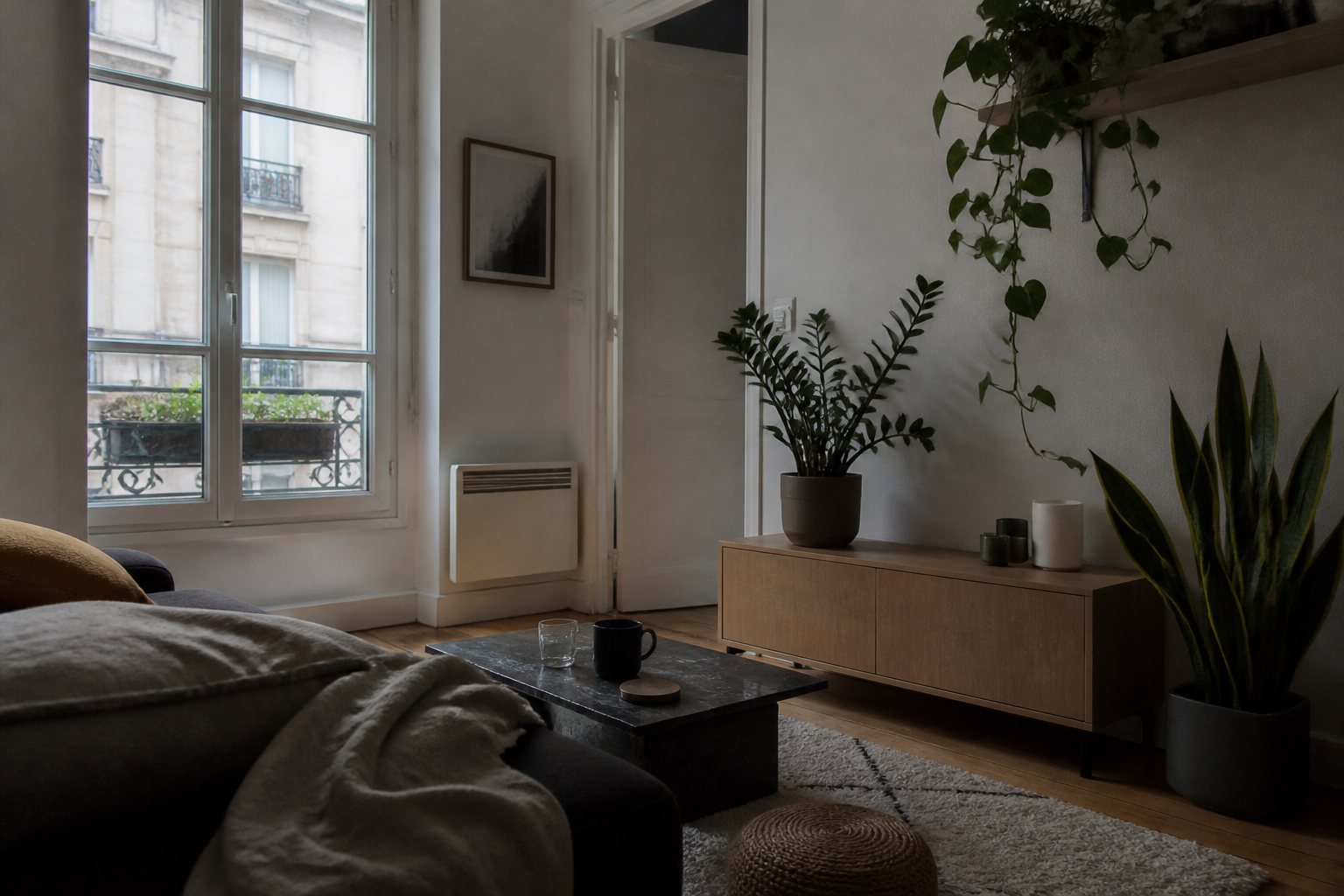
The most reliable low light houseplants are the ZZ plant, snake plant, pothos, heartleaf philodendron, cast iron plant (aspidistra), peace lily, Chinese evergreen and parlour palm. Place them no more than two to three metres from a window, where they can still see the sky. Water sparingly, because plants in shade use little water. Only the cast iron plant and parlour palm are safe for cats and dogs.
What does “low light” actually mean for a houseplant?
Light is measured in lux. Outdoors at midday in summer it can reach 100,000 lux, while beside a north window in winter you may measure only a few hundred to a few thousand. Our eyes adjust; a plant does not.
Growers use a rough scale: low light is around 500 to 1,000 lux, medium light 1,000 to 2,500 lux, and bright indirect light anything above 2,500 lux. Below about 250 lux even the toughest plants merely survive.
How do you measure the light in your home?
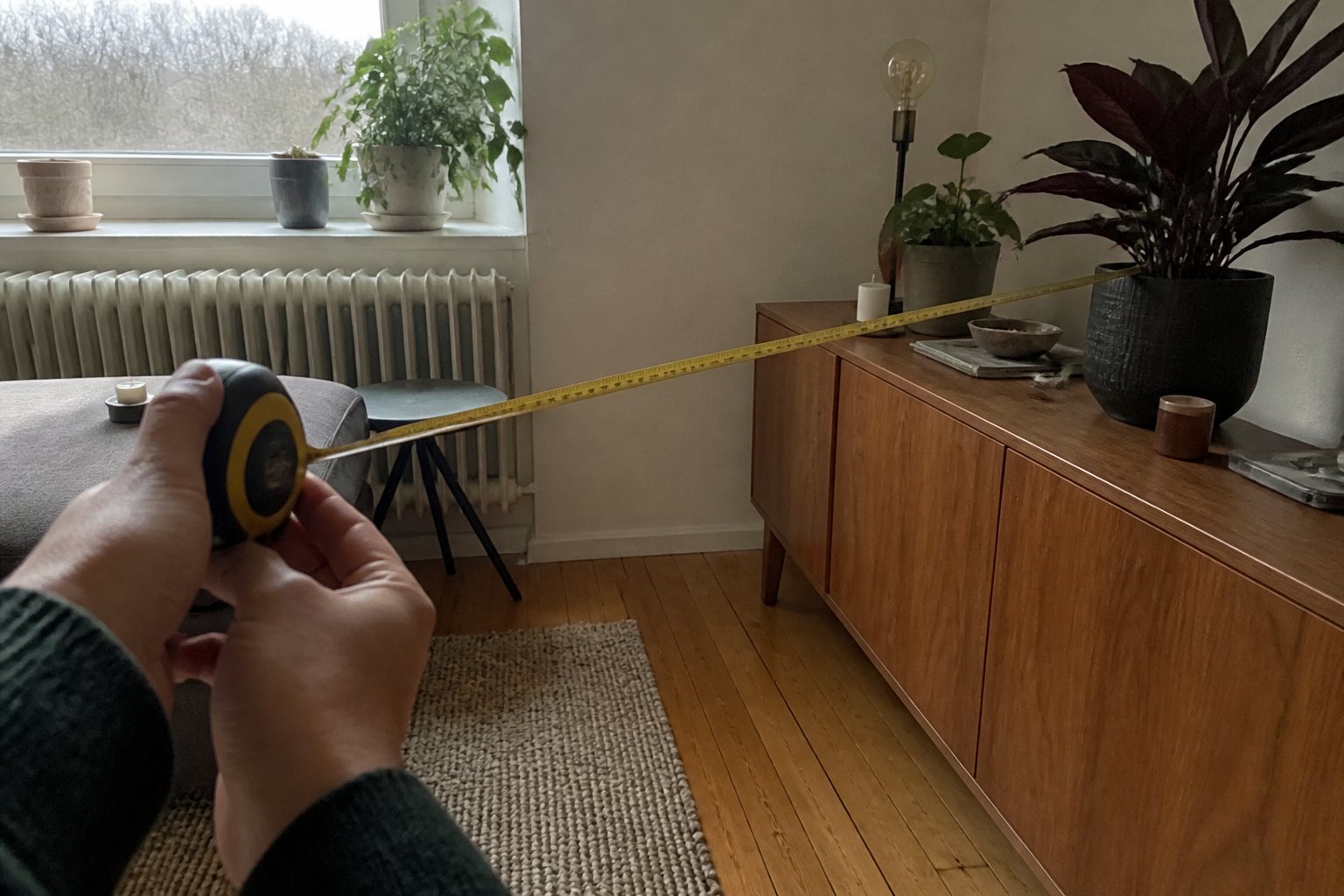
You do not need a professional meter. A tape measure, your own shadow and a smartphone will do.
- Distance from the window. Light falls away quickly as you move from the glass. Two metres back you often have less than a quarter of the light measured at the window.
- The shadow test. At midday, hold your hand 30 cm above the spot. A sharp shadow means strong light, a soft, blurred one medium light, and a barely visible shadow low light.
- Can it see the sky? If you cannot see a patch of sky from where the plant stands, there is too little light for most species.
- A lux meter app. Free apps use the phone’s sensor. They are not precise, but they are good enough to compare two spots in the same room.
- Which way the window faces. North windows give even, diffuse light with no sun. East brings gentle morning sun, west warmer afternoon sun. South is the brightest.
Which houseplants really tolerate low light?
These eight have proved the most dependable. All grow more slowly than they would somewhere brighter, but they stay healthy and green.
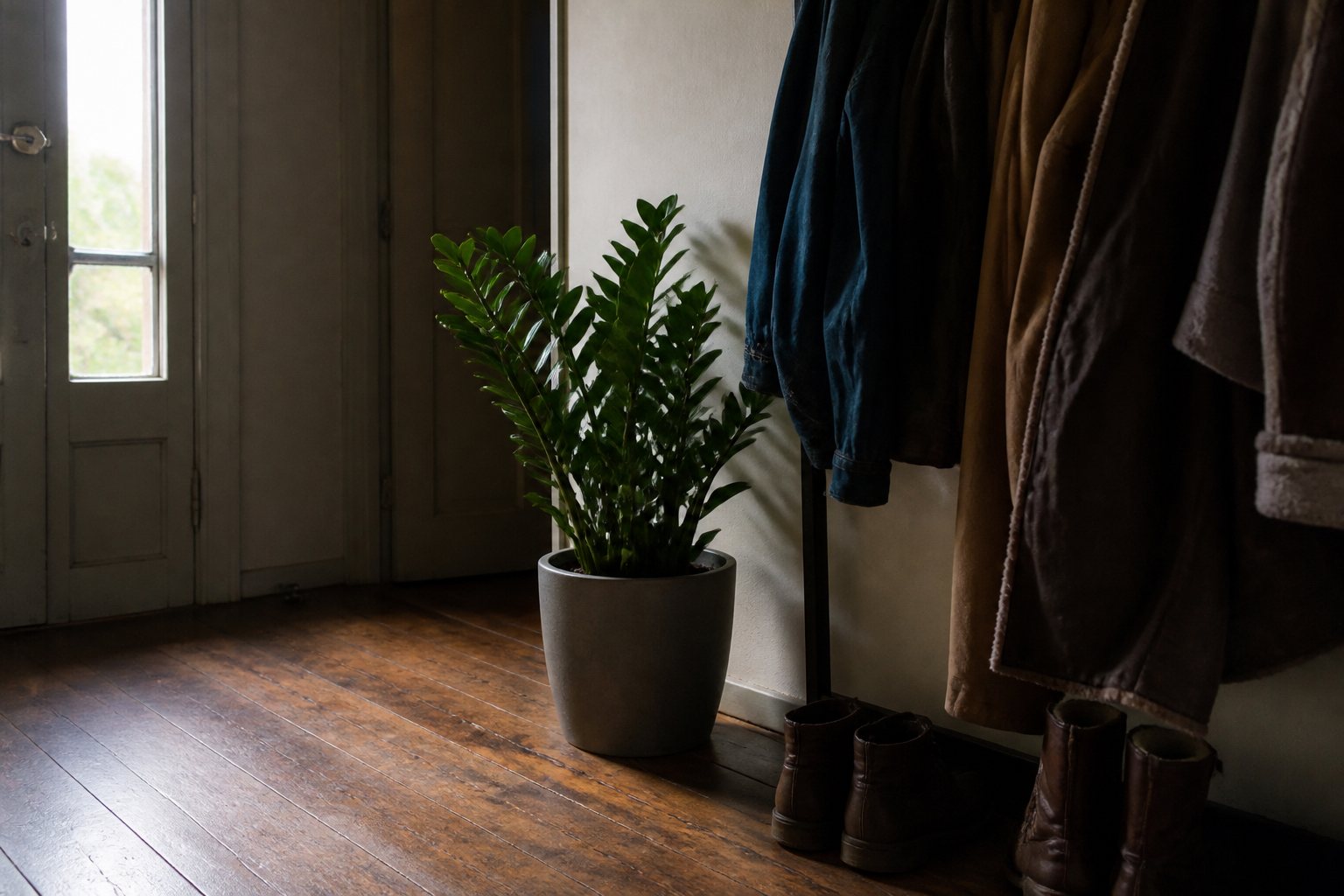
- ZZ plant (Zamioculcas zamiifolia). Stores water in underground rhizomes, so a forgotten watering does no harm. In shade it may produce only a few new stems a year, which is normal.
- Snake plant (Dracaena trifasciata, formerly Sansevieria). Copes with dry air from radiators and with low light. In winter it needs water every three to four weeks.
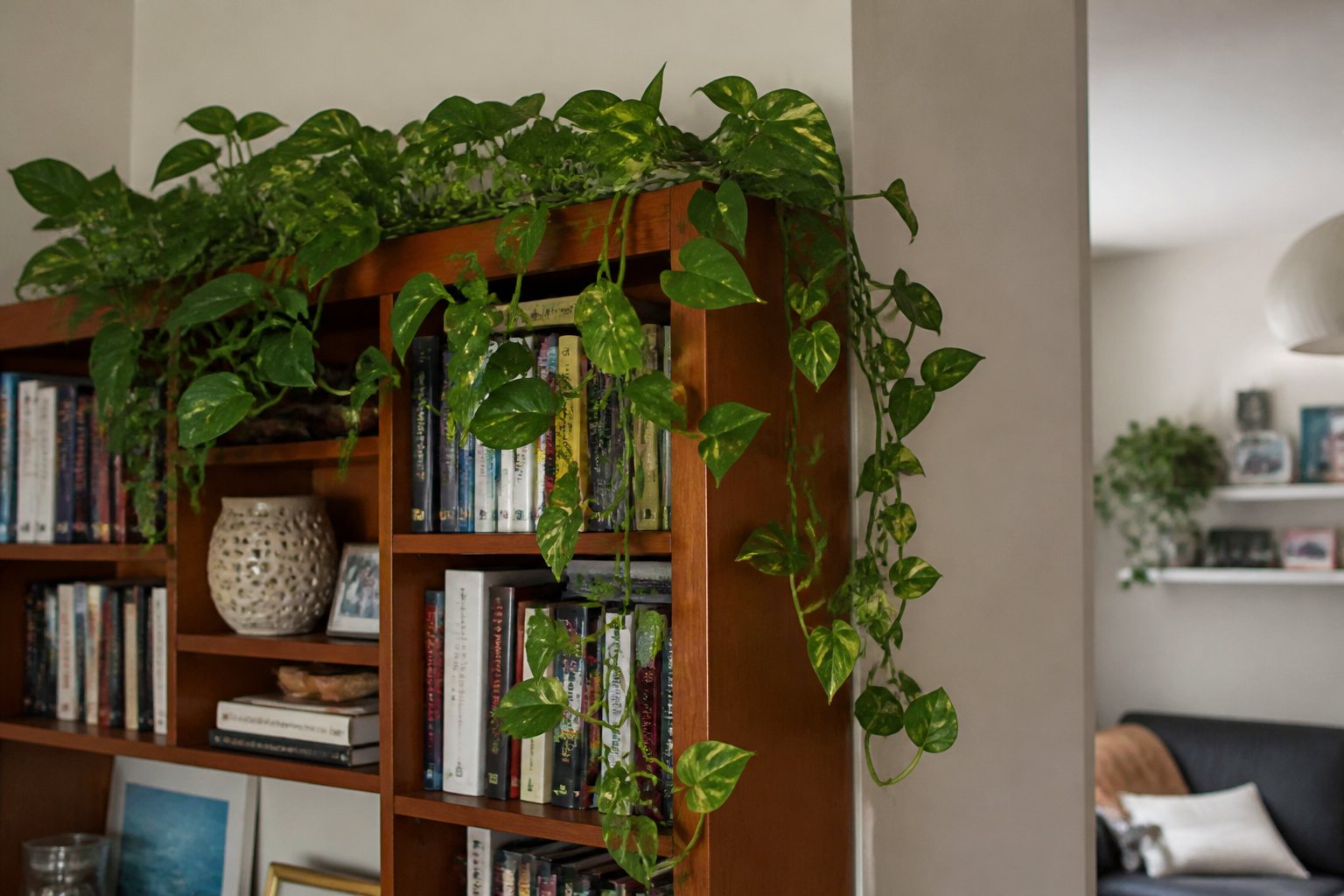
- Pothos (Epipremnum aureum). The most adaptable trailing plant. Variegated forms lose some of their yellow or white markings in shade; plain green ones cope better.
- Heartleaf philodendron (Philodendron hederaceum, formerly P. scandens). Heart-shaped leaves, quick growth and a graceful trail from a shelf. Care is much the same as for pothos.
- Cast iron plant (Aspidistra elatior). The Victorian parlour favourite earned its name by surviving gaslit, draughty rooms. It tolerates the least light of all and cool rooms down to about 7°C.
- Peace lily (Spathiphyllum). Grows well in shade but flowers rarely; blooms need medium light. It droops when dry and recovers quickly after watering.
- Chinese evergreen (Aglaonema). Dark green varieties suit shade; red and pink ones need more light. Dislikes temperatures below 15°C.
- Parlour palm (Chamaedorea elegans). A small palm that grows in the forest understorey in the wild, and one of very few palms that does well away from a window.
One plant often wrongly sold for shade is the maidenhair fern (Adiantum). It needs bright indirect light and high humidity. In a dark room with central heating it will crisp up within weeks.
How often should you water, and which are toxic to cats and dogs?
Watering intervals are a guide for winter in a heated home. Always check the compost with a finger first. Toxicity information follows the ASPCA plant list.
| Plant | Minimum light | Winter watering | Cats and dogs |
|---|---|---|---|
| ZZ plant | low, up to 3 m from a window | every 3–4 weeks | toxic |
| Snake plant | low, up to 3 m from a window | every 3–4 weeks | toxic |
| Pothos | low | when top 2–3 cm are dry, every 10–14 days | toxic |
| Heartleaf philodendron | low | when top 2–3 cm are dry | toxic |
| Cast iron plant | very low | when half the compost is dry, every 2–3 weeks | non-toxic |
| Peace lily | low (medium to flower) | keep lightly moist, about weekly | toxic |
| Chinese evergreen | low (dark green types) | when top 2–3 cm are dry | toxic |
| Parlour palm | low to medium | lightly moist, every 7–10 days | non-toxic |
| Maidenhair fern (for comparison) | bright indirect | constantly moist | non-toxic |
ZZ plant, pothos, philodendron, peace lily and Chinese evergreen contain calcium oxalate crystals, which irritate the mouth and can cause drooling and vomiting. Snake plant contains saponins that upset the stomach. Despite its name, the peace lily is not a true lily and does not cause the kidney failure in cats associated with Lilium, but it is still best kept out of reach.
Why do houseplants die in low light?
- Too much water. A plant in shade uses far less water than one on a sunny sill, and the compost dries slowly. Roots in wet compost run short of air and rot. This is by far the most common cause.
- Pots without drainage holes. Water collects at the bottom. Use a plastic pot with holes and stand it inside a decorative one.
- Pots that are too big. More compost holds more moisture than the roots can use. Pot on by one size only.
- Feeding in winter. From November to February plants in shade barely grow. Fertiliser builds up in the compost and can scorch roots.
- Dusty leaves. A layer of dust cuts light further. Wipe the leaves with a damp cloth once a month.
- Moving plants around. Plants take weeks to adjust to new light. Rather than moving them, give the pot a quarter turn every few weeks.
When is a grow light worth it?
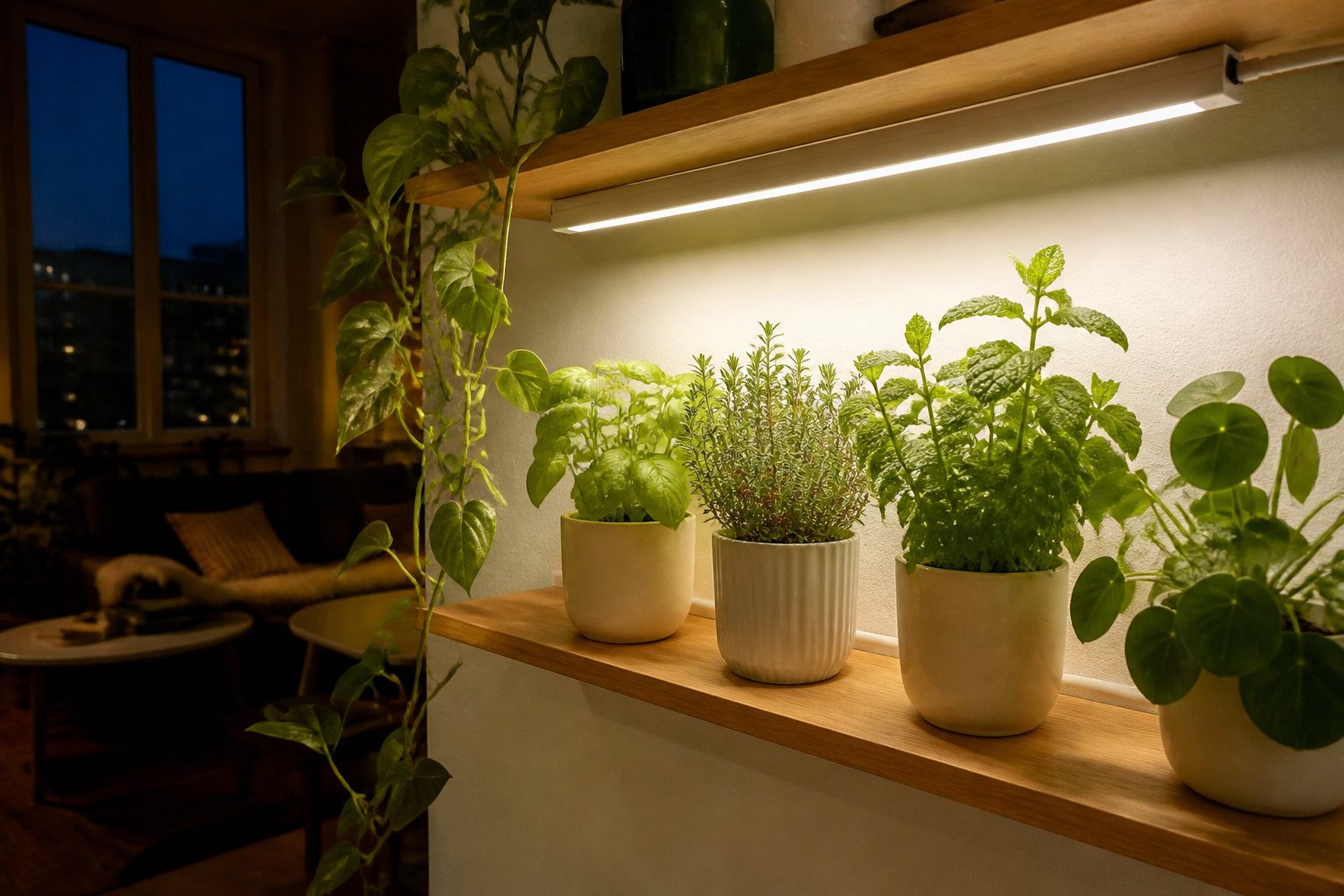
A grow light makes sense when a plant sits more than three metres from a window, in a room with no window, or when you want plants that need more light, such as herbs, in a north-facing room. Herbs are more demanding, as we explain in our guide to the balcony herb garden.
Choose a full-spectrum LED with a timer. Plants need roughly 10 to 12 hours of light a day, followed by darkness. The right distance between lamp and leaves depends on the lamp’s output; for small units it is usually 20 to 40 cm. Follow the manufacturer’s instructions.
How can you fit more plants into the brightest square metre?
In a dark flat the most valuable space is right beside the window. Plants on the floor below the sill get noticeably less light than those level with the glass, so it pays to grow upwards.
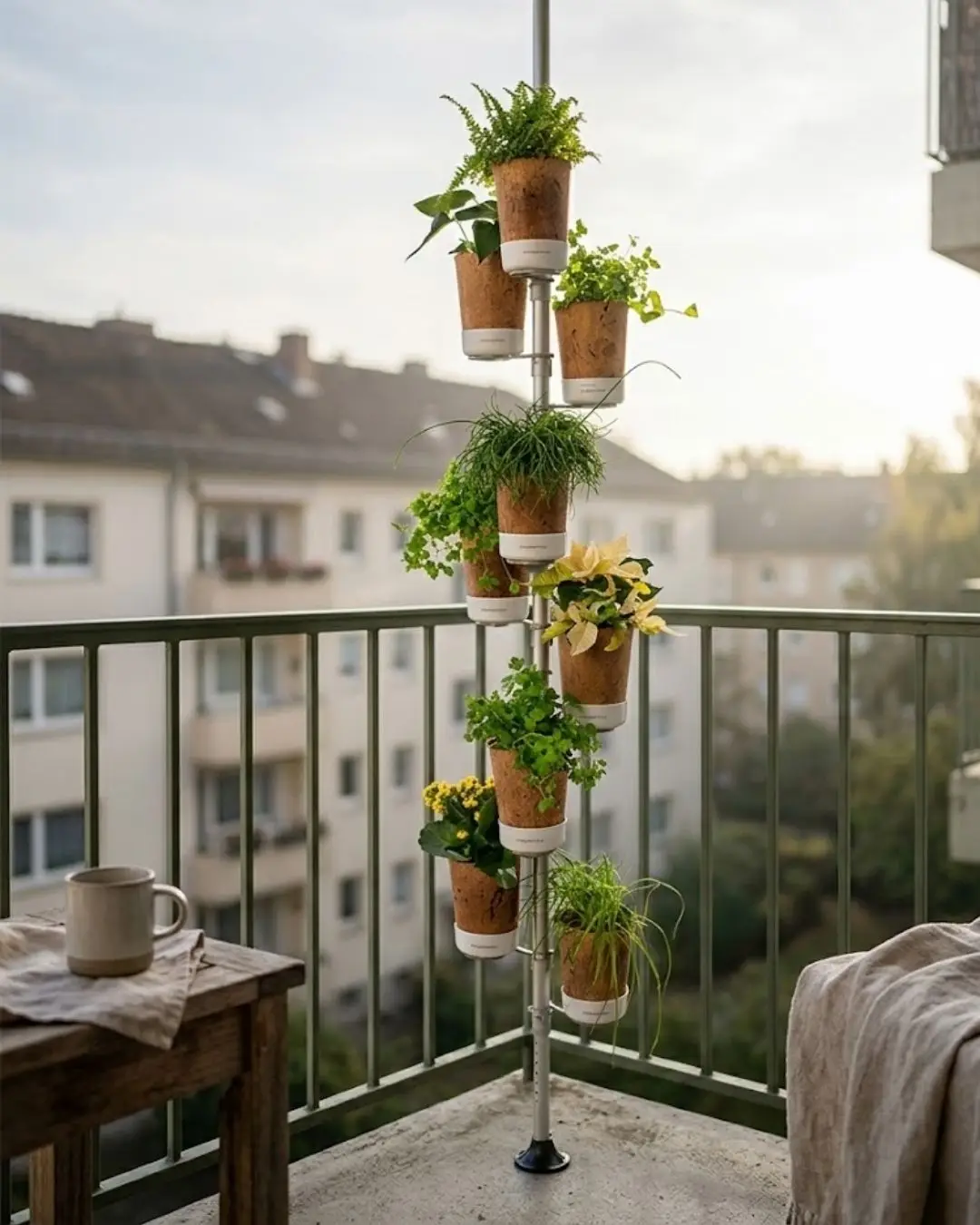
A vertical garden without drilling uses a telescopic pole clamped between floor and ceiling, so it works in rented flats too. It holds nine pots on less than one square metre of floor by the window. Put the plants that need more light at window height and the shade-tolerant ones lower down. The Urban Planty Vertical Garden costs €149 with free shipping.
Each pot has a 300 ml water reservoir. For a ZZ plant or snake plant, top it up less often in winter and check the compost first. See also our guide to vertical gardens on the balcony and indoors.

Frequently asked questions
Which houseplant needs the least light?
The cast iron plant and the ZZ plant. Both survive several metres from a window but grow very slowly. In a windowless room they need a grow light.
Can houseplants live in a bathroom with no window?
Not without extra light. Only a full-spectrum LED grow light on a timer, running 10 to 12 hours a day, will keep a plant alive there.
Which low light houseplants are safe for cats?
According to the ASPCA, the cast iron plant and the parlour palm (Chamaedorea elegans) are non-toxic to cats and dogs. ZZ plant, snake plant, pothos and peace lily are toxic.
How can you tell a plant is getting too little light?
New leaves come out smaller and paler, stems stretch towards the window and variegated leaves lose their pattern. Move the plant closer to the window or add a lamp.
How often should you water plants in a dark room?
Less often than on a bright sill. Water a ZZ plant or snake plant every three to four weeks in winter, and pothos or philodendron when the top 2 to 3 cm of compost are dry.