
Two weeks away in July is the hardest test most houseplants face all year. Some will barely notice, others will be limp by the fourth day. Here is how long each group can manage alone, how to prepare it and which watering methods are worth setting up.
The answer depends less on gadgets than on preparation. A plant that has been soaked, moved out of direct sun and grouped with others uses far less water than one left alone on a south-facing sill.
Most houseplants manage a week on their own if you soak them well, move them away from direct sun and group them together. For two to three weeks, use a bathtub with a damp towel, wick watering, a capillary mat or self-watering pots. Cacti and succulents need nothing. Balcony plants in summer heat need a neighbour or a drip system on a timer.
How long can houseplants go without water?
After a thorough soaking, and out of direct sun, the main groups last roughly as follows in summer. In winter, when growth slows, most manage noticeably longer.
- Cacti, succulents, aloe: three to four weeks or more. They need no help.
- Snake plant, ZZ plant: about three to four weeks.
- Monstera, rubber plant, pothos, philodendron: around ten days to two weeks.
- Moth orchids (Phalaenopsis): about two weeks, if the bark is soaked well before you go.
- Peace lily, ferns, calathea: about a week. These need a watering method.
- Herbs and pots under 10 cm: two to four days on a sunny sill.
- Balcony plants in July and August: one to three days in full sun.
These are estimates, not guarantees. A small terracotta pot dries out much faster than a large plastic one. If you are unsure how much your plants normally use, our guide on how to water houseplants explains the finger test and the weight test.
How should you prepare plants before you go?
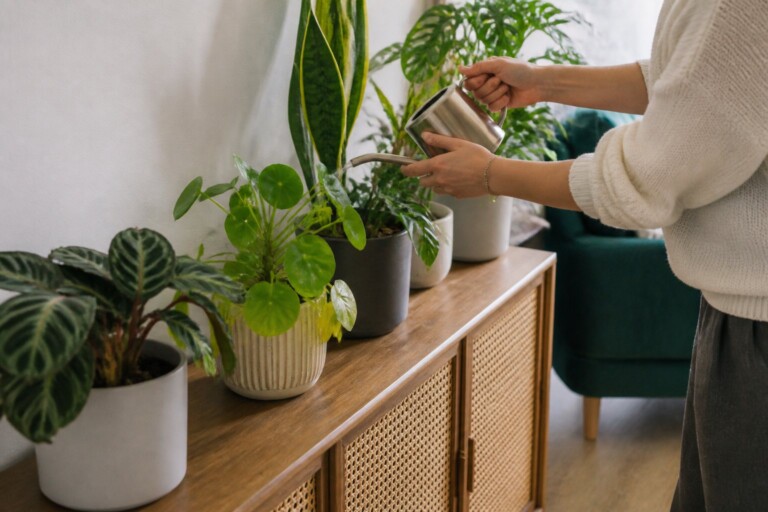
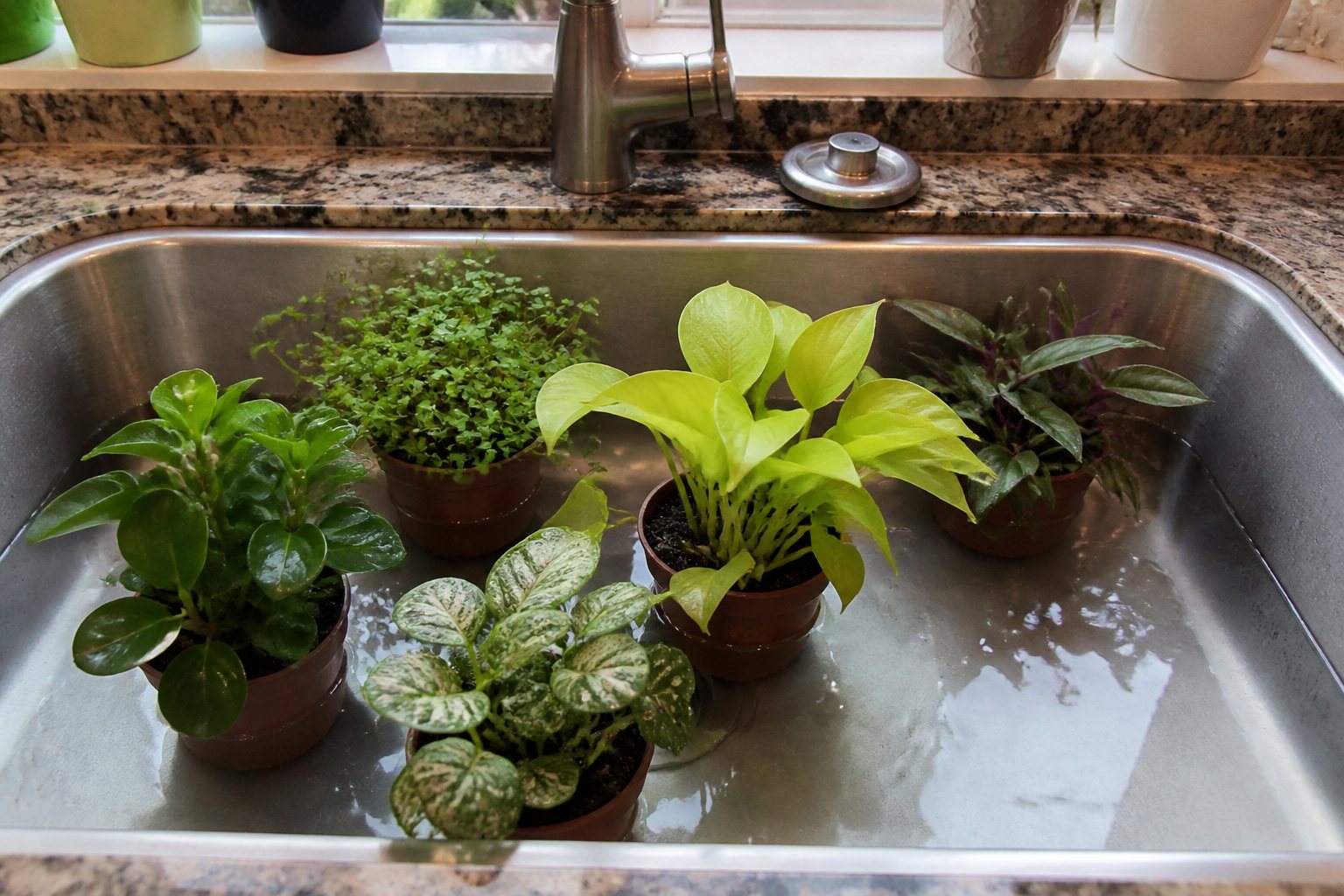
- Soak them the day before. Stand each pot in a bucket of water for 20 to 30 minutes, until no more bubbles rise, then let it drain. This wets the whole root ball.
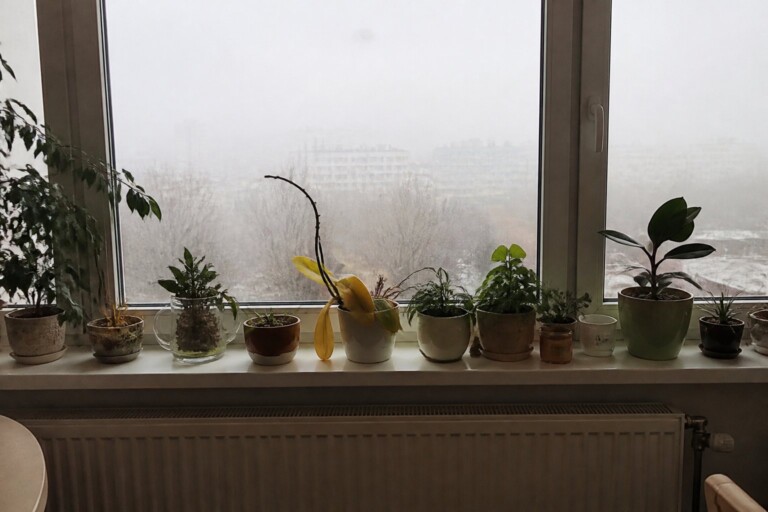
- Move them away from direct sun. One to two metres back from a south or west window is enough.
- Group them together. Plants standing close to each other raise the humidity around their leaves and dry out more slowly.
- Remove flowers and buds where it makes sense. They would fade while you are away anyway. On herbs, pinching out flower buds keeps the leaves tender.
- Skip the fertiliser. New growth needs water. Feed again when you are back.
- Close the blinds partly. In winter, keep the heating at about 15 °C or more; most tropical houseplants dislike long spells colder than that.
Which watering methods work while you are away?
None of these methods replaces a person for long, but several will keep most houseplants going for two to three weeks.
| Method | Suitable for | Roughly how long | Watch out for |
|---|---|---|---|
| Bathtub or sink with a damp towel | leafy houseplants in plastic pots with drainage holes | 1 to 2 weeks | needs daylight; not for cacti, succulents or orchids |
| Wick from a jar of water | small and medium pots, ferns, peace lily | 1 to 2 weeks per litre | soak the wick first; jar level with or above the pot |
| Bottle on a clay spike, olla | larger pots, balcony boxes | 2 to 7 days per bottle | flow varies, so test it first |
| Self-watering pot | most houseplants, herbs | 1 to 3 weeks | roots must reach the wick; not for succulents |
| Capillary mat | small plastic pots on a draining board | 1 to 2 weeks | terracotta makes poor contact |
| Plastic bag tent | small plants, cuttings, ferns | 2 to 3 weeks | keep out of sun; risk of mould |
| Neighbour with a list | everything, including the balcony | as long as needed | clear, simple instructions |
Bathtub or sink with a towel
Lay an old towel in the bath, add 1 to 2 cm of water and stand the pots on it, without their cover pots. The compost draws water up through the drainage holes. A bathroom with a window is fine for two weeks; without daylight, keep it to about one. Cacti, succulents and orchids in bark would rot.
How does wick watering work?
Push one end of a soaked cord about 5 cm into the compost and put the other end into a jar of water placed level with or slightly above the pot. Water travels along the cord as the compost dries. Cotton is fine for a holiday but rots over a season; synthetic cord lasts longer.
Watering spikes, bottles and ollas
Terracotta spikes are pushed into the compost and topped with an upturned bottle; water seeps through the porous clay. Garden centres sell them for a few pounds. The rate depends on compost and temperature, so the same spike can last two days in one pot and a week in another. Test it at home first.
Ollas, unglazed clay vessels buried up to the neck in a large container or raised bed, work on the same principle and hold more water.
Self-watering pots and reservoirs
These pots have a reservoir in the base and a gauge that shows when to refill. One filling lasts one to three weeks, but only once the roots have reached the wick, so water freshly potted plants from above for the first weeks.
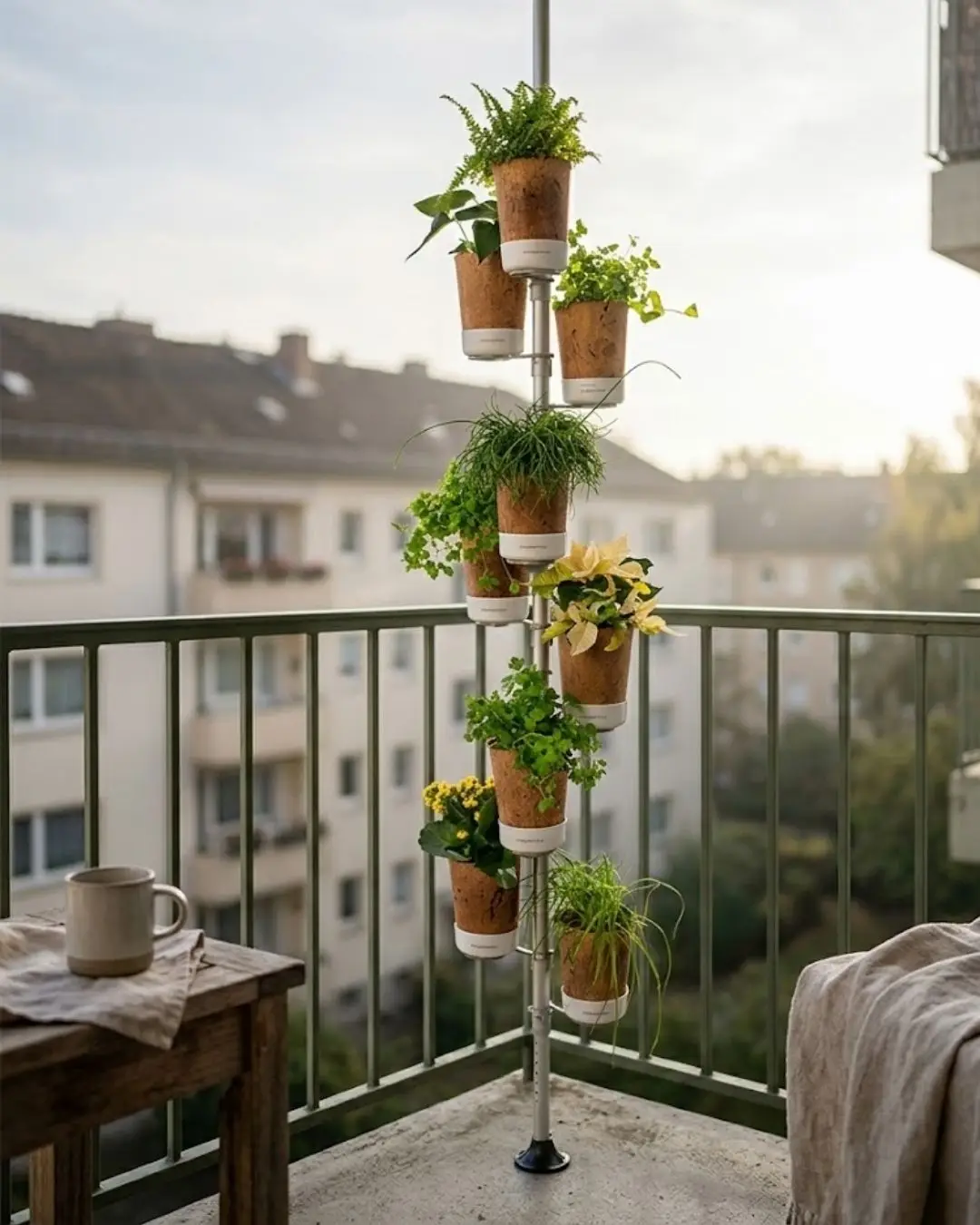
The Urban Planty vertical garden works similarly on a smaller scale. Each of its nine pots has a 300 ml reservoir, so it usually needs water once or twice a week, enough for a long weekend. For longer trips, all nine plants stand in one spot on less than one square metre, so a neighbour waters them in a few minutes. The pole clamps between floor and ceiling, making it a vertical garden without drilling.

Capillary mats
A capillary mat is a felt-like fabric that passes water to pots standing on it. Lay it on the draining board with one end hanging into a full sink. Press plastic pots down so the compost touches the mat through the drainage holes.
A plastic bag tent for small plants
Water a small plant, let it drain, put two or three sticks in the pot and tie a clear bag loosely over it. Water evaporates, condenses and runs back into the compost. Keep it out of sun, and if you find mould on your return, let the plant air for a day.
What should you leave for a neighbour?
For more than two weeks, or a sunny balcony in July, a person is still the most reliable option.
- Put all the plants in one or two places.
- Write a short list: which plant, how much water (one glass, half a litre) and how often.
- Mark the pots with coloured sticks, for example green for weekly.
- Ask for water left in saucers to be tipped away after 20 minutes.
- Say clearly which plants to leave alone, especially cacti.
How do you keep balcony plants alive in summer heat?
In July and August central Europe regularly sees 30 to 35 °C, and a balcony box in full sun can dry out in a day. No home-made trick covers two weeks of that, but preparation buys a few days.
- Move pots into the shade, against the house wall, and group them.
- Water thoroughly on the last evening and cover the compost with 2 to 3 cm of bark mulch.
- Tomatoes can stand in deep saucers of water for a few days; most other plants would rot.
- Pick ripe fruit and cut back herbs that are about to flower.
- If you have a tap, a drip system with a tap timer is the only reliable option without a neighbour.
Herbs in small pots usually go first. Our article on the balcony herb garden covers the mistakes that most often kill them.
Frequently asked questions
How long can houseplants survive without water?
Most leafy houseplants survive one to two weeks without water if soaked beforehand and kept out of direct sun. Cacti and succulents manage a month or more, ferns about a week.
Does the bathtub method work for watering plants on holiday?
The bathtub method works for leafy houseplants in plastic pots with drainage holes, standing on a towel in 1 to 2 cm of water. It is not suitable for cacti, succulents or orchids.
How does wick watering for houseplants work?
In wick watering, a soaked cord leads from a jar of water into the compost and draws water as it dries. Place the jar level with or above the pot and test it before leaving.
Do clay watering spikes with bottles really work?
Clay watering spikes work, but a bottle can empty in two days or last a week depending on compost and temperature. Test each spike at home first.
How can balcony plants survive a two-week holiday in summer?
Balcony plants in full summer sun rarely survive two weeks alone. Move them into shade, mulch the compost and ask a neighbour or install a drip system with a timer.