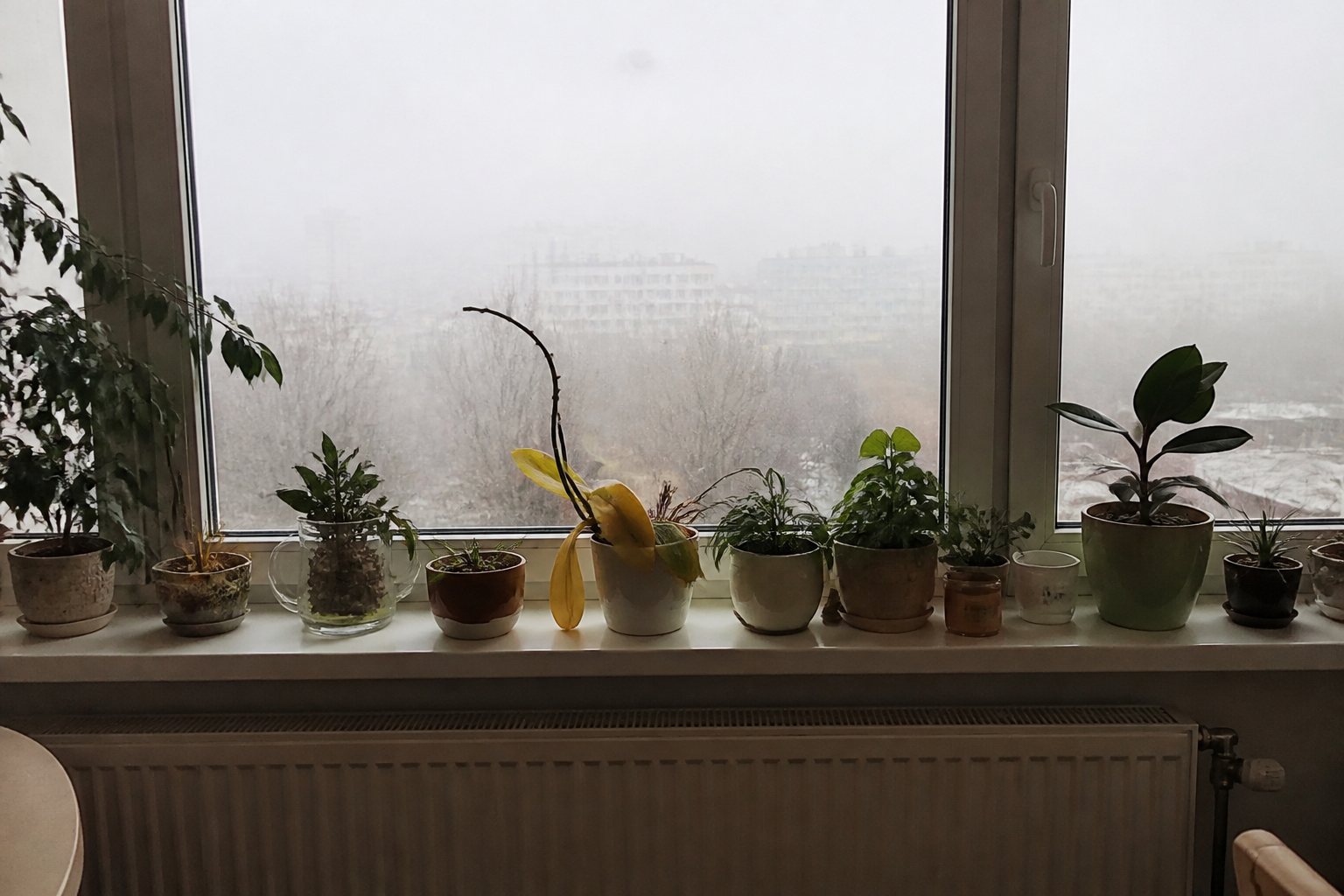

Between November and February most houseplants face three problems at once: short, grey days, dry air from the heating and cold glass a few centimetres from their leaves. Few are killed by cold. Far more are lost to too much water and too little light.
In London the shortest day of the year lasts under eight hours, and on overcast days even a south-facing room is dim. Most foliage plants respond by almost stopping growth. That is normal, and it changes what they need from you.
In winter, move houseplants closer to the brightest window, wipe dust off the leaves and consider a grow light for 10 to 12 hours a day. Water roughly half as often, only when the top 2 to 3 cm of compost is dry. Keep plants off hot radiators and cold glass, stop feeding until March and check leaf undersides for spider mites.
What changes for houseplants in winter?
Light is the limiting factor. With less of it, plants make less energy, grow slowly and use far less water. Wet compost then stays wet for longer, so overwatering is the most common winter mistake.
At the same time central heating dries the air. Indoor humidity often falls to 30 to 40 per cent, while many tropical foliage plants are happiest at 50 to 60 per cent.
| Problem | Typical sign | What helps |
|---|---|---|
| Too little light | long pale shoots, small new leaves, plant leans to the window | move closer to the glass, clean leaves, grow light |
| Too much water | yellow soft leaves, compost always wet, fungus gnats | water only when the top 2 to 3 cm is dry |
| Dry air | brown, crisp leaf tips and edges | group plants, pebble tray, humidifier |
| Cold glass, draughts | limp or dark, glassy patches after a cold night | insulate the pot, keep leaves off the glass |
| Spider mites | fine pale speckles, webbing under leaves | shower, isolate, repeat for 2 to 3 weeks |
| Recent move | leaves drop within 2 to 4 weeks | leave the plant in one place, water sparingly |
How do you give houseplants more light in winter?
The simplest step is to move plants closer to the window. Light falls away quickly with distance: a metre back from the glass a plant gets much less light than on the sill itself, often less than half. A spot that was fine in June can be too dark in December.
In winter a south or west-facing window rarely scorches foliage plants, so plants that spent the summer back from the glass can move up to it now. If a room faces north, our guide to low light houseplants lists the species that cope best.
Why should you clean the leaves?
A layer of dust on a large leaf blocks part of the light that is already scarce. Wipe large, smooth leaves, such as those of a rubber plant or monstera, with a soft damp cloth while supporting the leaf from below.
Skip leaf shine sprays, milk or oil. They leave a film that attracts more dust. Plants with hairy leaves, such as African violets, should be cleaned with a dry, soft brush instead.
Is a grow light worth it?
For herbs, seedlings and plants in dark rooms, yes. A white, full-spectrum LED grow light looks natural in a living room and uses little electricity. Clip-on lamps start at around £20.
Hang the lamp at the distance the manufacturer recommends, usually 20 to 40 cm above the leaves, and run it for 10 to 12 hours a day on a timer. Plants also need darkness at night, so leaving the light on around the clock does not help.
How often should you water houseplants in winter?
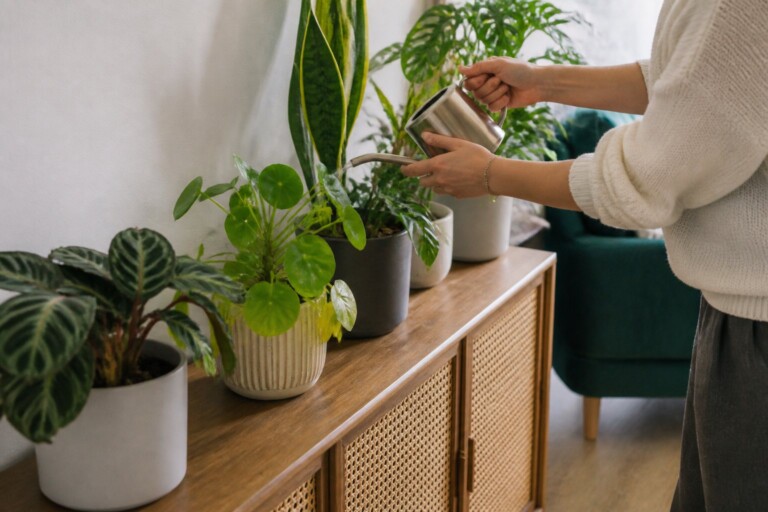
Most foliage plants need roughly half as much water as in summer. Do not water on a fixed day. Push a finger into the compost, and only water when the top 2 to 3 cm is dry.
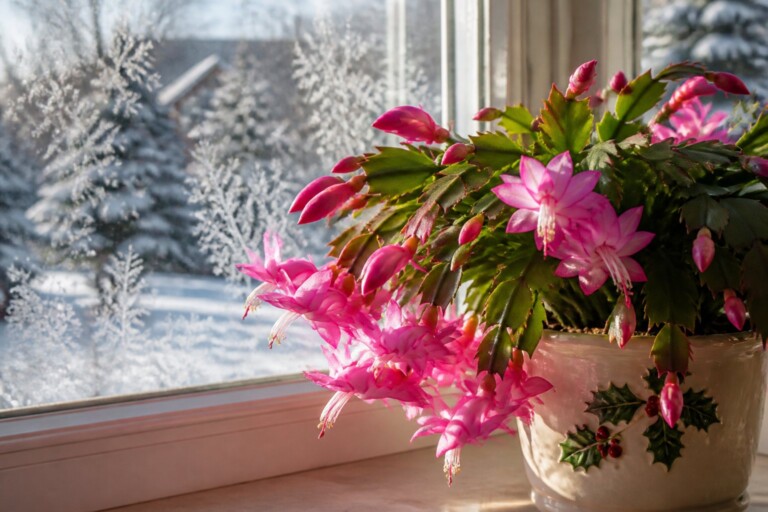
Cacti and many succulents kept in a cool room need very little water, often none at all for weeks. Cacti flower more reliably after a cool, dry winter at around 5 to 12 °C. Plants that flower in winter, such as the Christmas cactus, want evenly moist compost. Our guide on how to water houseplants covers the details.
What can you do about dry air from radiators?
A windowsill directly above a radiator is the hardest place in a flat for a plant in winter. Warm, dry air rises past the leaves and the compost dries out from below. Brown, crisp leaf tips are the usual result.
If you can, move sensitive plants to a sill without a radiator under it, or put a wide board on the sill so the warm air is deflected away from the pots. Cacti, succulents and the snake plant cope far better there than calatheas or ferns.
- Group plants together. Leaves release moisture, so a cluster of plants creates slightly more humid air around itself.
- Use a pebble tray. Stand the pot on a tray of pebbles and water, with the base of the pot above the water line so the roots stay dry.
- Run a humidifier. It is the only method that noticeably raises humidity in the whole room. Aim for 40 to 60 per cent.
- Buy a hygrometer. A cheap digital one shows whether the air is really dry.
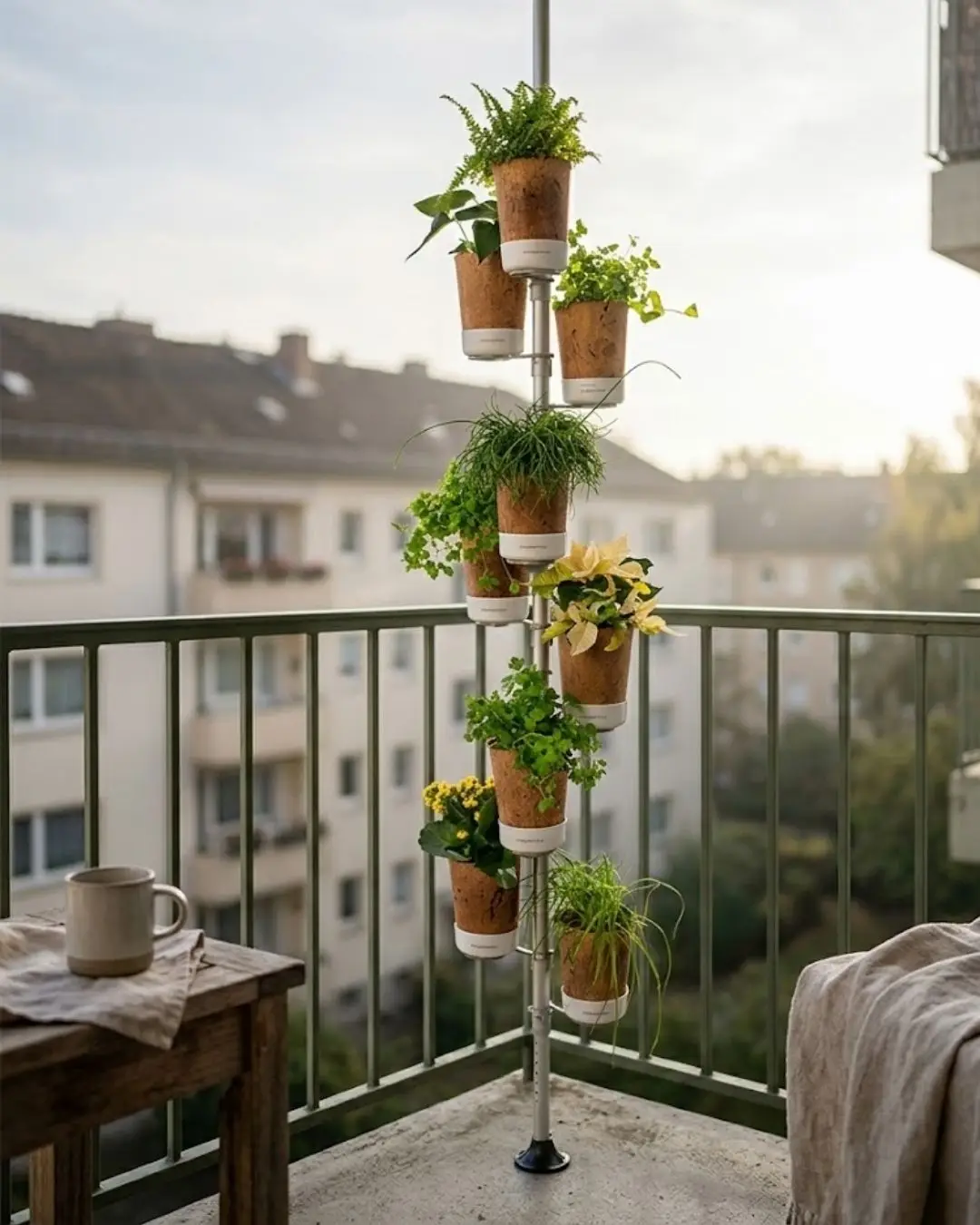
Grouping plants close to a bright window is easier with height. A vertical garden without drilling clamps between floor and ceiling with a telescopic pole, up to 285 cm, and holds nine plants on less than 1 m² of floor, each pot with a 300 ml reservoir. The Urban Planty Vertical Garden costs €149 with free shipping.
Does misting help?
Less than people think. A fine spray raises humidity around the leaves for only a few minutes, then the air is as dry as before. On hairy leaves, droplets can leave marks.
Are cold windowsills and draughts a problem?
On a frosty night the air right by the glass, and the stone or marble sill beneath the pot, can be several degrees colder than the room. Most tropical houseplants dislike roots below about 15 °C. A cork mat, a piece of wood or a polystyrene tile under the pot helps.
Make sure leaves do not touch the glass, and do not draw curtains between plants and the room at night, which traps them in the cold zone. When airing, open the window wide for five to ten minutes rather than leaving it on the latch for hours, and move sensitive plants out of the draught.
Should you feed houseplants in winter?
Most do not need feeding from November to February. A resting plant uses little fertiliser, and the unused salts build up in the compost and can damage the roots. Start again in March, once new leaves appear.
The exceptions are plants that are clearly growing, for example under a grow light or herbs on a bright sill. Give them a half-strength dose every four to six weeks.
Which pests thrive on houseplants in winter?
Spider mites love warm, dry air, which makes heated rooms ideal for them. They are barely visible to the naked eye. Look for fine pale speckles on the leaves, a dull, greyish look and, later, fine webbing between leaves and stems.
- Move an affected plant away from the others.
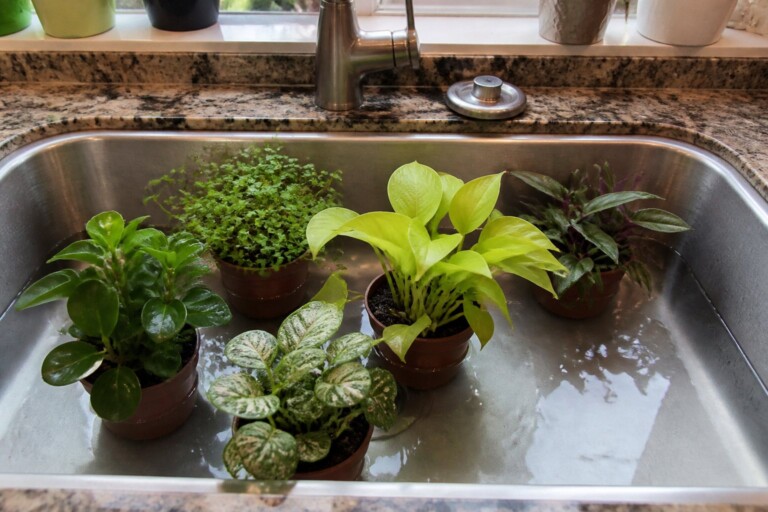
- Rinse the leaves, especially the undersides, with lukewarm water in the shower.
- Repeat every few days for two to three weeks, because new mites hatch from eggs.
- For a heavier infestation, use a spray based on potassium soap or plant oil, or order predatory mites from a garden centre or online.
Why does a houseplant drop leaves after being moved?
Plants adjust their leaves to the light where they stand. After a move, especially to a darker spot or a new home bought from a warm, bright greenhouse, some leaves no longer pay their way and the plant sheds them. The weeping fig (Ficus benjamina) is famous for it.
Some leaf drop in the first two to four weeks is normal. Choose the spot, leave the plant there and resist the urge to move it again, add fertiliser or water more.
Winter checklist for houseplants
- Move plants within a metre of the brightest window.
- Wipe dust off large leaves once a month.
- Water only when the top 2 to 3 cm of compost is dry, with water at room temperature.
- Keep sensitive plants away from radiators and off cold glass.
- Put cork or wood under pots on stone sills.
- Stop feeding until March.
- Check leaf undersides for spider mites every week or two.
Frequently asked questions
How often should you water houseplants in winter?
Most houseplants need roughly half as much water in winter as in summer. Water only when the top 2 to 3 cm of compost is dry, and let cacti kept cool stay almost dry.
Should you mist houseplants in winter?
Misting houseplants raises humidity for only a few minutes, so it does little against dry winter air. Grouping plants, a pebble tray or a humidifier work better.
Do houseplants need fertiliser in winter?
Most houseplants need no fertiliser from November to February because they are resting. Plants growing under a grow light can have a half-strength dose every four to six weeks.
Why are my houseplant leaves turning brown at the tips in winter?
Brown, crisp leaf tips on houseplants in winter usually mean dry air from the heating. Move the plant away from the radiator and raise humidity with grouping or a humidifier.
How do you know if a houseplant has spider mites?
Spider mites leave fine pale speckles on the leaves and, later, fine webbing on the undersides. Rinse the plant in the shower and repeat every few days for two to three weeks.