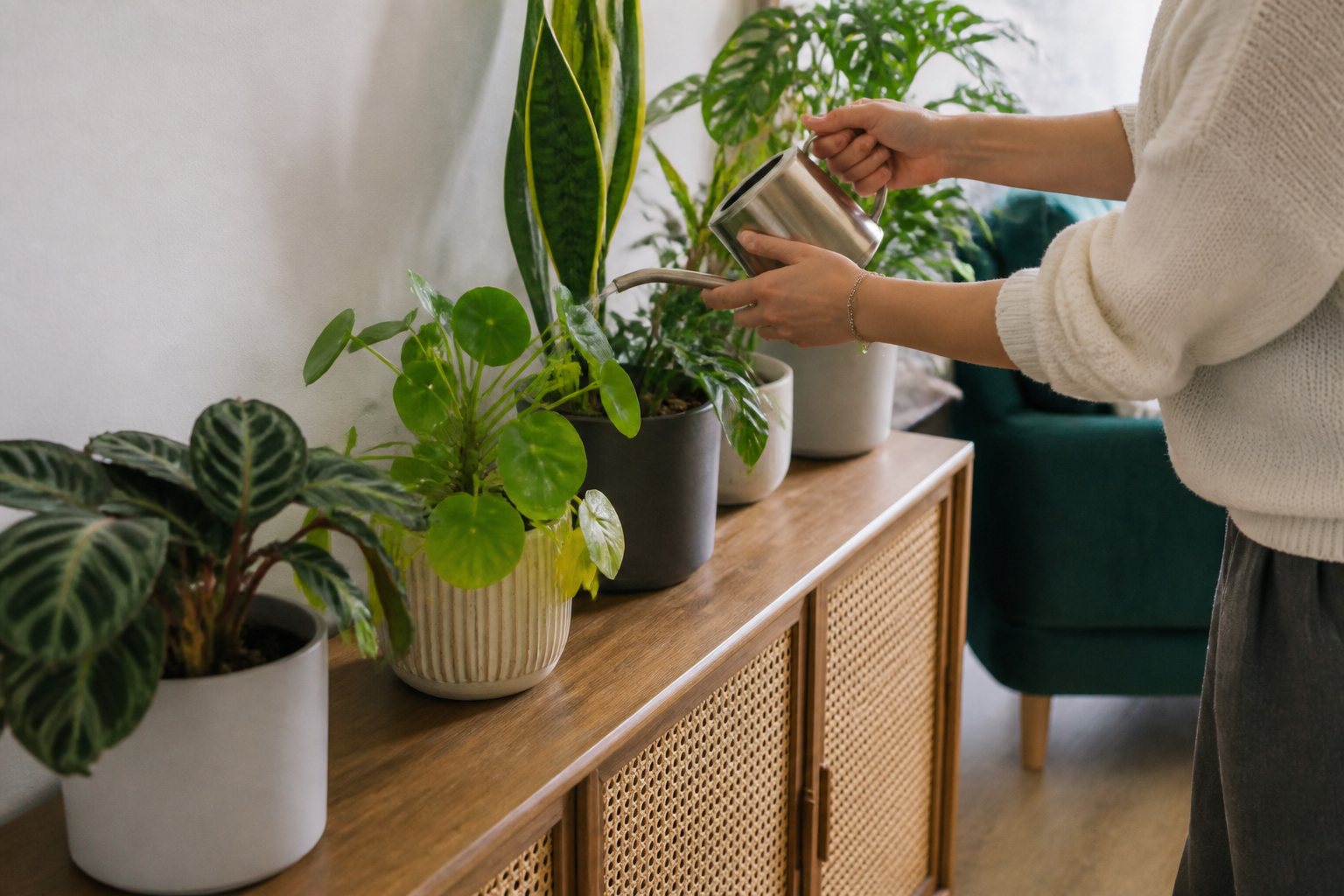

More houseplants die from too much water than from too little. The “once a week” rule is easy to remember, but a plant does not read the calendar. Here is how to tell whether a plant actually needs water, and how to give it enough without drowning the roots.
How much water a plant needs depends on the species, the light, the size and material of the pot and the time of year. A rubber plant on a south-facing sill may drink every few days in July. The same plant by a north window in December may need water only once a fortnight.
So rather than following a date, learn to read the compost. All you need is a finger.
Water houseplants when the top 2 to 3 cm of compost has dried out, not on a fixed day. Water thoroughly until it runs from the drainage holes, then tip away what collects in the saucer after 15 to 20 minutes. Water less in winter, use water at room temperature, let succulents dry right out and keep ferns evenly moist.
How often should you water houseplants?
There is no single answer, but four things decide it. The first is the plant itself. Cacti, succulents and the ZZ plant store water in their leaves or rhizomes. Ferns, calatheas and peace lilies show quickly when they run short.
The second is light. A plant on a bright windowsill grows faster and uses more water. In a darker corner the compost stays wet for longer, so the risk of root rot is higher. Our guide to low light houseplants covers which species cope away from the window.
The third is the pot. A small pot dries out in days, a large one in weeks. Terracotta breathes and dries faster than plastic or glazed ceramic. The fourth is the season: from April to September most houseplants grow, from November to February most of them rest.
| Plant | When to water | Summer | Winter |
|---|---|---|---|
| Cacti, succulents | when the compost is completely dry | every 10 to 14 days | every 3 to 4 weeks or less |
| ZZ plant, snake plant | when most of the compost is dry | every 2 weeks | every 3 to 4 weeks |
| Rubber plant, monstera, pothos | when the top 2 to 3 cm is dry | every 5 to 7 days | every 10 to 14 days |
| Peace lily, ferns, calathea | when the surface is just dry | every 3 to 5 days | every 7 to 10 days |
| Moth orchid (Phalaenopsis) | when the roots turn silvery | every 7 to 10 days | every 10 to 14 days |
How can I tell if a plant needs water?
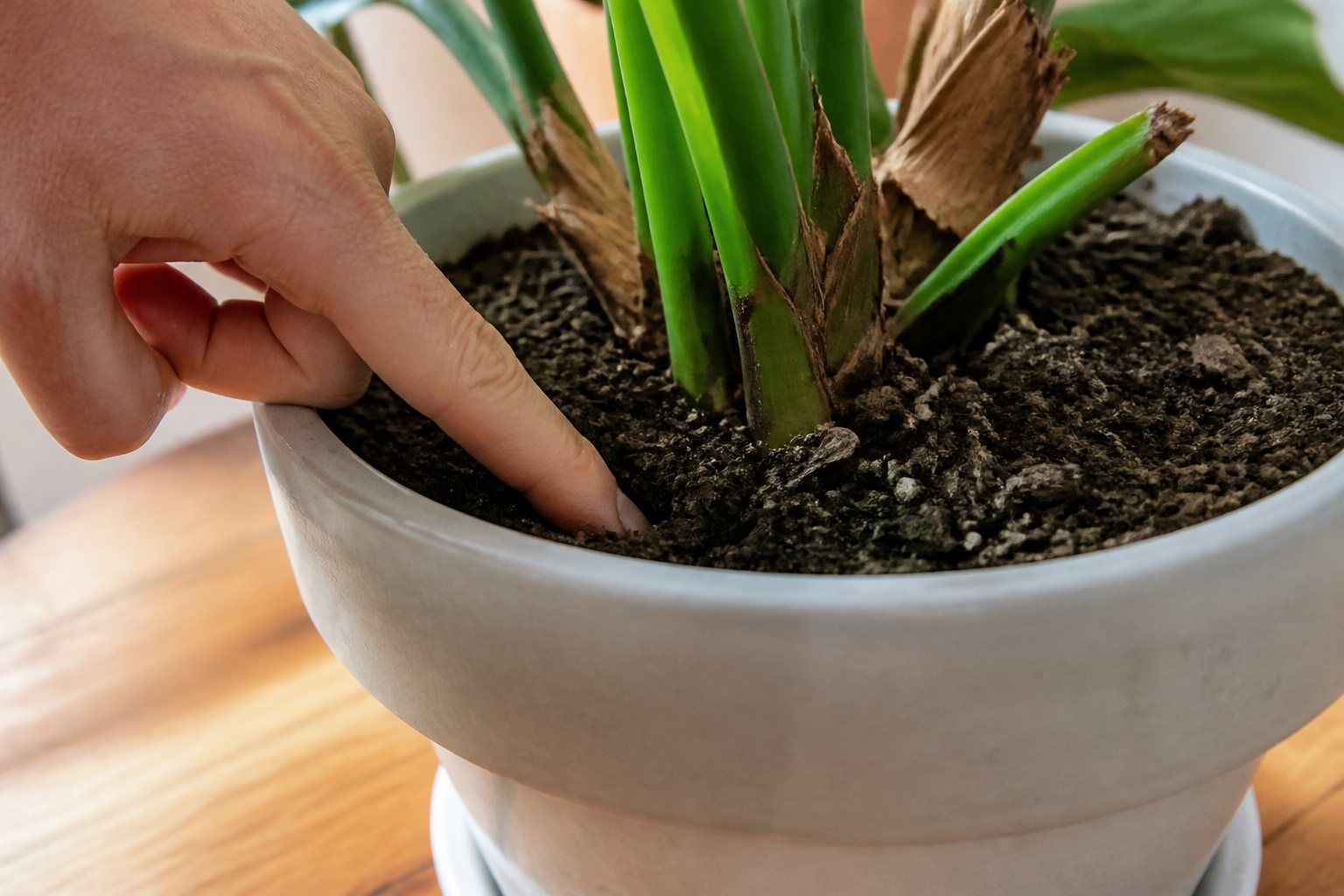
The most reliable method is the finger test. Push a finger into the compost up to the second knuckle, about 3 to 4 cm deep. If it feels dry there and nothing sticks to your skin, it is time to water. If it feels cool and damp, wait a few more days.
The second is the weight test. Lift the pot just after watering and remember how heavy it feels. When the compost is dry it is noticeably lighter. For large pots, push a wooden skewer to the bottom and check whether it comes out damp.
Is it better to water little and often or a lot and rarely?
Most houseplants prefer thorough but infrequent watering. Pour slowly over the whole surface until water starts to run from the drainage holes. That way the entire root ball is moistened, not just the top layer.
A few spoonfuls every other day does more harm than good. The surface stays permanently wet while the lower roots stay dry. The pot must have a drainage hole. If a plant sits in a decorative cover pot without one, keep it in its plastic nursery pot and lift it out to water.
When should you empty the saucer?
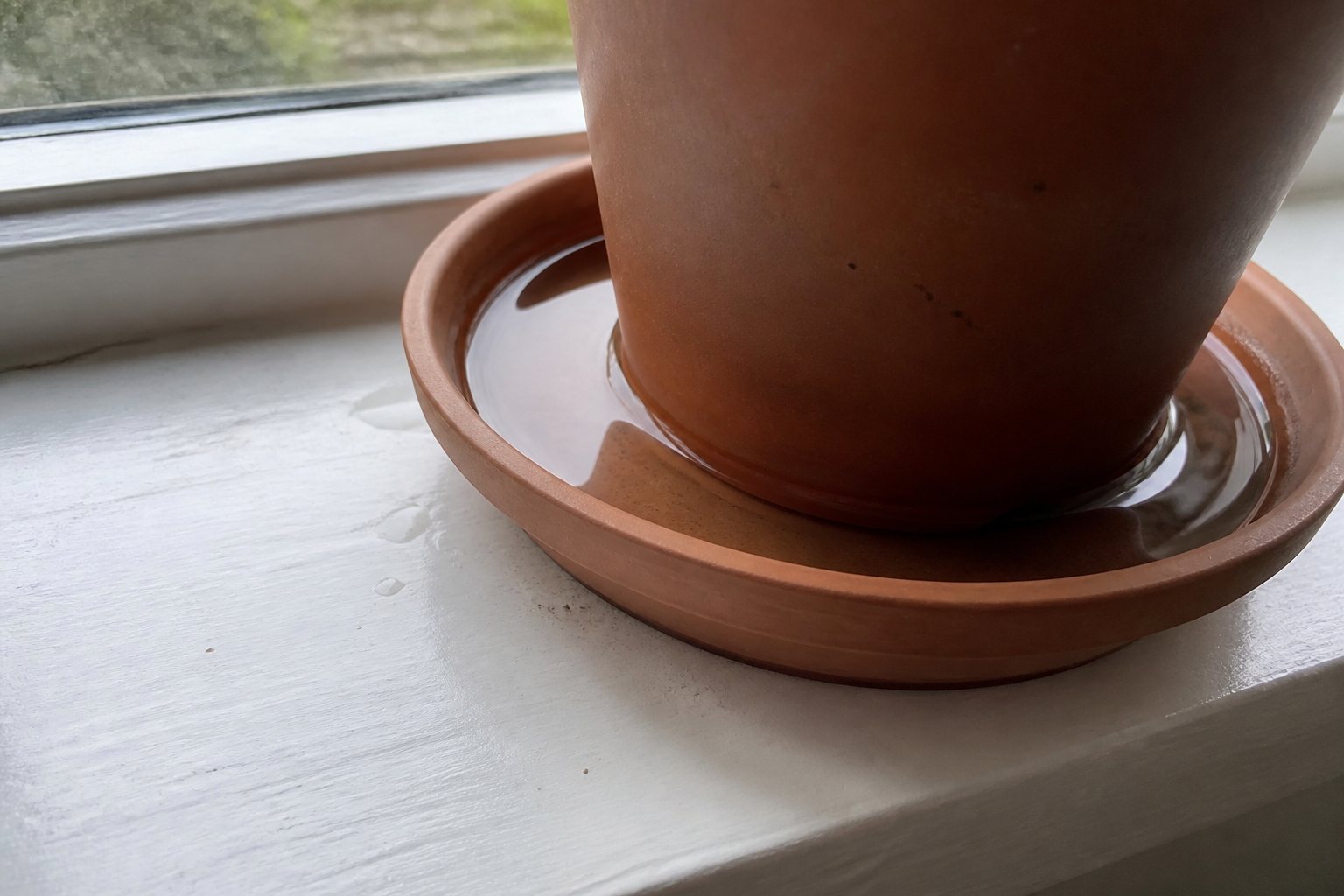
After 15 to 20 minutes, tip away any water left in the saucer or cover pot. Roots that stand in water cannot breathe and start to rot.
What is bottom watering and when is it worth doing?
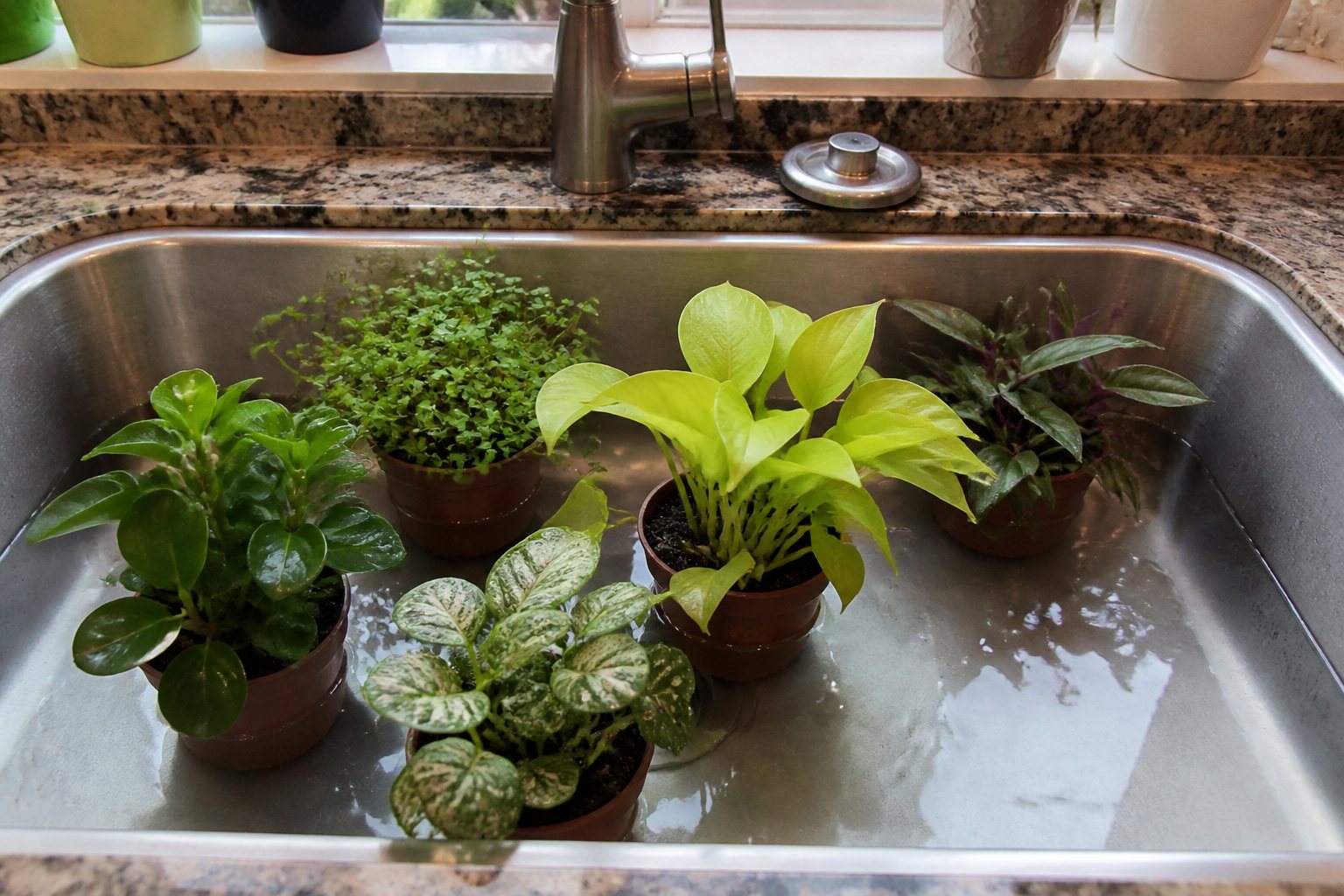
For bottom watering, stand the pots in a basin or the kitchen sink with 2 to 3 cm of water. The compost draws water up through the drainage holes. After 20 to 30 minutes, once the surface feels damp, lift the pots out and let them drain.
It suits African violets, which dislike water on their leaves, compost so dry that water from above simply runs down the inside of the pot, and plants with dense foliage that is hard to get a spout under. Once a month water from the top anyway, to flush out fertiliser salts that build up in the upper layer.
What water is best for houseplants?
Use water at room temperature, roughly 18 to 22°C. Cold tap water, which can be as low as 8 to 10°C in winter, can shock tropical plants and leave pale marks on the leaves. Fill the watering can in the evening and leave it to stand overnight.
Much of southern and eastern England has hard water. For most houseplants this is not a problem, and the white crust on the compost and pot is only cosmetic. Moth orchids, azaleas and camellias prefer softer water, so give them rainwater from a water butt or filtered water.
How should you water houseplants in winter?
In winter the days are short, growth slows and plants use less water. From November to February most foliage plants need roughly half as much as in summer. The finger test matters even more now, because radiators dry the surface while the compost lower down can still be wet.
The exceptions are plants that flower in winter, such as the Christmas cactus and the poinsettia. Both want evenly moist compost but never standing water. Our poinsettia care guide has the details.
How do you recognise overwatering and underwatering?
The two can look alike, because the plant wilts in both cases. The compost tells you which it is.
| Sign | Too much water | Too little water |
|---|---|---|
| Leaves | yellow, soft, even young leaves drop | dry, crisp, brown edges |
| Wilting | plant wilts although the compost is wet | plant wilts, compost is dry and light |
| Compost | always wet, smells musty | shrinks away from the side of the pot |
| Roots | brown, mushy, smell bad | dry but firm |
| Other | fungus gnats, mould on the surface | recovers quickly after watering |
Give a thirsty plant a thorough drink or stand it in water for half an hour. If it has had too much, let the compost dry out. If the roots are brown and soft, take the plant out of its pot, cut away the rotten roots and repot it in fresh compost.
Are self-watering pots a good idea?
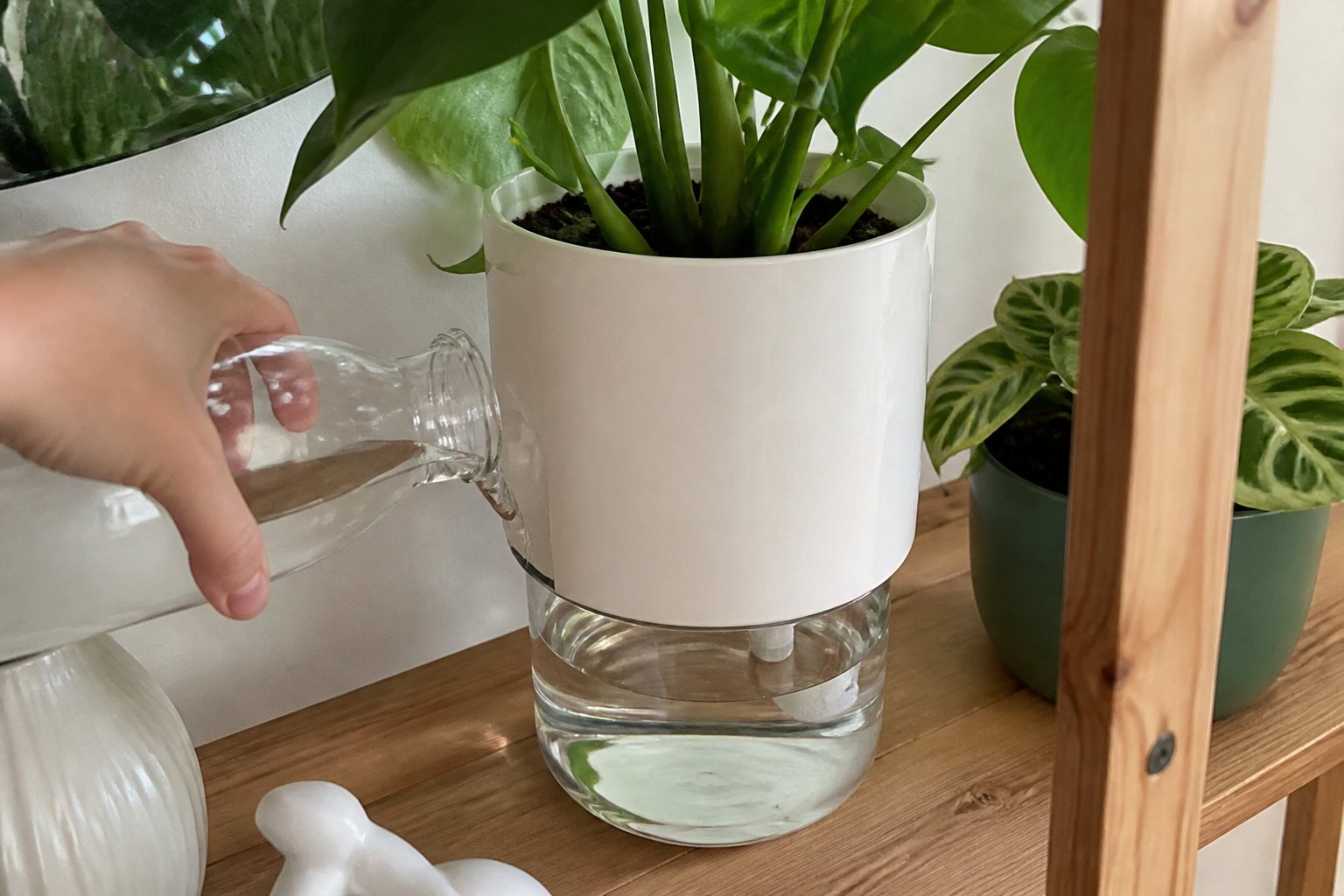
Self-watering pots have a reservoir at the base. The compost draws water from it as needed, through a wick or a capillary layer. The plant gets steadier moisture.
They suit plants that like constantly moist compost: peace lilies, ferns, calatheas and herbs such as basil and parsley. They are not for cacti or succulents. When the reservoir runs dry, wait a day or two before refilling so the roots get some air.
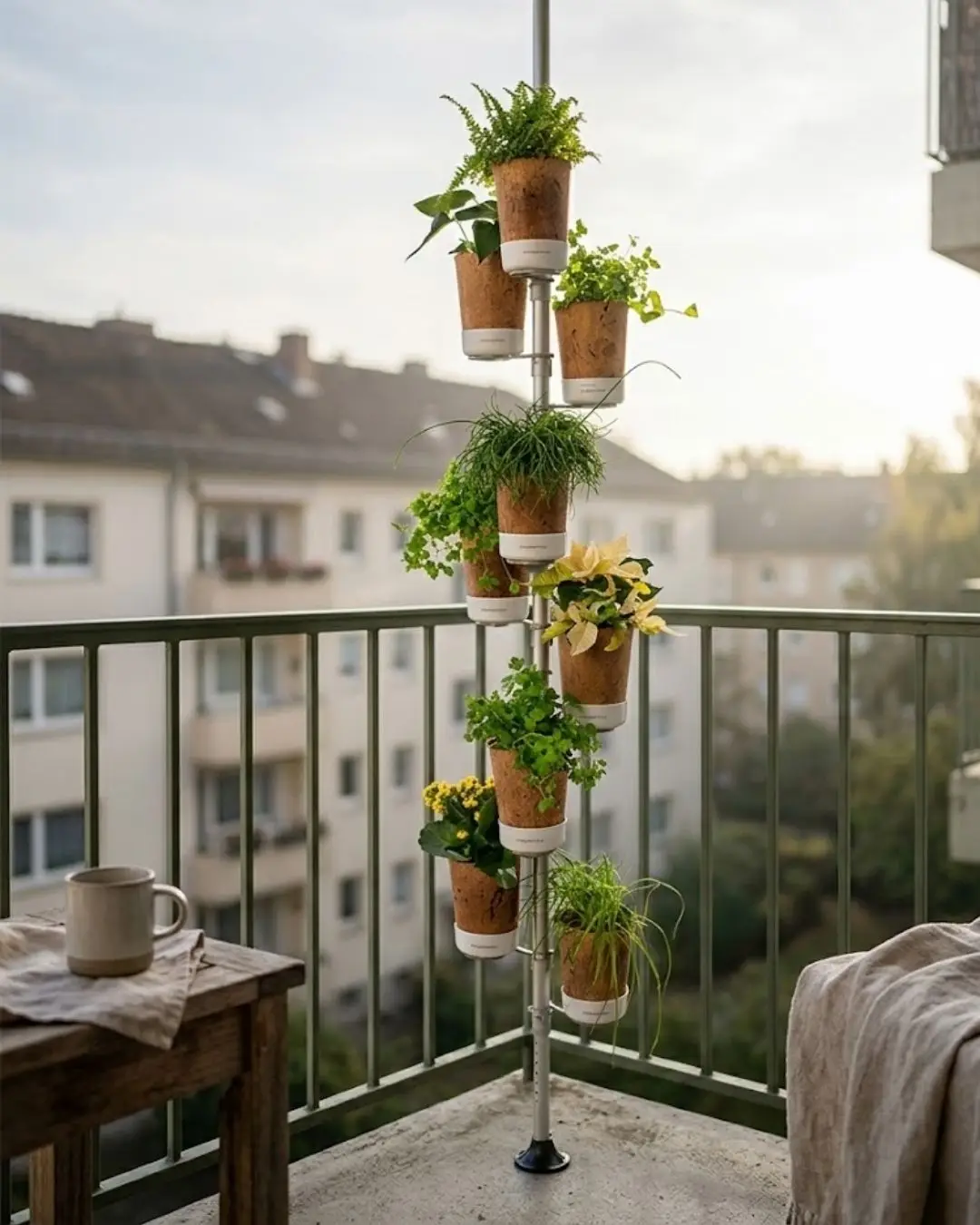
A vertical garden without drilling works on the same idea. A telescopic pole clamps between floor and ceiling, up to 285 cm, and carries nine pots. Each has a 300 ml reservoir, so watering once or twice a week is enough. By a bright window it holds nine plants on less than 1 m² of floor. The Urban Planty Vertical Garden costs €149 with free shipping.

How do you water houseplants while on holiday?
- Up to a week: water thoroughly the day before you leave and move plants half a metre to a metre back from the window.
- Up to two weeks: lay a wet towel in the bath and stand pots with drainage holes on it. Or run a cotton cord from a bucket of water into each pot to carry water slowly into the compost.
- Small plants: cover them with a clear plastic bag that does not touch the leaves. The moisture stays inside.
- Longer than two weeks: ask a neighbour and stick a note on each pot saying how much water it needs.
Frequently asked questions
How often should you water houseplants?
Water houseplants when the top 2 to 3 cm of compost is dry. In summer that is every 5 to 7 days for most foliage plants, and roughly half as often in winter.
Is it better to water houseplants from the top or the bottom?
Both work as long as the whole root ball gets wet. Bottom watering suits African violets and very dry compost, but water from the top once a month to flush out salts.
How long can water stay in a plant saucer?
Water should not stand in the saucer under a houseplant for more than 15 to 20 minutes. Tip it away, or the roots cannot breathe and begin to rot.
What water is best for houseplants?
Water at room temperature that has stood overnight is best for houseplants. Moth orchids and azaleas prefer softer water such as rainwater.
How do you water houseplants while on holiday?
For a week, water houseplants thoroughly and move them away from the window. For two weeks use a wet towel in the bath or cotton cords from a bucket, and for longer ask a neighbour.