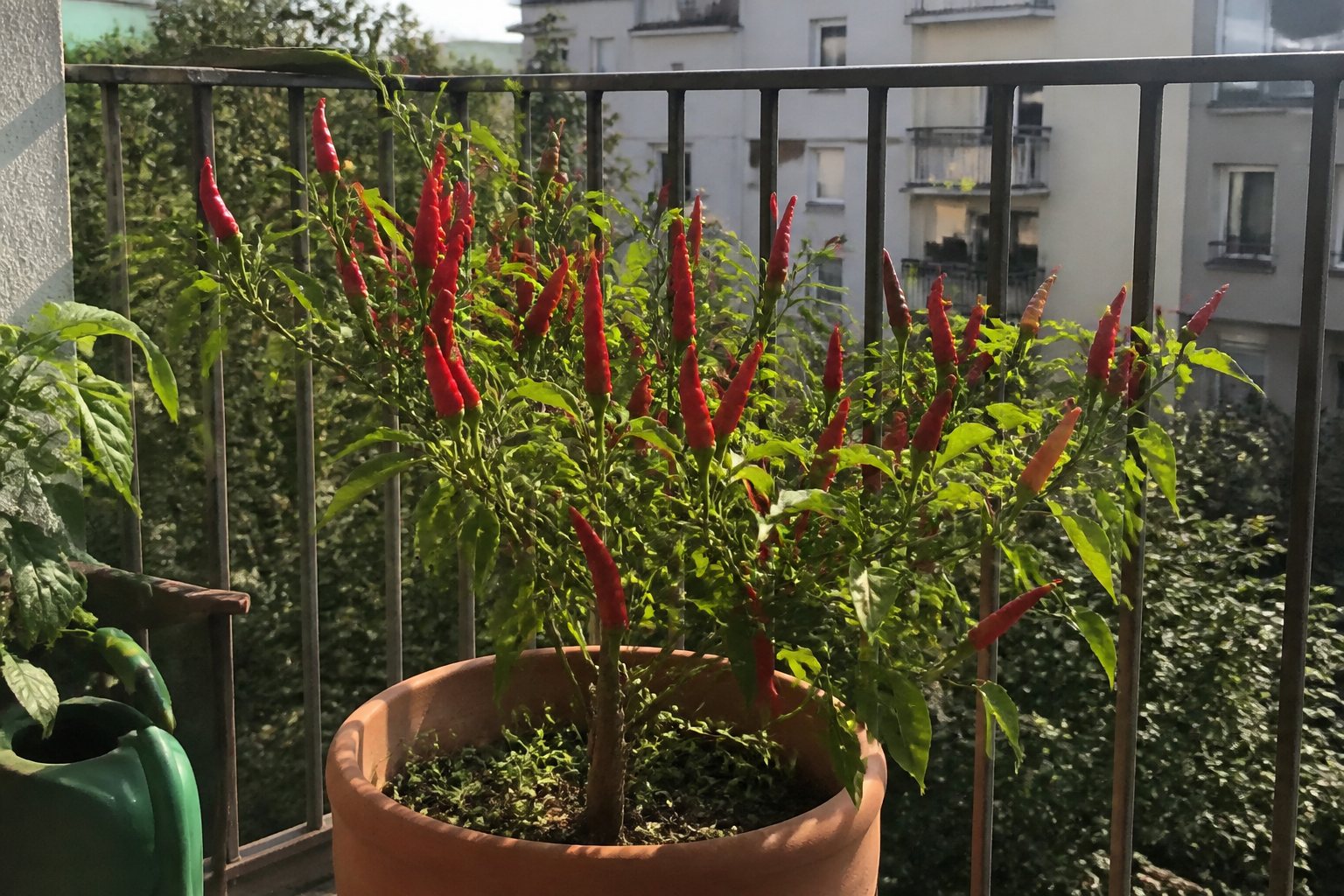

A chilli is a perennial that we treat as an annual. Left on the balcony, the first frost finishes it; brought indoors, it can survive the winter and flower and fruit earlier next summer than any new plant. November is the time to decide which plants come in.
In a British or Irish winter chillies cannot stay outside. Growth stops once nights fall below about 10C, and a few degrees above freezing damages the leaves and soft shoots. A warm living room is not ideal either: next to a radiator the plant weakens and pests move in.
The answer lies in between, a pruned plant in a cool, bright spot. Below we explain how to overwinter it, then walk through the whole season of a potted chilli, from repotting in March to the last harvest in autumn.
Bring potted chillies indoors before the first frost, prune them back to a framework 10 to 20cm tall and keep them somewhere bright at 10 to 15C. Water only when the compost is dry a few centimetres down. In March, repot into 5 to 10 litres of fresh compost, and from late May give them a sunny spot with at least six hours of sun.
How do you overwinter chillies in pots?
Overwintering is worth it for healthy plants without pests. If your chilli is still outside, bring it in as soon as nights drop below 10C, and certainly before the first frost. Five steps cover it.
- Pick all the fruit, including green chillies. The plant will not ripen them over winter.
- With clean, sharp secateurs, cut it back to the main branches, about 10 to 20cm above the compost. Leave a few leaf nodes on each stem; new shoots will grow from these in spring.
- Check the undersides of the leaves and the stems. Aphids and spider mites are the main reason overwintered chillies fail.
- Put it somewhere bright at 10 to 15C: a cool spare bedroom, a porch, an unheated conservatory or a windowsill well away from the radiator.
- Water sparingly, roughly every two to three weeks, and only when the compost is dry a few centimetres down. Do not feed until spring.
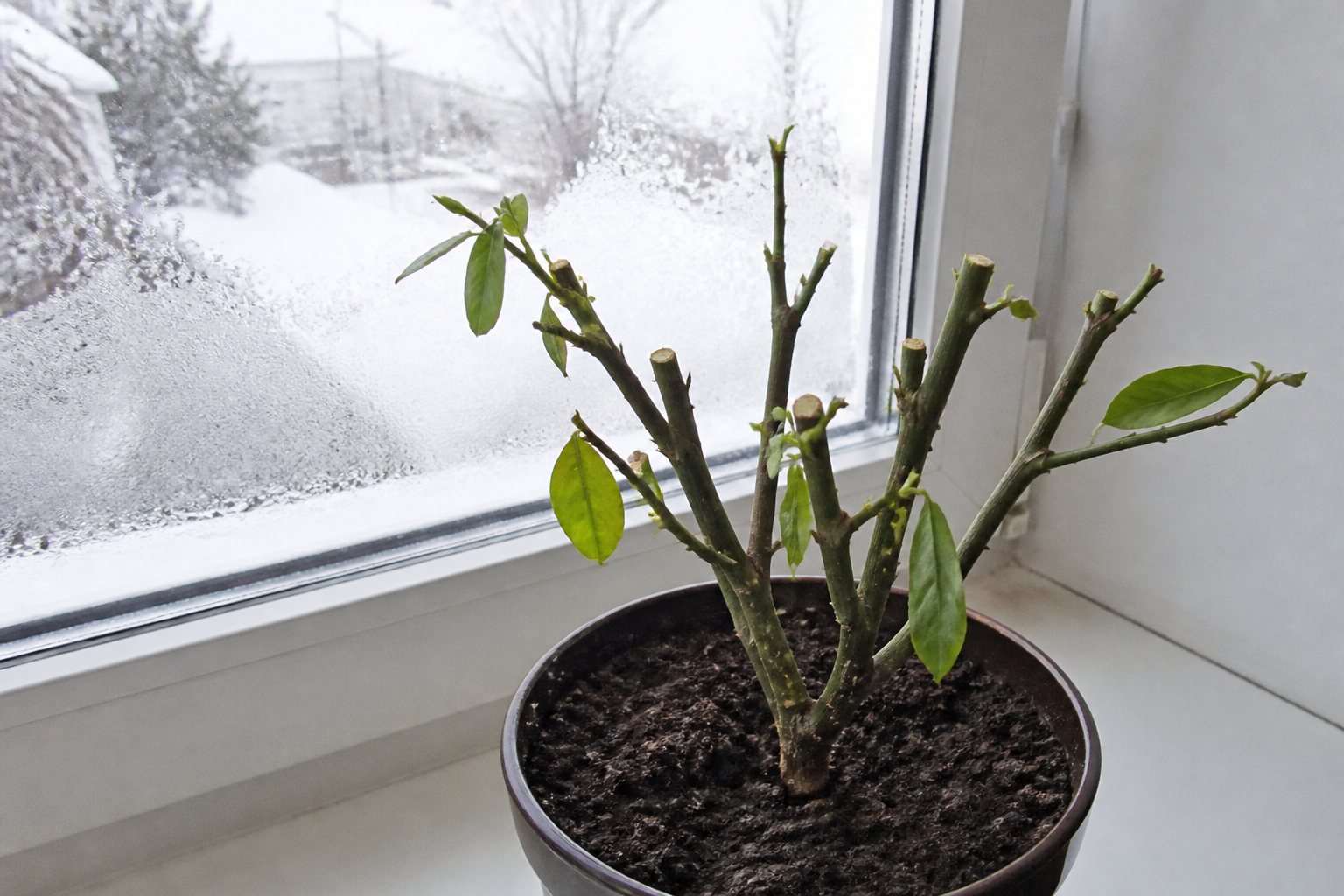
The plant will probably drop its remaining leaves. That is normal and does not mean it has died. As long as the stems are green and firm, it is alive.
Which chilli varieties grow well in pots?
The best choices for pots are varieties of Capsicum annuum, which stay compact and crop quickly. Species that need a long, hot season will grow in a pot but are harder work.
- Apache: a compact F1 variety around 50cm tall with plenty of medium-hot fruit.
- Prairie Fire and Numex Twilight: very small, 20 to 30cm, with tiny upright chillies that change colour as they ripen. Good on a windowsill.
- Cayenne and jalapeño: taller, 60 to 90cm, and happiest in a pot of around 10 litres with a cane for support.
- Habanero and Scotch bonnet: Capsicum chinense, very hot, needing warmth and a long season. An overwintered plant crops far more reliably in a British summer than a new one.
- Rocoto: Capsicum pubescens has hairy leaves, copes better with cool nights and overwinters well, but grows tall and needs a big pot.
What size pot and compost do chillies need?
Most varieties need a pot of 5 to 10 litres; dwarf ornamental types manage in three. The pot must have drainage holes.
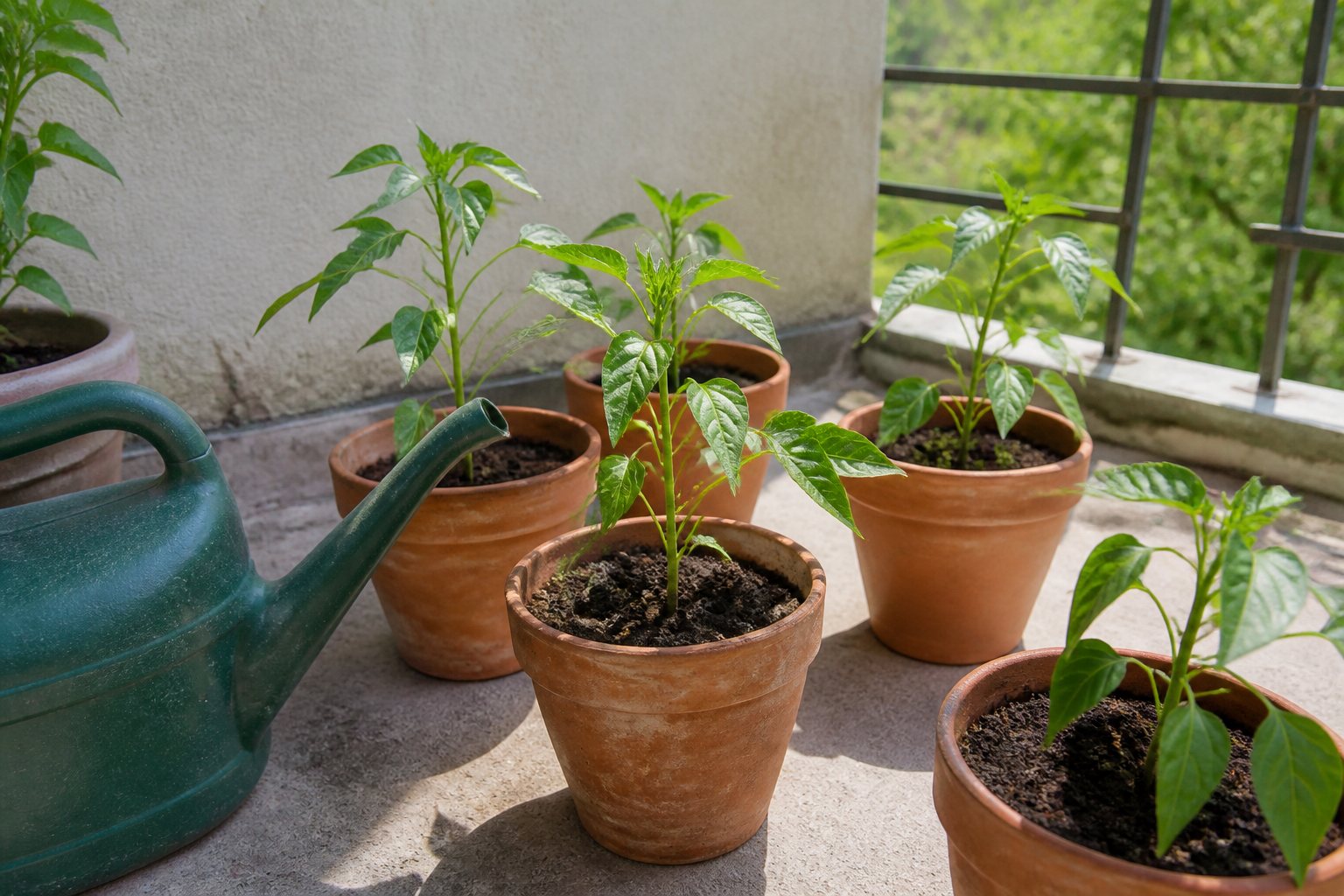
Repot an overwintered plant in March, when you move it somewhere warmer and it starts to shoot. Use a good peat-free multipurpose or vegetable compost with a handful of perlite for drainage.
If you are also raising new plants in spring, we show sowing from seed to seedling in our guide how to grow chillies from seed in seven steps. Sow early, in January or February.
How much sun and water do chillies need?
Chillies need at least six hours of direct sun a day. A south or south-west facing balcony is ideal; on a north-facing one they will barely crop. Move them outside for good only once the risk of frost has passed, usually late May or early June, when nights stay above 10C, and give them a week to get used to full sun.
Water thoroughly when the top 2 to 3cm of compost is dry, and tip out whatever is left in the saucer after half an hour. In a hot spell a small pot in full sun may need water daily, a larger one every other day. Erratic watering, swinging between dry and soaked, is a common reason flowers drop.
When and what should you feed chillies?
Start feeding when an overwintered or new plant begins to grow in spring, at first with half-strength balanced liquid feed. Once the first flowers appear, switch to a high-potash feed such as tomato feed, every 7 to 14 days as the label says.
Too much nitrogen shows as a lush, dark green plant with few flowers. Cut back on feeding in September and stop until spring.
How do you hand pollinate chillies indoors?
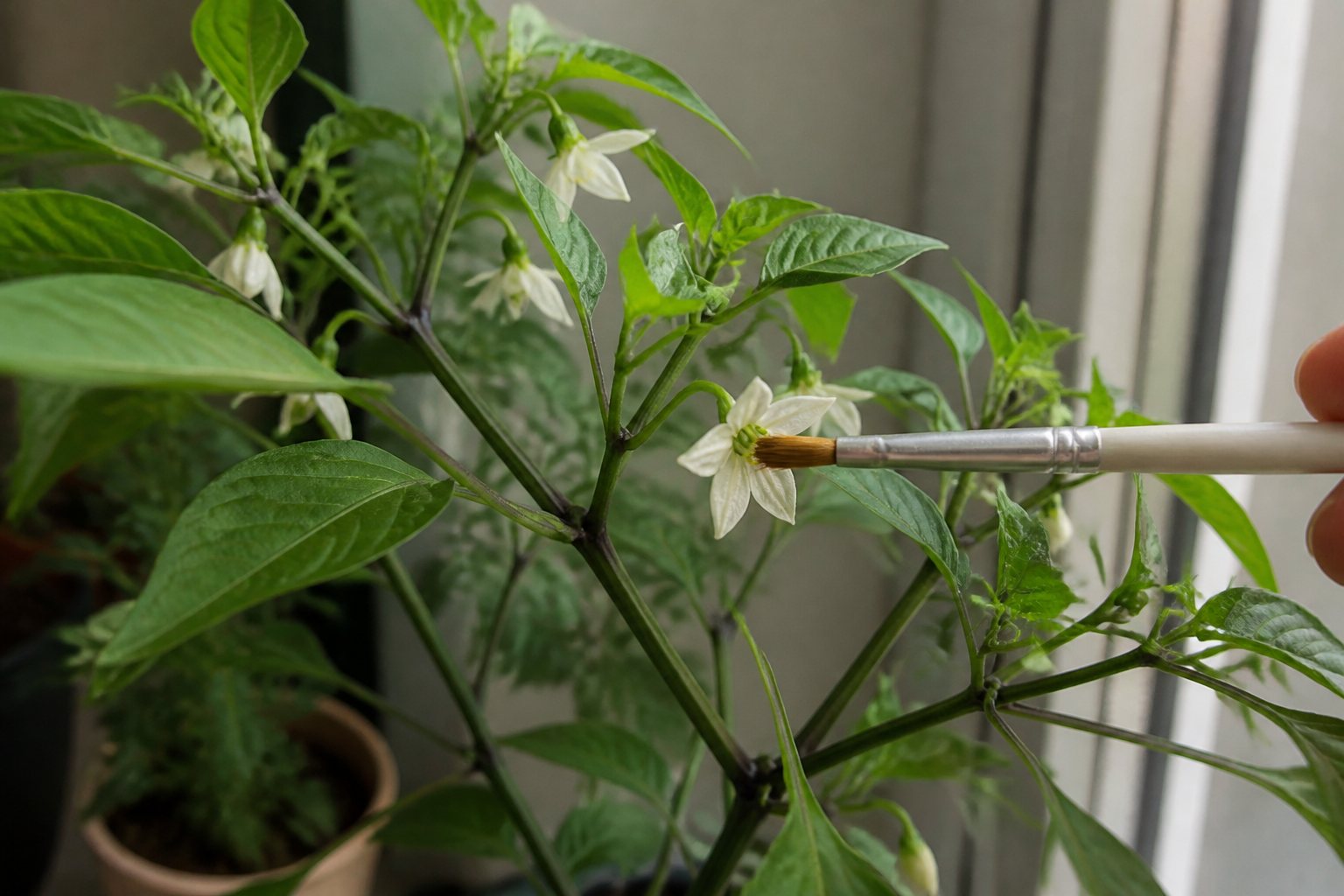
Chilli flowers are self-fertile: each one has both anthers and a stigma. Outdoors, wind and insects pollinate them; on a windowsill or an enclosed balcony you have to do it yourself.
Take a small, soft paintbrush and gently brush the inside of each open flower, moving from one flower to the next. Repeat every other day while the plant is in flower, ideally around midday when it is warm and the pollen is dry. Gently flicking the stems also works.
Flowers also drop for reasons that have nothing to do with pollination: nights below about 15C, daytime heat above 30C, and drought.
Which pests attack chillies in pots?
- Aphids: green or black colonies on shoot tips and leaf undersides, often with sticky leaves. Wash them off with a firm jet of water or spray with insecticidal soap.
- Spider mites: fine pale speckling on the leaves and thin webbing between them, especially in warm, dry winter air. Shower the leaves regularly, move the plant away from the radiator, and for a heavy infestation use predatory mites.
When are chillies ripe and how do you pick them?
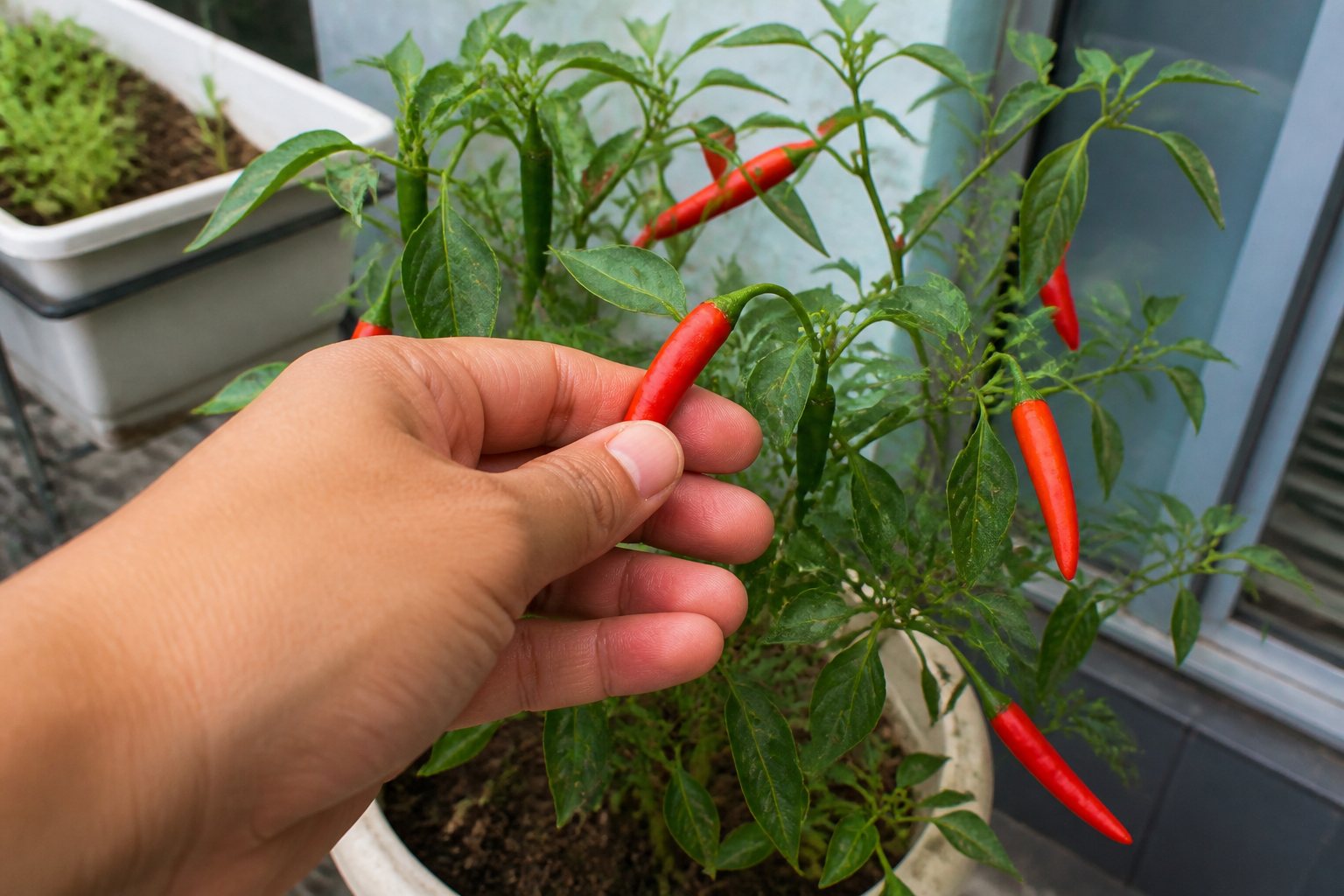
You can pick chillies green, but fruit that has reached the final colour of its variety has more flavour and is often hotter. For most varieties it takes six to ten weeks from flower to ripe fruit, longer for habaneros.
Do not pull them off, as the branches snap easily. Cut them with scissors, leaving a short stalk. Regular picking encourages the plant to keep flowering. Wear gloves with very hot varieties and keep your hands away from your eyes.
What to do with chillies month by month
| Month | What to do |
|---|---|
| October | When nights fall below 10C, bring the plant in and check it for pests. |
| November to February | Pruned plant at 10 to 15C, bright, little water, no feed. |
| January to February | Sow new plants in a warm propagator. |
| March | Repot into fresh compost, move somewhere warmer, more water, start feeding. |
| April to mid-May | Outside for a few hours on warm days, indoors at night. |
| Late May to June | Outside for good once frost has passed. |
| June to July | Flowering: tomato feed, even watering, hand pollination if needed. |
| August to September | Main harvest, cut ripe fruit regularly. |
Where can the herbs that go with chillies grow?
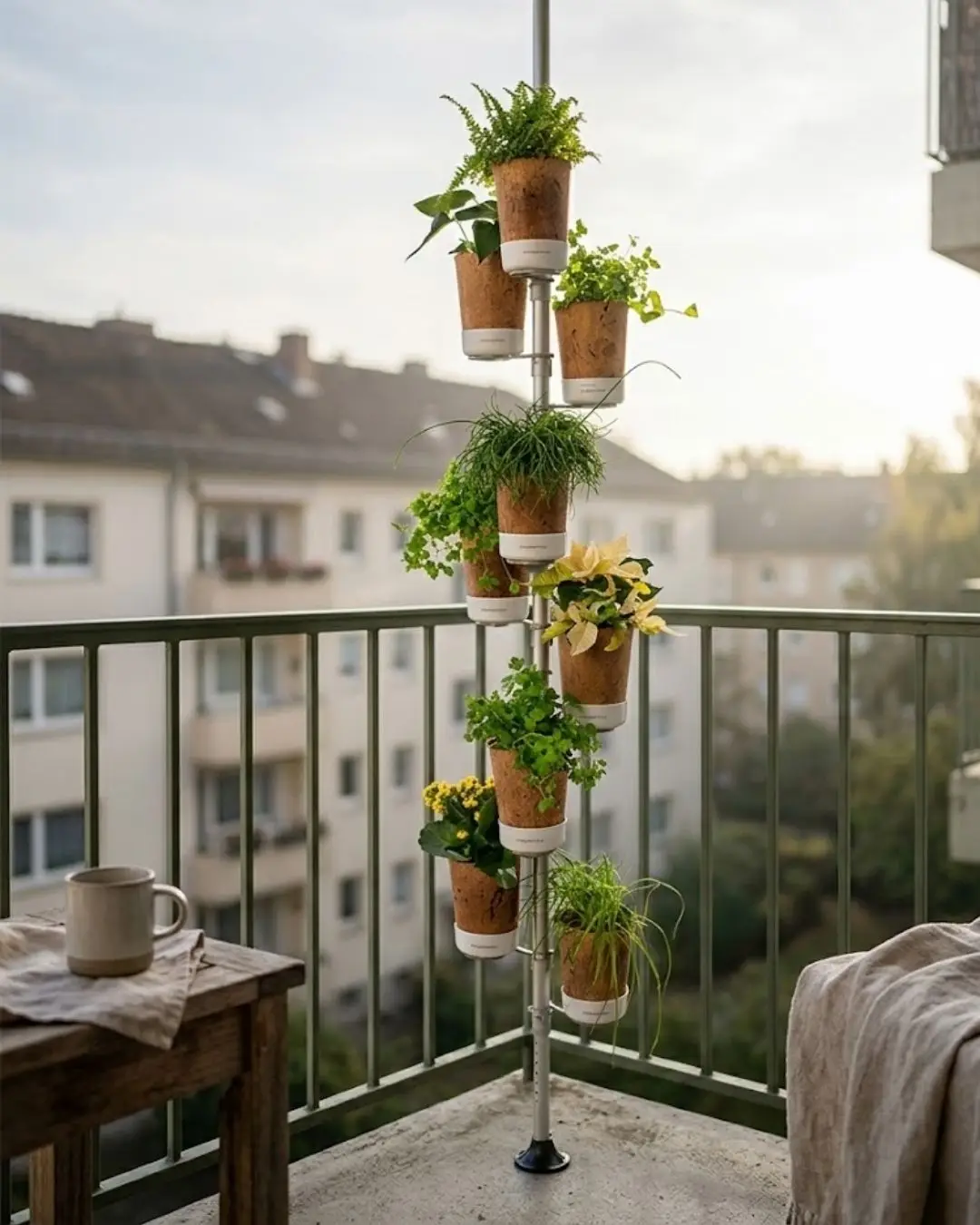
A chilli in a 5 to 10 litre pot needs its own spot on the balcony floor. The basil, coriander, parsley and oregano you cook with alongside it can grow upwards instead. A vertical garden without drilling uses a telescopic pole that clamps between floor and ceiling, adjustable up to 285cm, so it suits rented flats too.
It holds nine plants on less than a square metre of floor. Each pot has a 300ml water reservoir, so watering once or twice a week is enough, and it works on a balcony or indoors next to a window. The Urban Planty Vertical Garden costs €149 with free shipping. Which herbs cope outdoors is covered in our balcony herb garden guide.

Frequently asked questions
At what temperature should chillies come indoors?
Bring potted chillies indoors when night temperatures fall below 10C. Do not wait for the first frost, which damages the leaves and shoots.
How do you overwinter a chilli plant indoors?
Prune the chilli back to main branches 10 to 20cm tall, keep it somewhere bright at 10 to 15C and water only when the compost is dry a few centimetres down. Do not feed it over winter.
What size pot does a chilli plant need?
Most chilli varieties need a pot of 5 to 10 litres with drainage holes. Dwarf varieties such as Prairie Fire and Numex Twilight grow in smaller pots.
Why are my chilli flowers falling off?
Chilli flowers usually drop because of cold nights below 15C, heat above 30C, drought or irregular watering. Indoors they also need hand pollinating with a brush.
When are chillies ready to pick?
Chillies are ripe when they reach the final colour of their variety, most often red. For most varieties this takes six to ten weeks from flowering, but green chillies can be picked earlier.