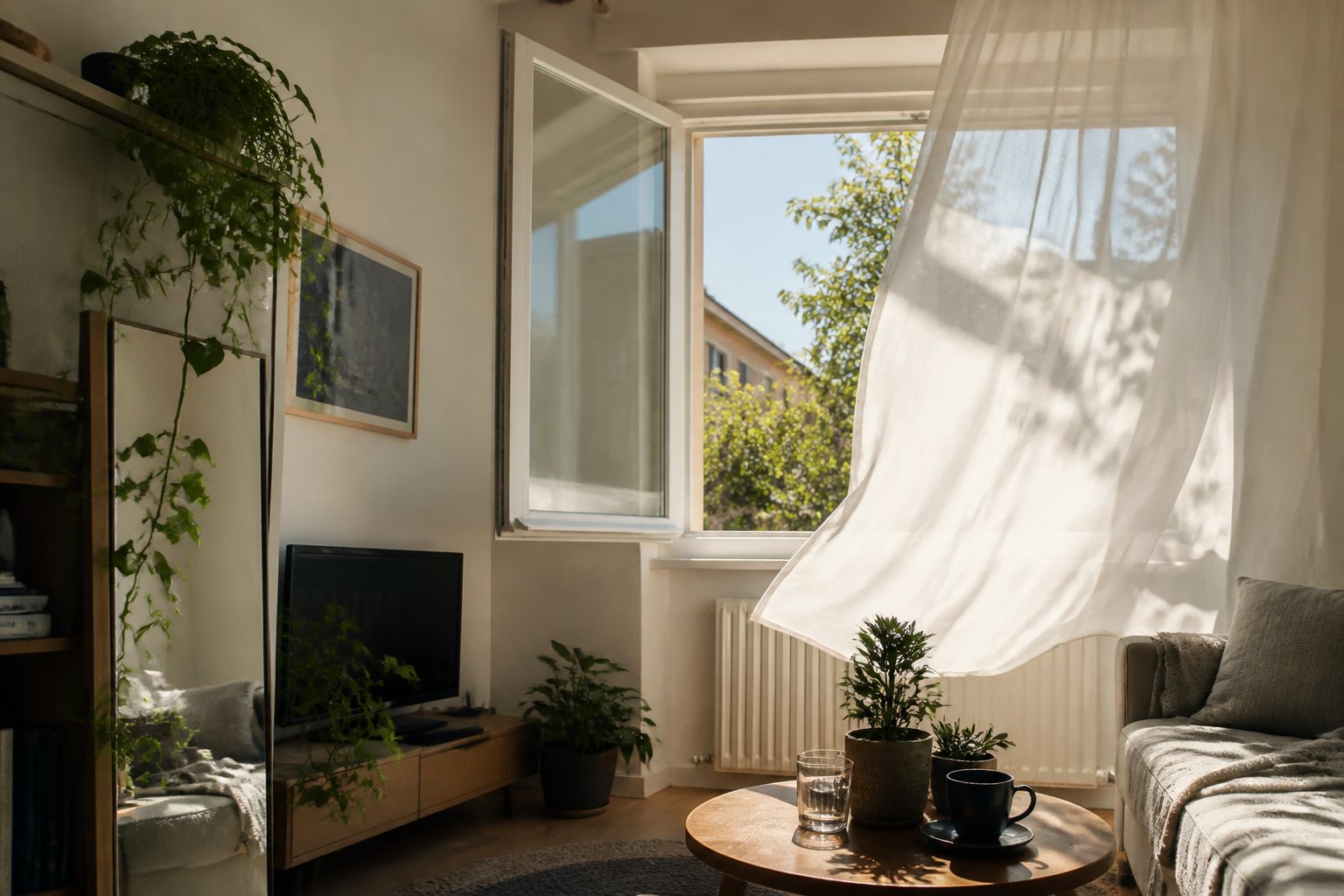

Almost every garden centre has a shelf labelled “air purifying plants”, usually with a reference to NASA. The research behind the label is real, but it was done in small sealed chambers, not in homes. In an ordinary flat, an open window does far more for the air than any number of pots.
That does not make houseplants pointless. They add a little moisture to dry winter air, they make a room more pleasant to sit in, and several studies link them to lower stress. Those are good reasons to grow them, as long as nobody expects a peace lily to do the work of an extractor fan.
Below is what the 1989 study measured, what later reviews concluded, how to air a room properly in winter, and ten plants that appear on most lists, with their light, care and pet safety.
Houseplants do remove some pollutants in sealed laboratory chambers, but in a normal home the effect is negligible. A 2019 review by Cummings and Waring estimated you would need between 10 and 1,000 plants per square metre to match ordinary ventilation. Air the room properly, deal with pollution at its source, and grow plants for humidity, wellbeing and pleasure.
What did the NASA Clean Air Study actually find?
In 1989 NASA and the Associated Landscape Contractors of America published a study led by the scientist Bill Wolverton. NASA was interested in how to keep air clean in sealed spaces such as a future space station. The team placed individual potted plants in small, airtight chambers, added benzene, trichloroethylene and formaldehyde, and measured how quickly the concentrations fell over 24 hours.
They did fall, and the study listed the plants that performed best, among them the peace lily, English ivy, the snake plant and several dracaenas. Wolverton also noted that much of the effect came from microorganisms in the compost around the roots, not only from the leaves.
The important detail is the setting. A sealed chamber of under a cubic metre has no air exchange, so even a slow process shows up clearly. A living room of 40 to 60 cubic metres, with doors, gaps and a kitchen extractor, is a very different thing.
Do houseplants really clean the air in a home?
Not to any measurable degree. In 2019 two environmental engineers at Drexel University in Philadelphia, Bryan Cummings and Michael Waring, reviewed 12 studies covering about 30 years of chamber experiments. They converted the results into the rate at which plants clean air and compared it with the rate at which a building normally exchanges air with the outside.
Their conclusion, published in the Journal of Exposure Science and Environmental Epidemiology, was blunt. To match the effect of ordinary ventilation, you would need between 10 and 1,000 plants per square metre of floor.
What helps more: plants or ventilation?
Ventilation, by a wide margin. The usual indoor pollutants come from cooking, damp, candles, new furniture, cleaning sprays and our own breath. The simplest remedy is to let them out and let outdoor air in.
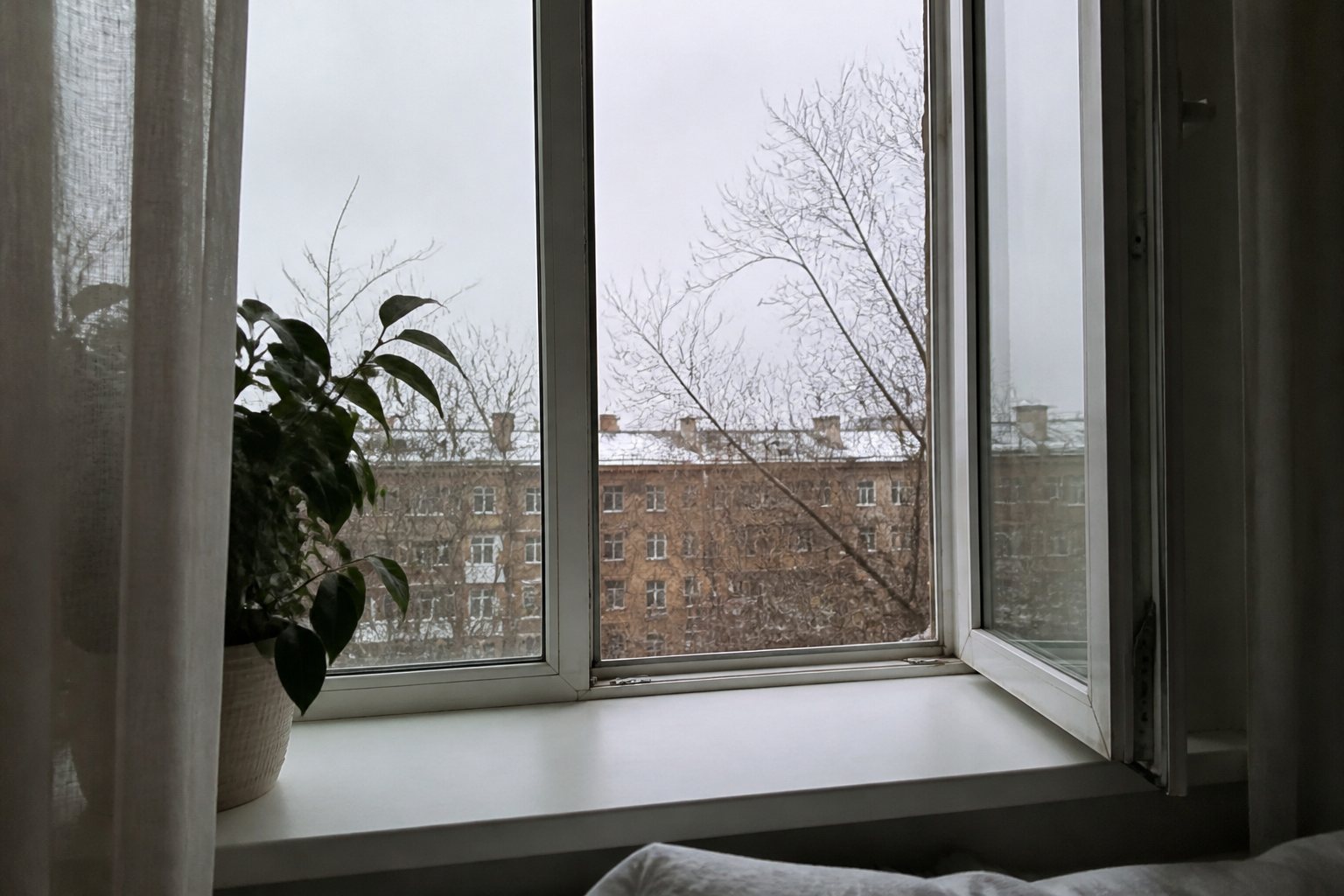
In winter many people keep a window on the tilt all day. That cools the wall around the window, wastes heat and changes little. Short, wide airing works better: windows fully open for a few minutes, ideally on opposite sides of the flat so air moves through.
How to air a room in winter
- Open the windows wide for 5 to 10 minutes, three or four times a day. In frost, 5 minutes is enough.
- Air after cooking, showering and drying laundry, when humidity is highest.
- Turn the radiator valve down while the window is open and back up afterwards.
- Aim for relative humidity of 40 to 60 percent. A cheap hygrometer from a DIY shop shows where you are.
- Air the bedroom first thing in the morning, when carbon dioxide has built up overnight, and again before bed.
- Use the extractor hood when cooking, especially on a gas hob.
If you are worried about something specific, such as smoke, pollen or a smell from new furniture, an air purifier with a HEPA filter and activated carbon does measurable work. A plant does not.
What do houseplants actually do for a room?
They add a little moisture. Most of the water you pour into a pot leaves through the leaves. One plant hardly matters, but a group of large, leafy plants in a small room can raise humidity by a few percentage points, which is welcome when radiators push it towards 30 percent in January.
They also make a room feel better. Studies of offices and hospital rooms have linked plants with lower reported stress and better mood, although the effects are modest.
Which plants are usually listed as air purifying?
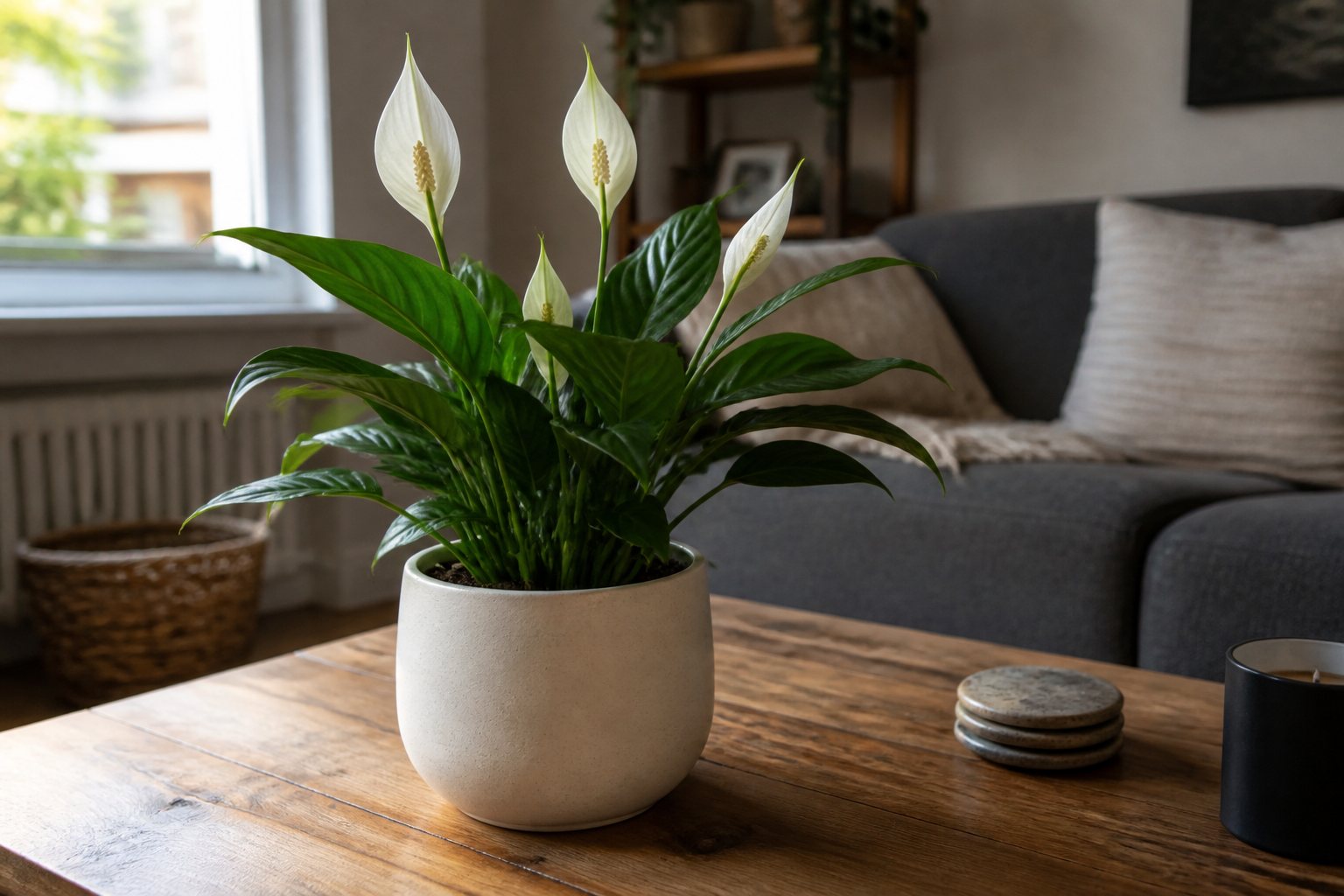
The ten below appear on most lists. None will clean your air in a meaningful way, but all are good houseplants, and most are forgiving. If you are new to plants, our list of easy houseplants for beginners goes into more detail.
| Plant | Light | Care | Cats and dogs |
|---|---|---|---|
| Peace lily (Spathiphyllum) | Semi-shade, no direct sun | Keep evenly moist; droops when dry | Toxic |
| Snake plant (Dracaena trifasciata) | Low to bright | Water every 2–4 weeks, less in winter | Toxic (mild) |
| Spider plant (Chlorophytum comosum) | Bright, indirect | Water when the top 2 cm is dry | Non-toxic |
| Pothos (Epipremnum aureum) | Semi-shade to bright, indirect | Water when the top 2–3 cm is dry | Toxic |
| Boston fern (Nephrolepis exaltata) | Bright, indirect | Keep moist, likes humid air | Non-toxic |
| Areca palm (Dypsis lutescens) or parlour palm (Chamaedorea elegans) | Bright, indirect; parlour palm tolerates less | Moist but never waterlogged | Non-toxic |
| Rubber plant (Ficus elastica) | Bright, some morning sun | Water when the top 3 cm is dry; wipe leaves | Toxic (sap) |
| Dracaena (D. fragrans, D. marginata) | Semi-shade to bright, indirect | Sparingly, let the top dry out | Toxic |
| Aloe vera | Brightest window, sun | Every 2–3 weeks, very little in winter | Toxic |
| Ivy (Hedera helix) | Bright, cooler room | Moderately moist; prone to spider mite in dry air | Toxic |
“Toxic” here mostly means irritation of the mouth, drooling or vomiting if a pet chews the leaves, not a medical emergency. The peace lily is not a true lily, so it does not cause the kidney failure that Lilium species cause in cats, but it still irritates. With a cat that chews everything, the spider plant, Boston fern and the two palms are the safe choices.
Overwatering kills more of these plants than anything else, and a soggy pot can grow mould on the surface, which is the opposite of what you want. Our guide on how to water houseplants covers the details.
How many plants per room is reasonable?
There is no number that cleans the air, so the sensible answer is as many as you can look after and as many as the light allows. In practice that means two to five plants in a living room and one or two in a bedroom. You will see a rule of one plant per 10 square metres quoted online, but it has no basis in measurements in real homes.
Plants in the bedroom are fine. The idea that they use up oxygen at night is a myth: a few pots consume a negligible amount compared with a sleeping person.
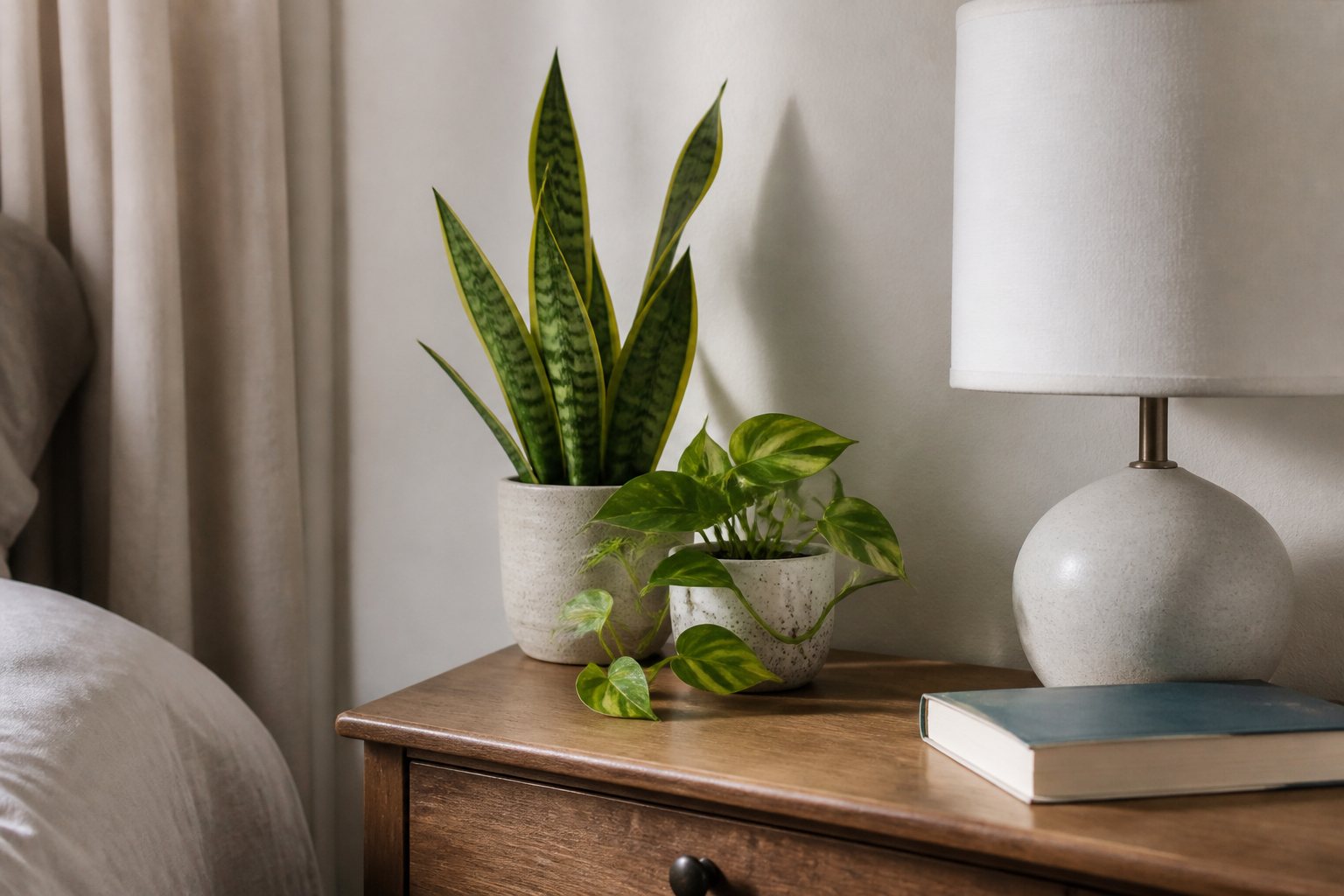
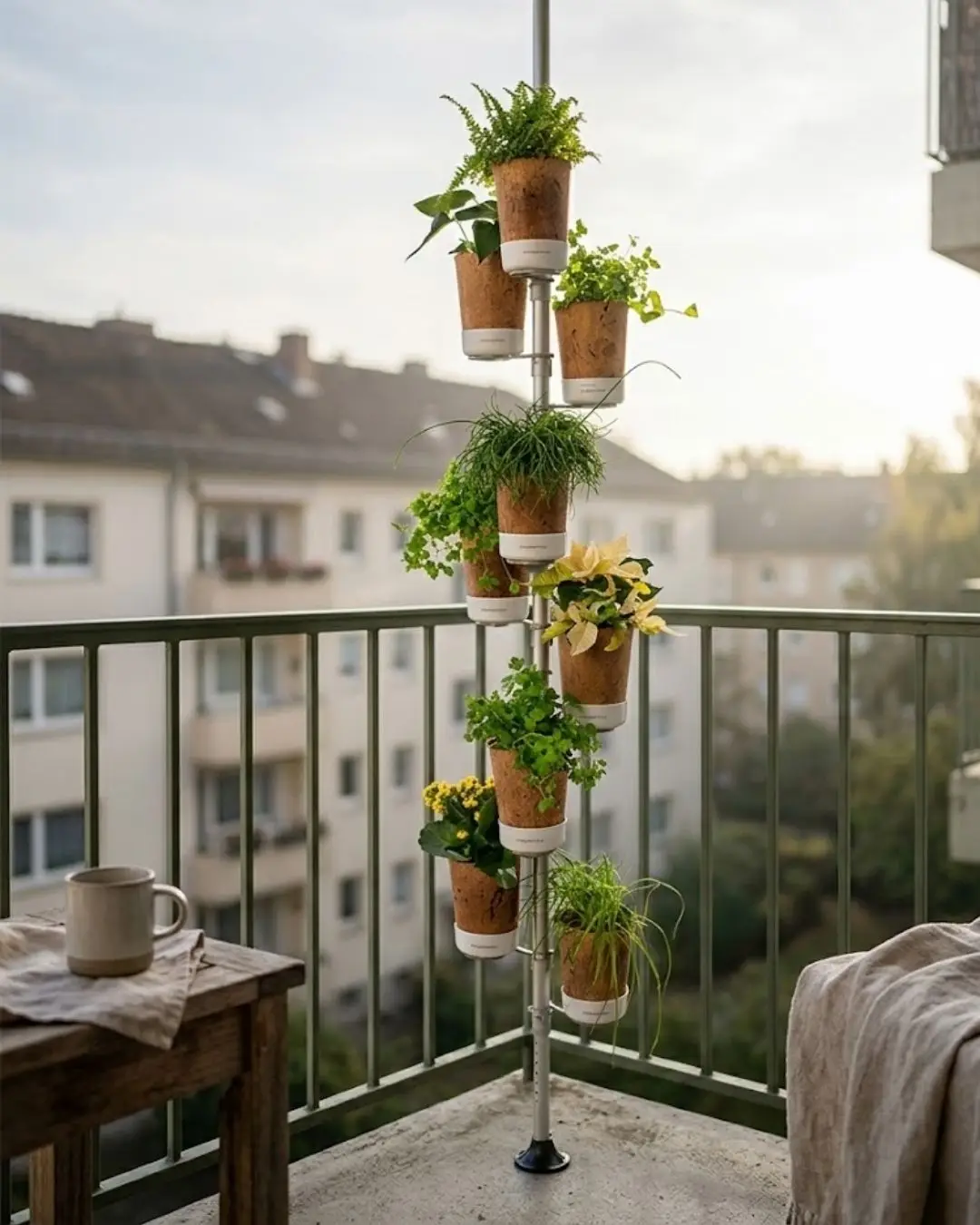
If floor space is short and you would like more green than a windowsill holds, a column of pots next to a window is one option. The Urban Planty Vertical Garden clamps between floor and ceiling on a telescopic pole adjustable up to 285 cm, holds nine plants on less than a square metre, and each pot has a 300 ml reservoir, so you water once or twice a week. It costs €149 with free delivery; more on this vertical garden without drilling. It will not purify the air either, but nine pothos, spider plants and ferns make a room noticeably greener.
Frequently asked questions
Do air purifying plants really clean the air at home?
Not measurably. A 2019 review by Cummings and Waring found you would need 10 to 1,000 plants per square metre of floor to match normal ventilation, so airing the room does far more.
What did the 1989 NASA Clean Air Study test?
The NASA study placed single potted plants in small sealed chambers with benzene, trichloroethylene and formaldehyde and measured how fast the levels fell over 24 hours. Real homes exchange air much faster, so the results do not transfer.
Is it safe to keep plants in the bedroom?
Yes. A few houseplants use a negligible amount of oxygen at night, far less than a sleeping person, so plants in the bedroom are safe.
Which air purifying plants are safe for cats and dogs?
Of the commonly listed plants, the spider plant, Boston fern, areca palm and parlour palm are non-toxic to cats and dogs. The peace lily, pothos, ivy, aloe, rubber plant, dracaena and snake plant are toxic.
How should I air a room in winter?
Open the windows fully for 5 to 10 minutes three or four times a day instead of leaving one on the tilt, and aim for indoor humidity of 40 to 60 percent.