
Most houseplants bought by beginners do not die of neglect. They die of too much attention: too much water, a pot without a hole, a sunny window chosen for a plant that wanted shade. The ten plants below put up with all of that better than most, and they are sold in almost every garden centre and supermarket.
We have chosen them for one quality only: they recover. A pothos that wilts after a missed watering stands up again within hours, a ZZ plant can go three weeks without a drink, and a cast iron plant copes with a cold hallway that would finish off a fern.
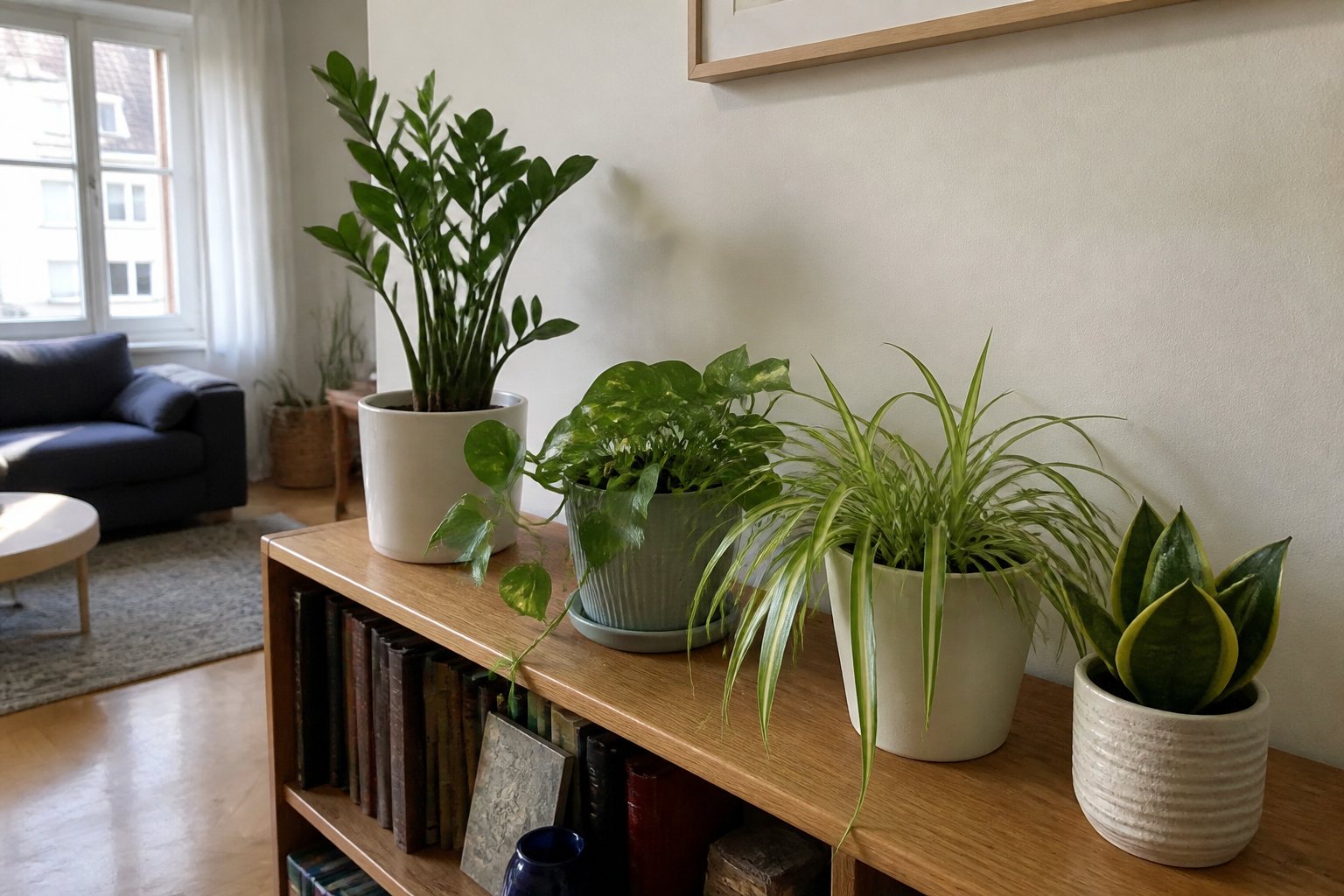
The most forgiving houseplants for beginners are snake plant, ZZ plant, pothos, spider plant, monstera, aloe vera, peace lily, parlour palm, Christmas cactus and cast iron plant. Choose by the light you have, water only when the top 2 to 3 cm of compost is dry and use pots with drainage holes. Spider plant, parlour palm, Christmas cactus and cast iron plant are safe for cats and dogs.
Which houseplants are easiest for beginners?
Watering intervals are for a heated flat at around 20 °C between spring and autumn; in winter most of them need roughly half as much water. Toxicity refers to cats and dogs and is based on the ASPCA plant database.
| Plant | Light | Watering | Cats and dogs | Size indoors |
|---|---|---|---|---|
| Snake plant (Sansevieria) | bright to low | every 2–4 weeks, when fully dry | toxic | 30–120 cm |
| ZZ plant (Zamioculcas) | medium to low, indirect | every 2–4 weeks | toxic | 40–90 cm |
| Pothos (Epipremnum) | medium, indirect | when the top 2–3 cm is dry | toxic | trails 1–2 m |
| Spider plant (Chlorophytum) | bright, indirect | about once a week | non-toxic | 30–60 cm |
| Monstera deliciosa | bright, indirect | every 1–2 weeks | toxic | 1–2 m |
| Aloe vera | bright, some direct sun | every 2–3 weeks | toxic | 30–60 cm |
| Peace lily (Spathiphyllum) | medium to low, indirect | about once a week | toxic | 40–80 cm |
| Parlour palm (Chamaedorea elegans) | medium, indirect | when the top 2–3 cm is dry | non-toxic | 60–150 cm |
| Christmas cactus (Schlumbergera) | bright, indirect | when the top 2–3 cm is dry | non-toxic | 30–45 cm |
| Cast iron plant (Aspidistra) | low to medium | every 1–2 weeks | non-toxic | 40–80 cm |
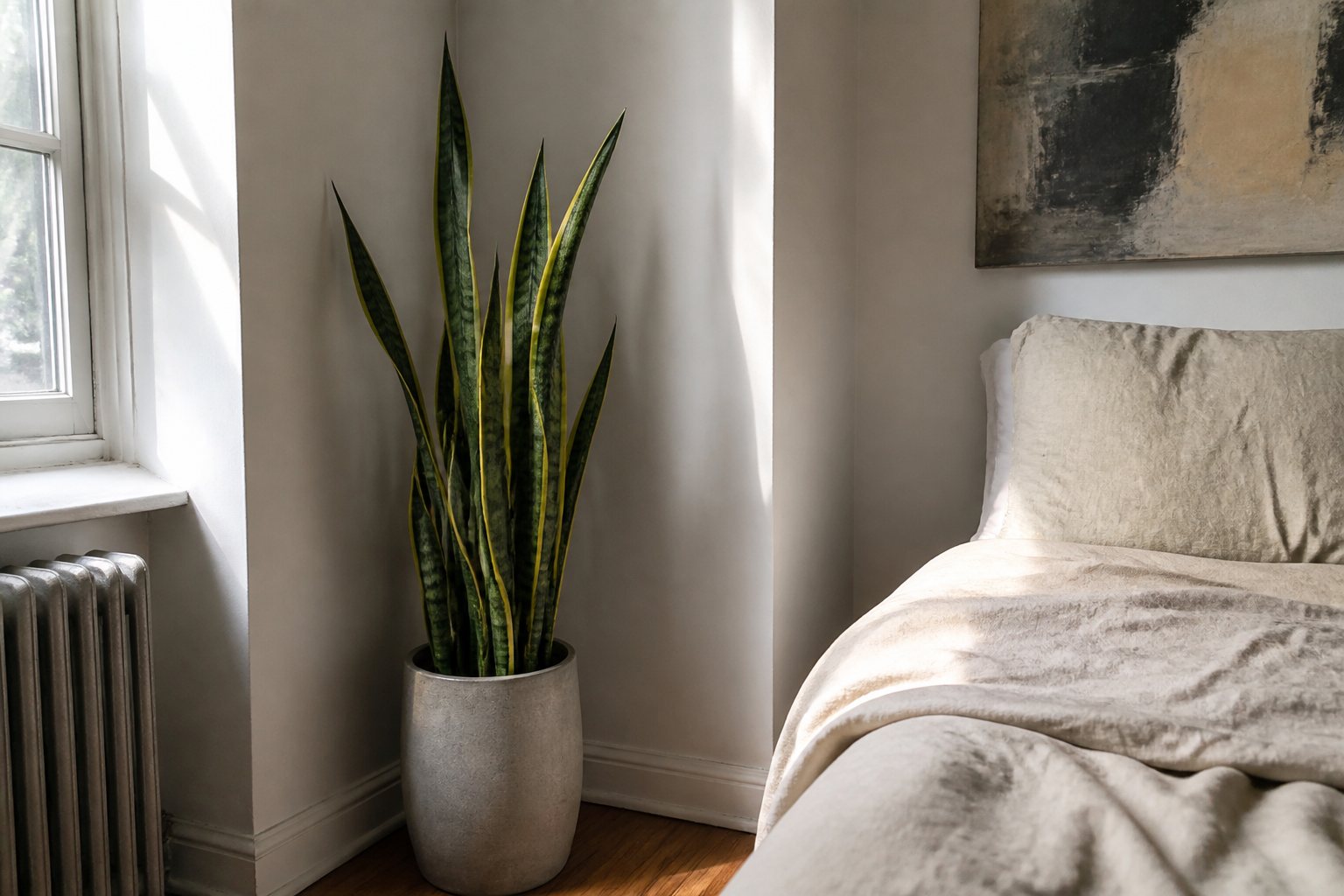
1. Snake plant
Its stiff leaves store water, so it tolerates long gaps between waterings and the dry air of a centrally heated flat. It survives in a dim corner but grows noticeably faster near a bright window. In winter, watering once a month is usually enough.
2. ZZ plant
Thick underground rhizomes act as a water tank. The ZZ plant accepts low light and irregular care, and overwatering is about the only reliable way to kill it.
3. Pothos
A trailing plant for a shelf or the top of a wardrobe. When it is thirsty the leaves go limp, and they recover within hours of watering, which makes it a good teacher. Cuttings root in a glass of water in two to four weeks.
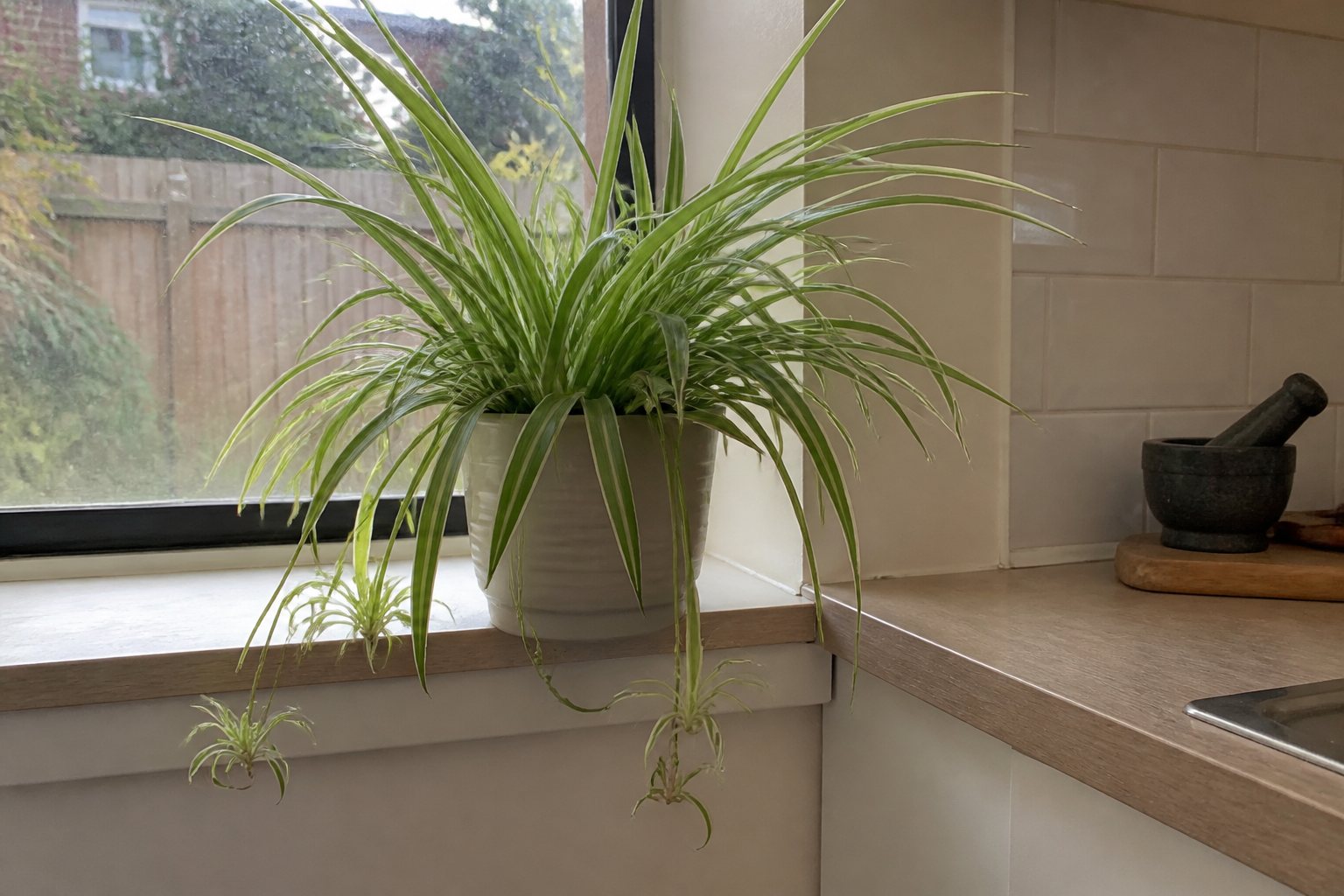
4. Spider plant
It produces long stems with small plantlets that root easily, so one plant soon becomes several. It likes a bright spot without hot midday sun. Brown leaf tips usually point to dry air from radiators.
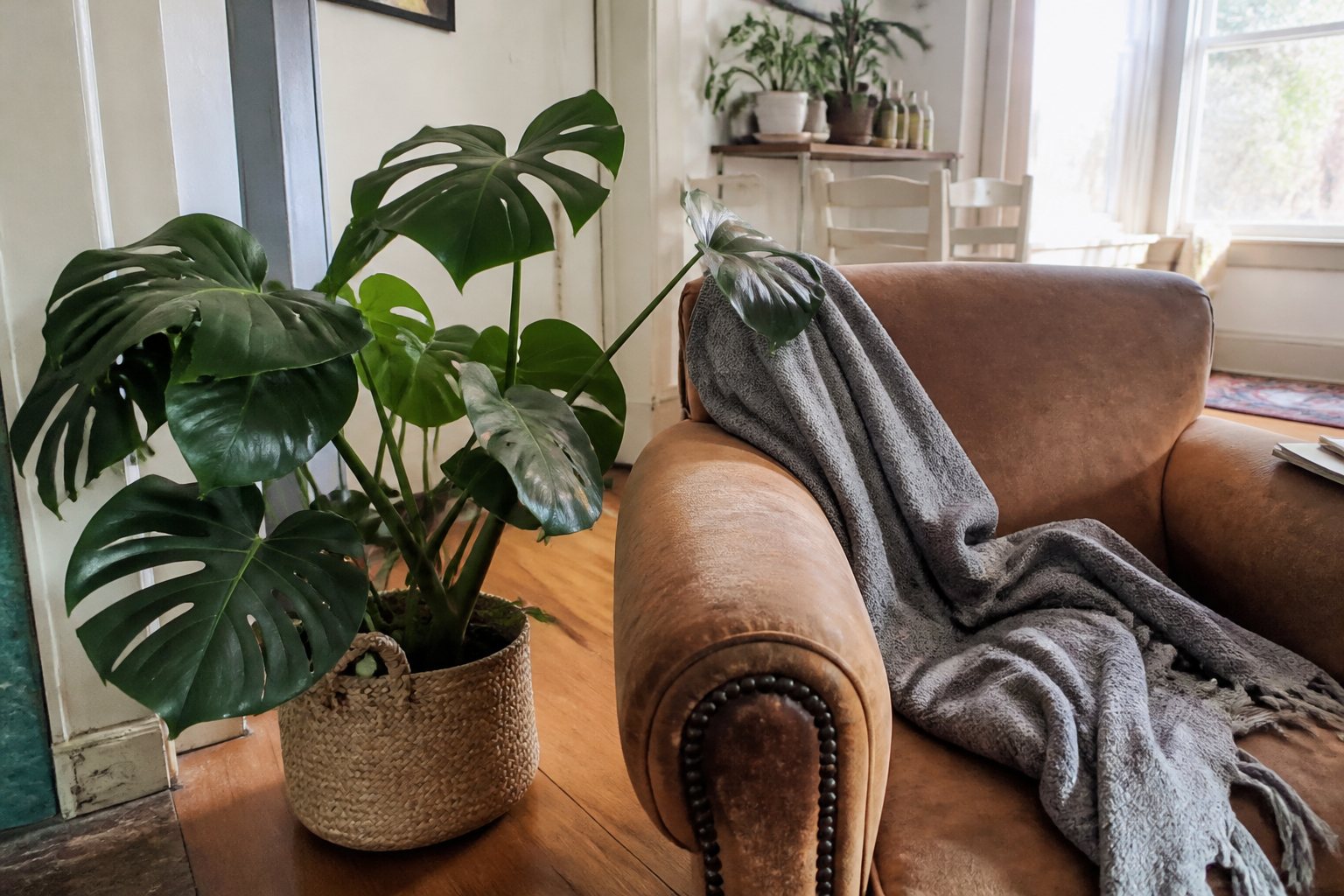
5. Monstera
The best known of the large leafy plants needs bright, indirect light and room to spread. Young leaves are whole; the typical splits appear as the plant matures and gets enough light. Water when the top 3 to 5 cm of compost is dry.
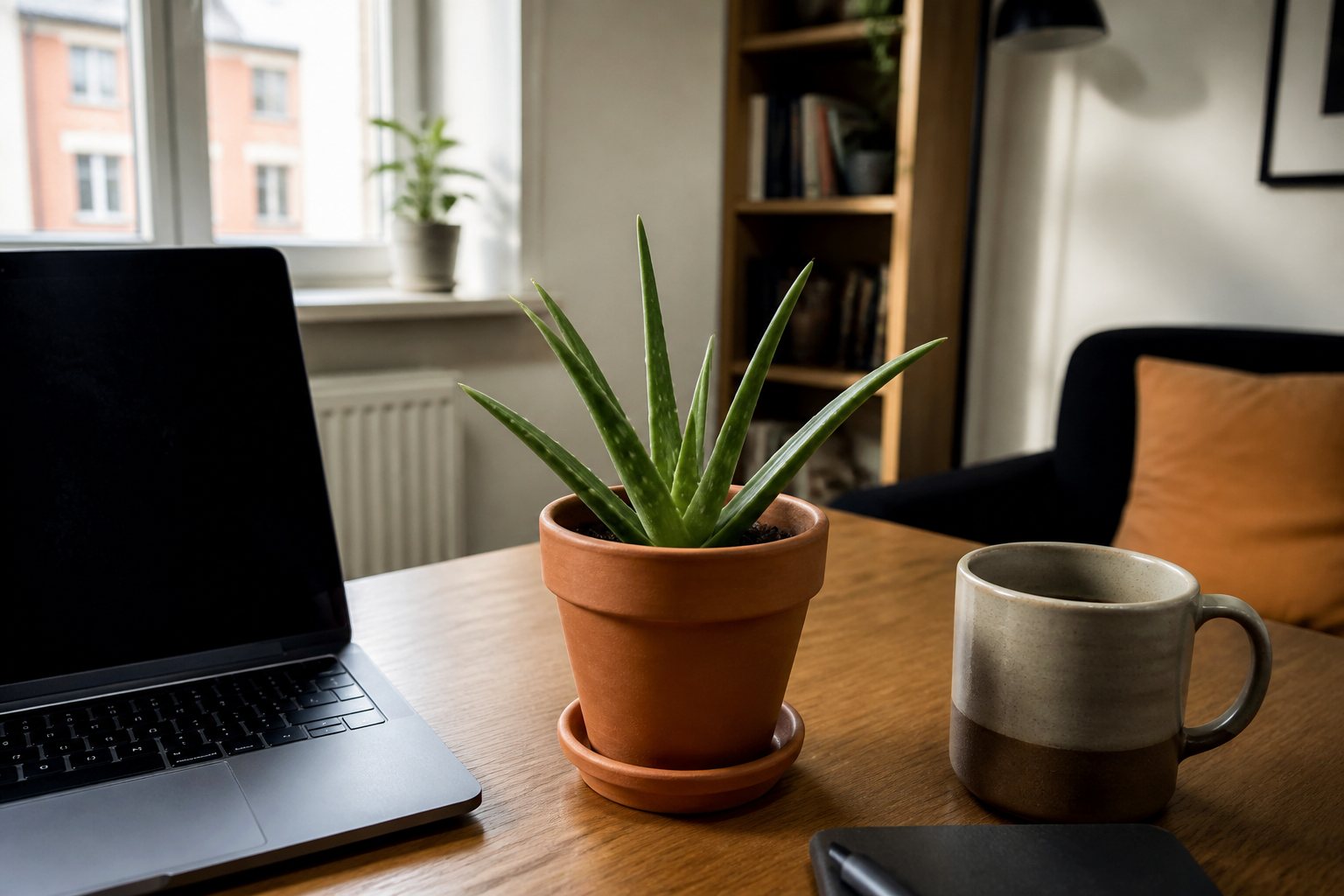
6. Aloe vera
A succulent for the sunniest window in the flat. It wants gritty cactus compost, ideally in a terracotta pot, and watering only when the soil has dried out completely. In summer it can go outside, but get it used to direct sun over a week or two.
7. Peace lily
One of the few plants that flowers in moderate light. It shows thirst clearly: the whole plant droops, then stands up again within a few hours of watering.
8. Parlour palm
A small, slow palm that tolerates less light than most palms. It does not like drying out completely, and in dry heated air it can attract spider mites, so a regular shower helps.
9. Christmas cactus
A forest cactus, so it prefers bright, indirect light and more water than desert cacti. To flower again, it needs cooler nights of around 12 to 15 °C and long dark nights in October and November.
10. Cast iron plant
The Victorian favourite earned its name by surviving cold, dim halls and irregular watering. It grows slowly, so buy a plant of the size you want. Slow, tough plants like this also make good gifts; we collected more in our list of plant gifts for a housewarming.
How do you choose a houseplant by the light in your room?
Start with the window, not with the plant. A simple test: if you can read a newspaper comfortably at noon without a lamp, the spot is suitable for most plants on this list.
- South-facing window or close to a west window: aloe vera and snake plant. Keep the Christmas cactus a little back from the glass.
- East or west window, 1 to 2 m away: monstera, spider plant, pothos, parlour palm, Christmas cactus.
- North window or deeper in the room: ZZ plant, snake plant, cast iron plant, peace lily and pothos, which will grow more slowly.
For rooms that hardly get any daylight, the choice narrows further; we covered that in a separate guide to low light houseplants for north-facing rooms.
What are the most common beginner mistakes with houseplants?
- Watering by the calendar. Push a finger 2 to 3 cm into the compost and water only when it is dry at that depth. Wet roots rot, and root rot kills far more houseplants than drought.
- A pot without a drainage hole. Decorative pots are fine as outer covers, but the plant should sit in a plastic pot with holes. Empty water from the saucer or cover pot after 15 to 20 minutes.
- Choosing by looks, not by light. A monstera three metres from a north window will survive, but it will not grow. Match the plant to the spot you have.
- Repotting straight after buying. Give a new plant two to four weeks to adjust, and then move it into a pot only 2 to 4 cm wider. Too much fresh compost stays wet for too long.
- Feeding in winter. Feed from March to September every two to four weeks at the dose on the label, and not at all from November to February, when growth all but stops.
When and how should you repot a houseplant?
Repot when roots grow out of the drainage holes, when water runs straight through the pot or when the plant becomes top-heavy. Fast growers such as pothos, monstera and spider plant usually need it every one to two years; snake plant, ZZ, aloe and cast iron plant every two to three. The best time is March to May.
- Water the plant the day before.
- Choose a pot 2 to 4 cm wider, always with a drainage hole.
- Use fresh houseplant compost; for aloe, snake plant and ZZ, mix in about a third of grit or use cactus compost.
- Set the plant at the same depth as before, fill around it and press lightly.
- Water moderately and keep the plant out of direct sun for a week.
What if there is no more room on the windowsill?
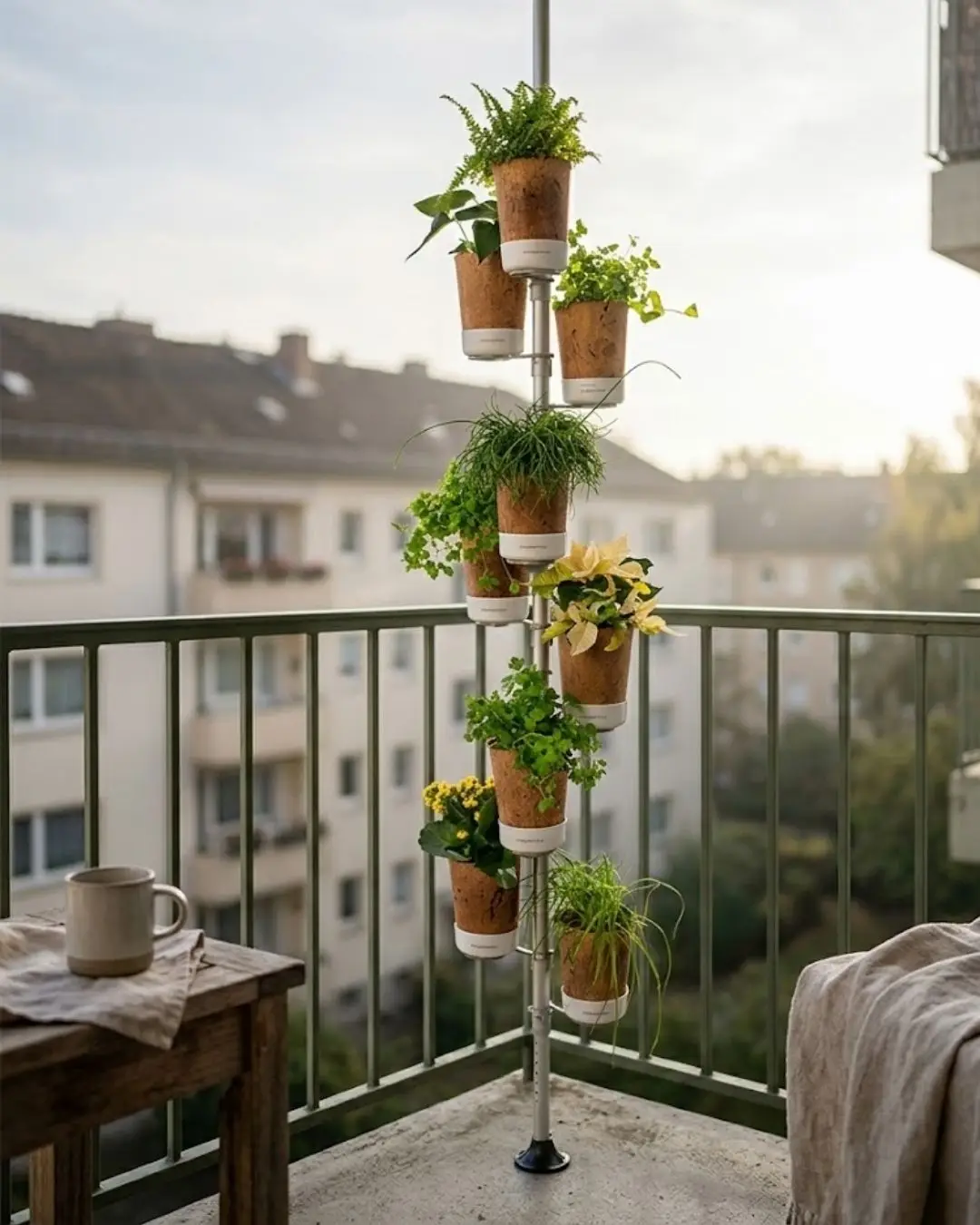
Once the sill is full, the space by the window can be used upwards. Our vertical garden without drilling clamps between floor and ceiling with a telescopic pole, adjusts up to 285 cm and holds nine pots on less than 1 m² of floor, each with a 300 ml water reservoir, so watering once or twice a week is usually enough. It suits smaller plants such as young spider plants or pothos cuttings, while aloe is better kept in its own pot. The Urban Planty vertical garden costs €149 with free shipping.
Frequently asked questions
Which houseplant is the hardest to kill?
The ZZ plant and the snake plant are the most forgiving houseplants, because both store water and cope with low light.
Which easy houseplants are safe for cats and dogs?
Spider plant, parlour palm, Christmas cactus and cast iron plant are listed as non-toxic to cats and dogs by the ASPCA. Snake plant, ZZ plant, pothos, monstera, aloe vera and peace lily are toxic if chewed and are best kept out of reach.
How often should beginners water houseplants?
Houseplants should be watered when the top 2 to 3 cm of compost is dry, not on a fixed day. For most easy houseplants this means about once a week in summer and every two to four weeks in winter.
Is a peace lily dangerous for cats?
The peace lily is toxic to cats because it contains calcium oxalate crystals, which irritate the mouth and stomach. It is not a true lily, however, and does not cause the kidney failure associated with lilies of the genus Lilium.
When is the best time to repot houseplants?
Houseplants are best repotted between March and May, when they start growing again. Move them into a pot only 2 to 4 cm wider and do not feed them for four to six weeks afterwards.