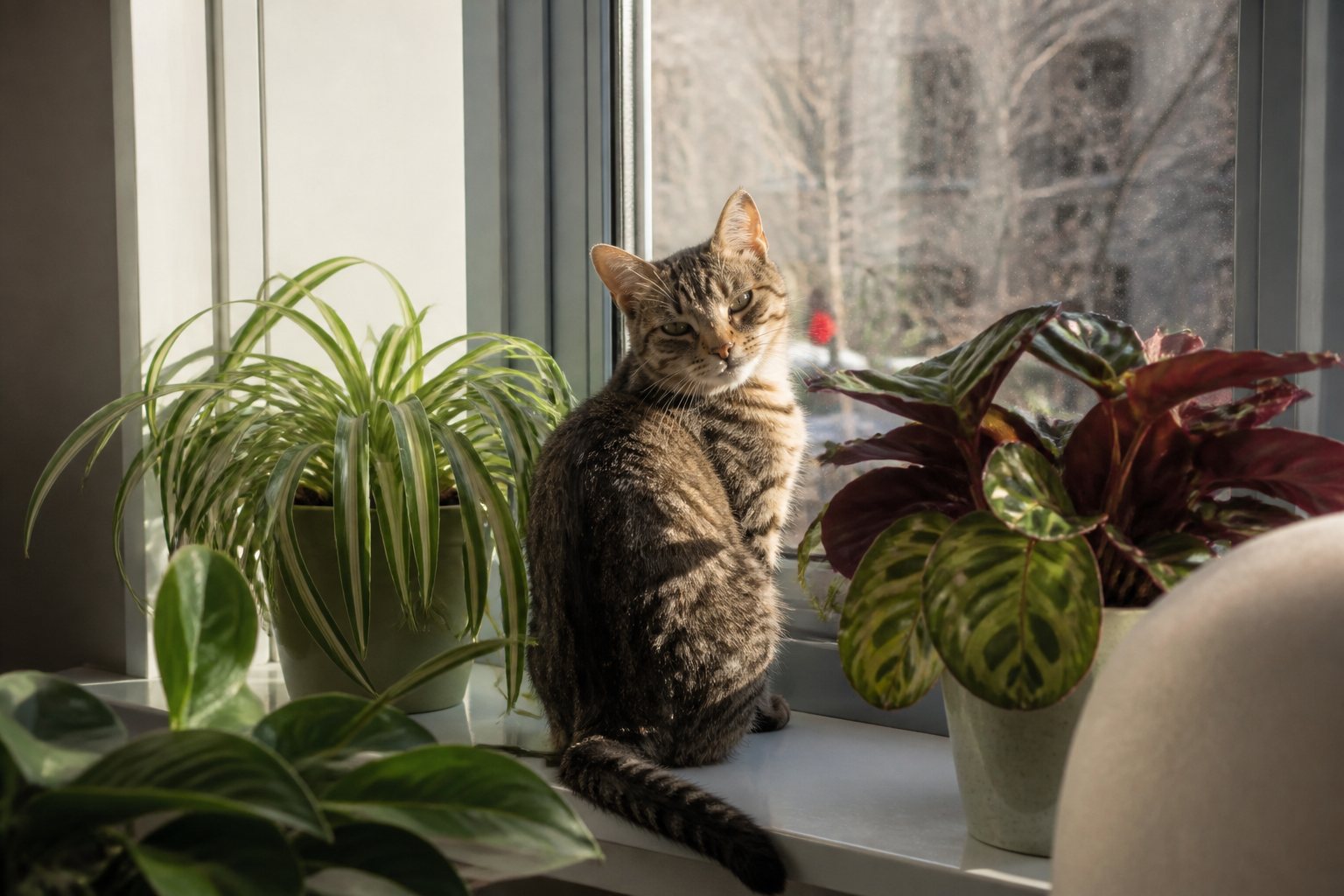

Many of the most popular houseplants in British homes, from pothos to the peace lily, are toxic to cats and dogs. Most cause no more than a sore mouth and a bout of vomiting, but a few, lilies above all, can kill a cat. The good news is that there is a long list of attractive plants that are considered safe.
The list below is based on the plant database of the ASPCA, the American animal welfare charity whose poison control centre is a standard reference for vets.
One point before the list. Non-toxic does not mean edible. A cat that eats half a spider plant may still vomit, simply because plant fibre is hard for a carnivore to digest.
Houseplants listed as non-toxic to cats and dogs by the ASPCA include spider plant, parlour palm, areca palm, Boston fern, calathea and prayer plant, Christmas cactus, African violet, peperomia, haworthia, friendship plant, ponytail palm, cast iron plant, moth orchid, basil and rosemary. Avoid lilies, which can be fatal to cats, and sago palm. If a pet eats a toxic plant, call a vet straight away.
Which houseplants are safe for cats and dogs?
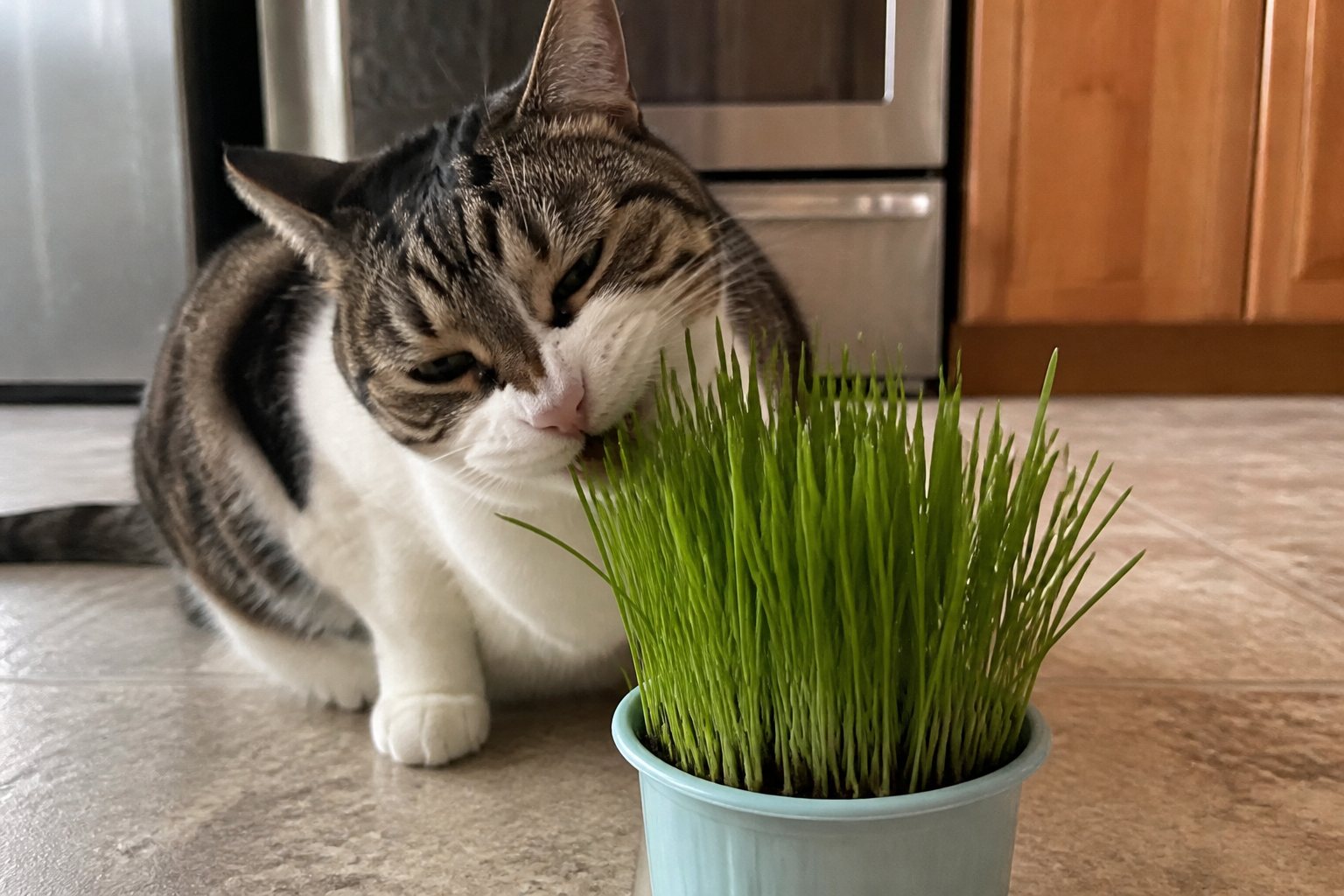
The first fourteen plants in the table are listed as non-toxic to both cats and dogs in the ASPCA database. Cat grass is a special case: it is not one species but sprouted cereal, usually oats, wheat or barley, grown precisely so that cats can chew it.
Check the Latin name on the label: several plants sold as a “palm” or a “fern” are not related to the safe ones.
| Plant | Light | Care | Note |
|---|---|---|---|
| Spider plant (Chlorophytum comosum) | bright, indirect | water when the top 2 cm is dry | cats love the arching leaves; eaten in quantity, it can cause vomiting |
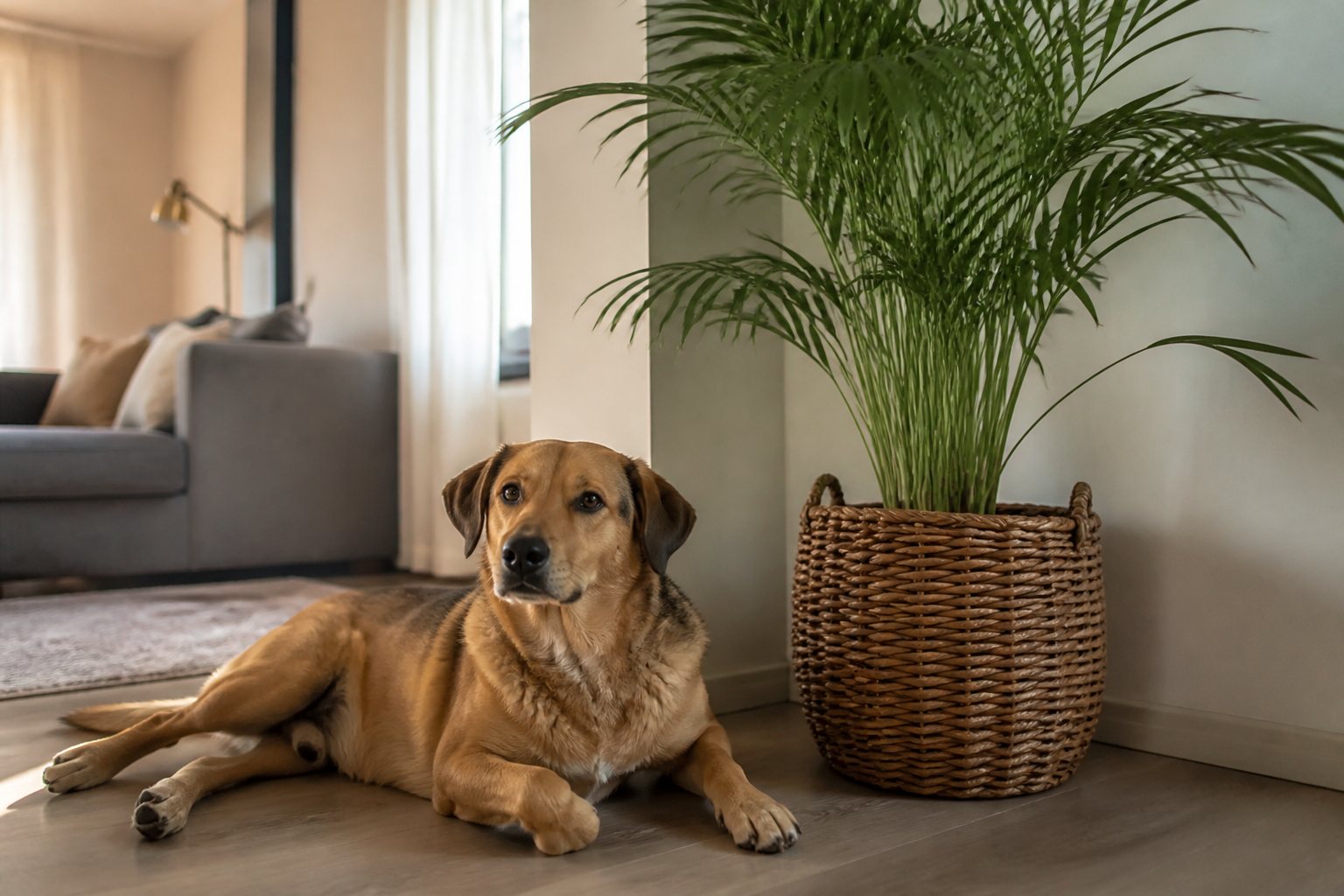
| Parlour palm (Chamaedorea elegans) | medium, indirect | keep lightly moist | one of the few palms that copes with modest light |
| Areca palm (Dypsis lutescens) | bright, indirect | water when the top 2 to 3 cm is dry | reaches 1.5 to 2 m indoors |
| Boston fern (Nephrolepis exaltata) | bright, indirect | keep evenly moist, likes humidity | not to be confused with asparagus fern, which is toxic |
| Calathea and prayer plant (Maranta) | medium, indirect | evenly moist, soft or rain water | leaves fold up in the evening |
| Christmas cactus (Schlumbergera) | bright, indirect | water when the top 2 to 3 cm is dry | a forest cactus with no sharp spines |
| African violet (Saintpaulia) | bright, no direct sun | water from below, at room temperature | flowers for much of the year |
| Peperomia (Peperomia spp.) | medium to bright | let it dry out between waterings | compact, suits a shelf |
| Haworthia (Haworthia) | bright, some sun | every 2 to 3 weeks in summer, rarely in winter | looks like a small aloe, but aloe is toxic |
| Friendship plant (Pilea involucrata) | medium, indirect | evenly moist, likes humidity | low and spreading, good for a terrarium |
| Ponytail palm (Beaucarnea recurvata) | bright, sun tolerated | sparingly; it stores water in its swollen base | not a true palm |
| Cast iron plant (Aspidistra elatior) | low to medium | every 1 to 2 weeks | survives a cool, dim hallway |
| Moth orchid (Phalaenopsis) | bright, indirect | soak the bark every 7 to 10 days and drain | the listing covers Phalaenopsis, not all orchids |
| Basil and rosemary | sunny window | basil moist, rosemary on the dry side | kitchen herbs; small nibbles are harmless |
| Cat grass (oats, wheat, barley) | bright window | keep moist, resow every 2 to 3 weeks | grown to be eaten; too much can make a cat vomit |
Plants for the living room
For height, the parlour palm, areca palm and ponytail palm are safe alternatives to a monstera. The parlour palm tolerates a spot away from the window; the other two need bright light.
For a north-facing room, the cast iron plant is the most reliable choice. We describe more forgiving species in our guide to easy houseplants for beginners, where pet safety is marked for each plant.
Plants for shelves, desks and windowsills
Peperomia, haworthia, the friendship plant and the African violet stay small, which suits a shelf or a desk. The Christmas cactus flowers in December and is a safe replacement for the poinsettia as a seasonal plant.
Basil and rosemary are a useful exception to the rule that herbs belong only in the kitchen. Both are listed as non-toxic; how to keep basil alive through a British winter is covered in our piece on growing basil indoors. Concentrated essential oils are a different matter: several are dangerous for cats, so keep diffusers and oil bottles away from them.
Which common houseplants are toxic to cats and dogs?
These plants are sold in almost every garden centre. Most contain either insoluble calcium oxalate crystals, which irritate the mouth, or saponins, which upset the stomach.
- Lilies (Lilium) and daylilies (Hemerocallis): potentially fatal for cats. Small amounts of a leaf, a petal, pollen licked from the fur or water from the vase can cause acute kidney failure. Do not keep them in a home with a cat, not even as cut flowers.
- Sago palm (Cycas revoluta): very toxic, especially to dogs. All parts are poisonous, the seeds most of all, and it can cause liver failure. Despite the name it is not a palm.
- Pothos, monstera, philodendron, dieffenbachia and ZZ plant: calcium oxalate crystals cause burning in the mouth, drooling, pawing at the face and vomiting.
- Peace lily (Spathiphyllum): not a true lily and not dangerous to the kidneys, but it irritates the mouth in the same way as pothos.
- Snake plant and aloe vera: saponins cause vomiting and diarrhoea; aloe can also cause lethargy.
- Cyclamen: the tuber is the most toxic part. It causes vomiting and diarrhoea, and large amounts can affect the heart.
- Poinsettia: only mildly toxic. The milky sap irritates the mouth and stomach, but serious poisoning is rare.
What are the signs of plant poisoning in cats and dogs?
The most common signs are drooling, pawing at the mouth, vomiting, diarrhoea, loss of appetite and unusual tiredness. With oxalate plants such as pothos or dieffenbachia, symptoms usually appear within minutes because the mouth starts to burn.
Lily poisoning in cats is more treacherous. The first signs, vomiting, low energy and refusing food, may ease after a few hours, while kidney damage develops over the next one to three days. A cat that has had any contact with a lily needs a vet even if it seems well.
What should you do if your pet has eaten a toxic plant?
- Take the animal away from the plant and remove any pieces from its mouth, if you can do so safely.
- Call your vet or the nearest out-of-hours emergency clinic at once. In the UK, the Animal PoisonLine (01202 509000) gives advice for a fee.
- Tell them which plant it was, how much was eaten and when. Take a photo of the plant or bring its label.
- Do not induce vomiting and do not give salt, milk or oil. Home remedies can do more harm than good; follow the vet’s instructions.
How do you stop a cat or dog from chewing houseplants?
- Offer something better. A pot of cat grass in a bright spot often draws a cat away from other plants. Sow a new pot every two to three weeks so there is always fresh grass.
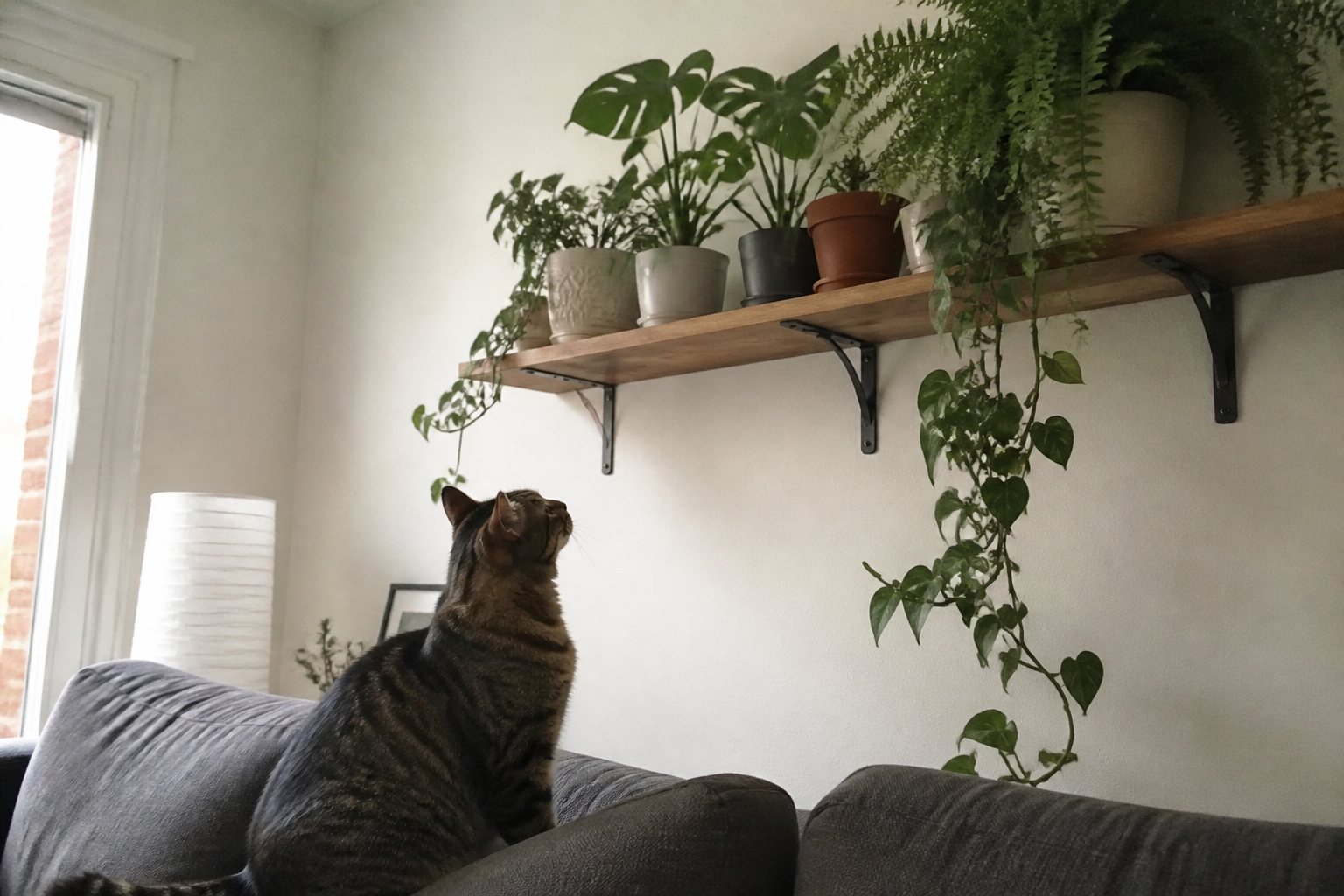
- Move plants out of reach. A high shelf or a hanging pot works against most dogs. Cats jump, so with them a safe plant choice matters more than height.
- Cover the compost. Large pebbles or pine cones on the surface stop digging and using the pot as a litter tray.
- Use a deterrent. A bitter-tasting spray for pets on the leaves of safe plants helps some animals; never rely on it for lilies or sago palm.
Can you keep plants and herbs up high, out of reach?
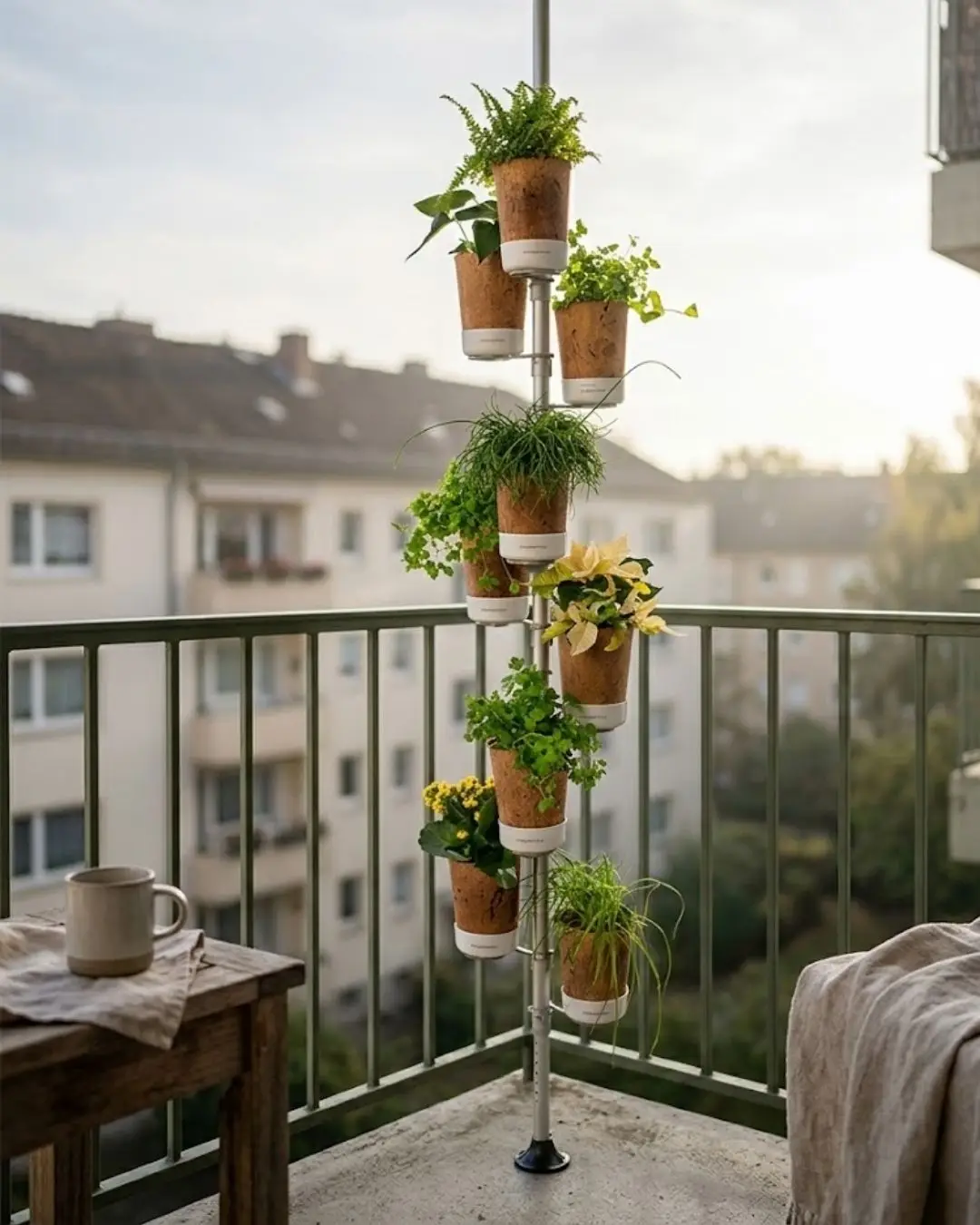
Our vertical garden without drilling clamps between floor and ceiling with a telescopic pole, adjusts up to 285 cm and holds nine plants, each pot with a 300 ml water reservoir, on less than 1 m² of floor. The upper pots keep herbs and smaller plants well above a dog, though a determined cat climbs, so fill it only with safe species. The Urban Planty Vertical Garden costs €149 with free shipping.
Frequently asked questions
Are spider plants safe for cats?
Yes. The spider plant is listed as non-toxic to cats and dogs by the ASPCA. Cats are often drawn to its leaves, and eating a lot of them can still cause vomiting.
Are lilies dangerous to cats?
Yes, true lilies and daylilies are among the most dangerous plants for cats. Even pollen or vase water can cause kidney failure, so a cat that has touched a lily needs a vet at once.
Is the peace lily toxic to cats and dogs?
The peace lily is toxic, but not in the same way as true lilies. Its calcium oxalate crystals irritate the mouth and cause drooling and vomiting rather than kidney failure.
What should I do if my dog ate a sago palm?
Call a vet or an emergency clinic immediately. Sago palm is very toxic to dogs, especially its seeds, and early treatment gives the best chance against liver damage.