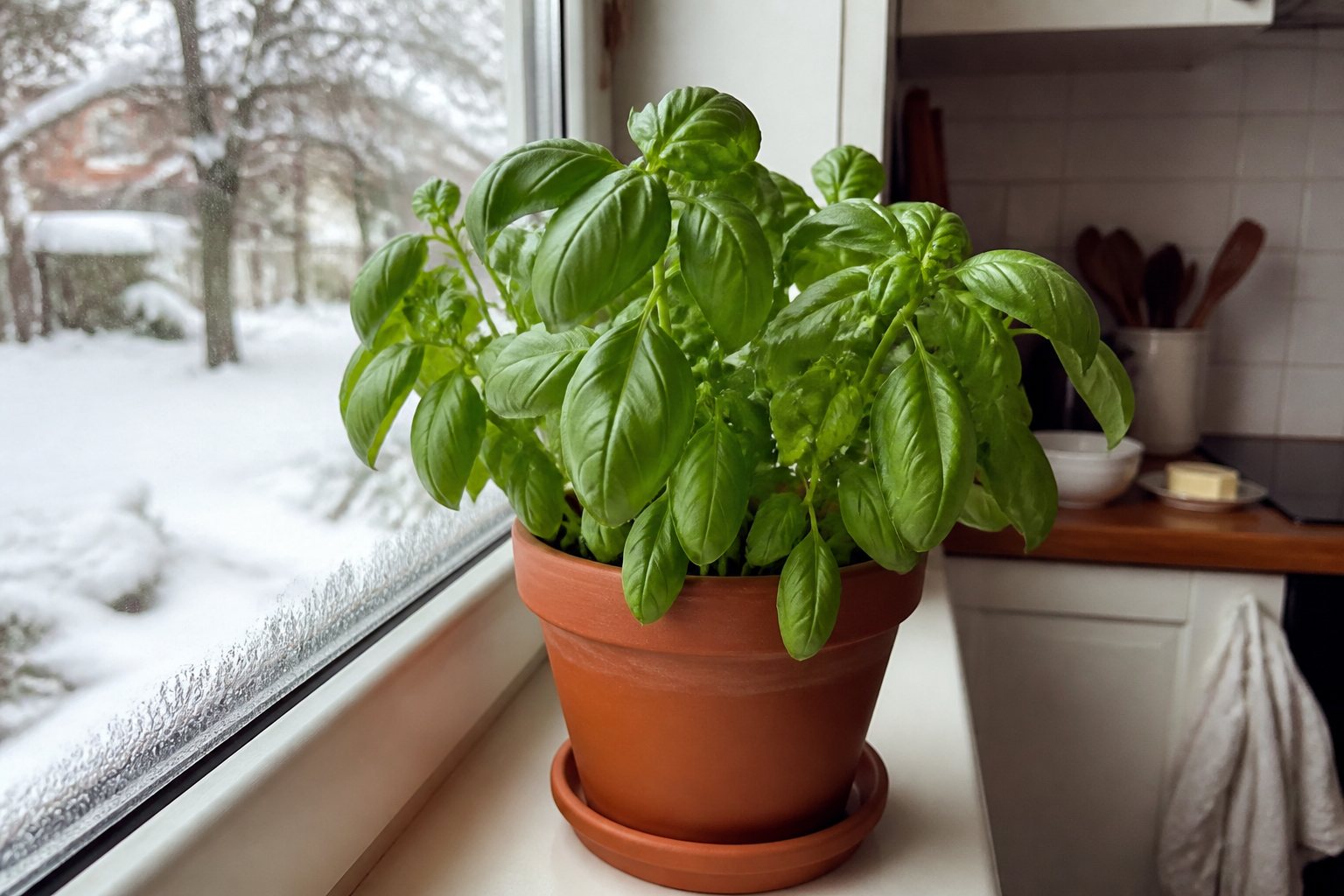

A supermarket pot of basil on the kitchen windowsill often lasts only a few weeks. The cause is rarely bad luck: it is too little light, too much water and far too many seedlings crammed into one pot. Sort out those three things and basil will keep growing indoors through December.
Basil (Ocimum basilicum) is a tender annual from warm climates. It dislikes cold, needs plenty of light and wants compost that stays evenly moist but never wet. In Britain it only goes outside in early June, once nights stay above 12 °C.
Indoors the kitchen is warm enough, but from November to February the light is thin.
Grow basil indoors on your brightest window, ideally south-facing, at 18–25 °C and never below 12 °C. Use a pot at least 12–14 cm across with drainage holes. Water when the top 2 cm of compost is dry. Split a supermarket pot into three or four clumps. Pinch the tips just above a pair of leaves and remove flower buds as they appear.
How much light does basil need in winter?
Basil needs at least six hours of good light a day. In December, London gets fewer than eight hours of daylight and the sun sits low, so a south or south-west-facing window is the only reliable spot without extra lighting.
On a north-facing sill basil grows tall and thin, with small, pale leaves spaced far apart.
Set the pot right against the glass and give it a quarter turn every few days so it grows evenly.
What temperature is too cold for basil?
Basil grows best at 20–25 °C. Below 15 °C growth almost stops, and below 12 °C dark, glassy patches appear on the leaves. At around 5 °C the plant collapses within days.
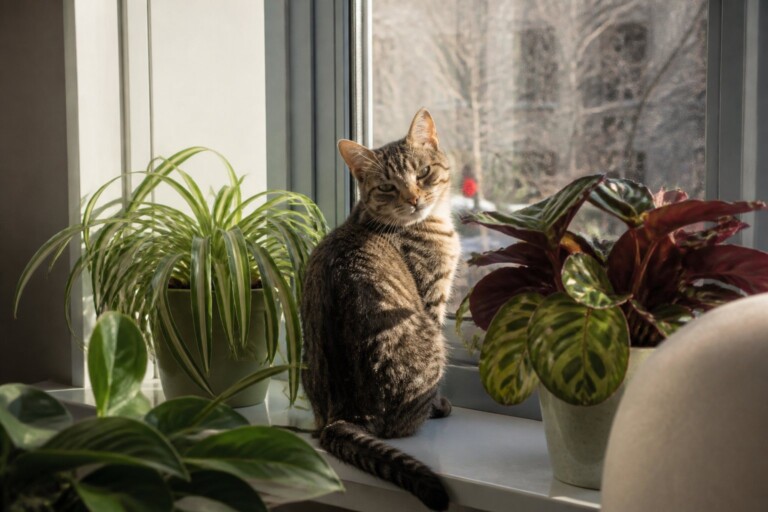
In winter the windowsill itself is the danger zone. At night the air next to single glazing, or behind a drawn curtain, can be five degrees or more colder than the room. Leaves touching cold glass often blacken. Basil also dislikes draughts.
What size pot and compost does basil need?
Basil makes a dense root ball and dries out fast in a small pot. A single plant or small clump needs a pot 12–14 cm across; a larger bush 16–20 cm. Drainage holes are essential.
- Compost: a good peat-free multipurpose or herb compost with about a fifth of perlite or grit mixed in for drainage.
- No garden soil: it compacts in pots, drains badly and can bring in pests.
- Saucer: tip away any water left in the saucer 15–20 minutes after watering.
- Feeding: from March to September every two to three weeks with liquid herb or seaweed feed at half strength; in winter once a month at most, or not at all.
Is it better to sow basil or buy a pot from the supermarket?
Sowing on the windowsill
You can sow basil indoors at any time of year if you can give it enough light. Scatter the seed over moist compost and cover it only very lightly, half a centimetre at most. At 20–25 °C it germinates in 5–10 days.
Cover the pot with a clear bag until the seedlings appear. At two pairs of true leaves, thin them so three or four plants share a 10 cm pot.
Split the supermarket pot
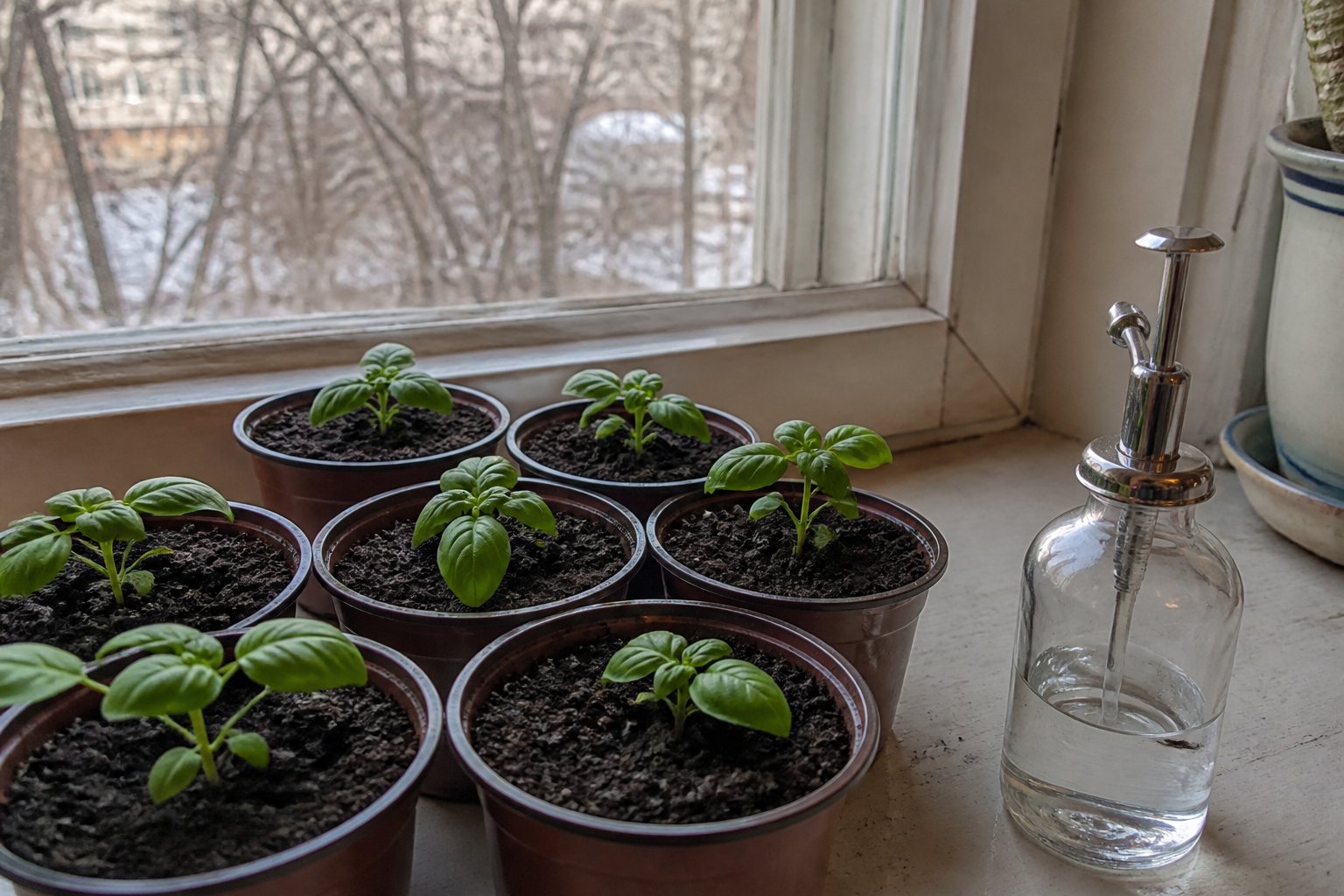
A living basil pot from Tesco or Sainsbury’s costs a pound or two and can hold fifty or more seedlings, grown under glass to look good on the shelf rather than to last.
- Water the pot and leave it for half an hour so the root ball softens.
- Slide the root ball out of the plastic pot and divide it by hand or with a knife into three or four equal pieces.
- Plant each piece in its own 12–14 cm pot of fresh compost.
- Keep them out of strong midday sun for three or four days, then move them to your brightest window.
How often should you water basil in a pot?
There is no fixed schedule. The rule is simple: water when the top 1–2 cm of compost feels dry. On a sunny summer sill that can mean every day or two; in winter perhaps once a week.
Water in the morning, with water at room temperature, onto the compost rather than the leaves.
Thirsty basil droops, but so does overwatered basil, and then the compost is wet. Always check with a finger before reaching for the watering can.
Where do you pinch basil to make it bushy?
Basil left alone grows as a single stem and flowers sooner. When the plant is about 15 cm tall with three or four pairs of leaves, pinch out the top of the stem just above a pair of leaves. Two new shoots will grow from the leaf joints.
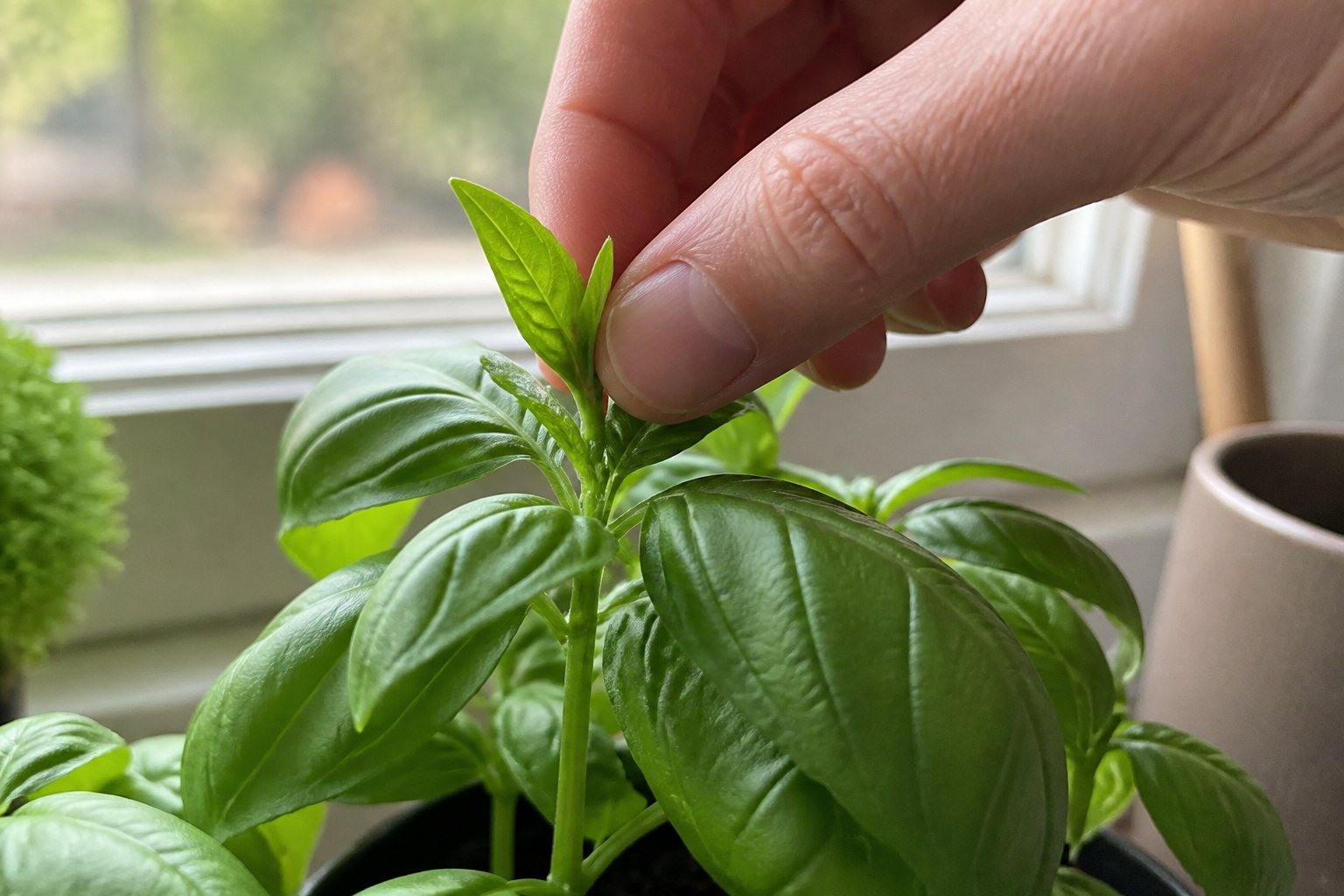
When those new shoots have grown a few pairs of leaves, repeat. After two or three rounds you have a low, dense plant with four to eight tips instead of one bare stem.
Never cut into a bare, woody section of stem with no leaves. Basil will not regrow from there, so always leave at least two pairs of leaves below the cut.
How do you harvest basil so it keeps growing?
- Harvest whole tips rather than picking single leaves from the bottom. Stripping lower leaves weakens the plant and does nothing to make it branch.
- Take no more than a third of the leaves at once, then let the plant recover.
Why are my basil leaves turning yellow or black?
Most problems have a handful of causes:
| Symptom | Most likely cause | What to do |
|---|---|---|
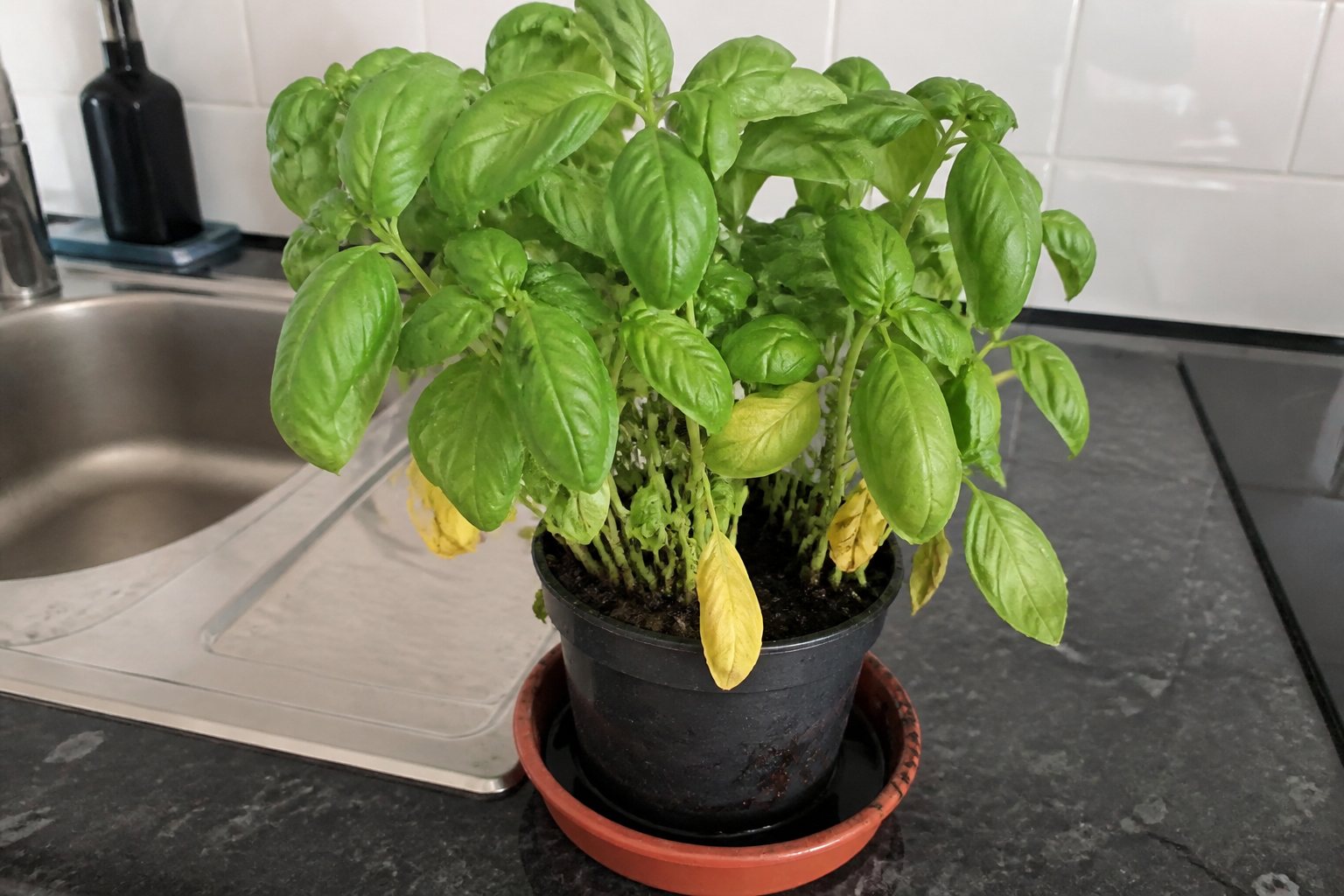
| Lower leaves yellow, compost wet | too much water, water standing in the saucer | water less often, empty the saucer, check the drainage holes |
| Dark, glassy patches or black leaves | cold below 12 °C, contact with cold glass, draughts | move away from the glass, take off the sill at night |
| Yellow leaves with grey-purple fuzz underneath | basil downy mildew | remove affected leaves, water in the morning, improve air flow |
| Stem dark and soft at the base, plant collapses | root rot from constant wet | the plant rarely recovers; root healthy tips in a glass of water |
What should you do when basil starts to flower?
Once basil flowers, the plant puts its energy into seed, produces fewer leaves and the flavour becomes more bitter. Pinch out flower buds as soon as you see them, together with the pair of leaves below.
Which basil varieties grow best on a windowsill?
- Genovese: the classic large-leaved basil for pesto and tomato sauces. It reaches 40–50 cm, so pinch it regularly.
- Greek bush basil (Ocimum basilicum var. minimum): tiny leaves and a compact habit of 20–30 cm. The most forgiving choice for a sill.
- Thai basil: aniseed scent and purple stems, a little more tolerant of heat. Good for South-East Asian cooking.
- Purple basil (for example ‘Dark Opal’): ornamental and aromatic, but needs even more light than green types.
Can you grow basil in a vertical garden?
Yes, as long as it stands in good light. The hardest thing with basil is keeping the moisture even: a small pot dries out fast, while a saucer of standing water rots the roots. Pots with a reservoir, from which the compost draws water as it needs it, suit it well.
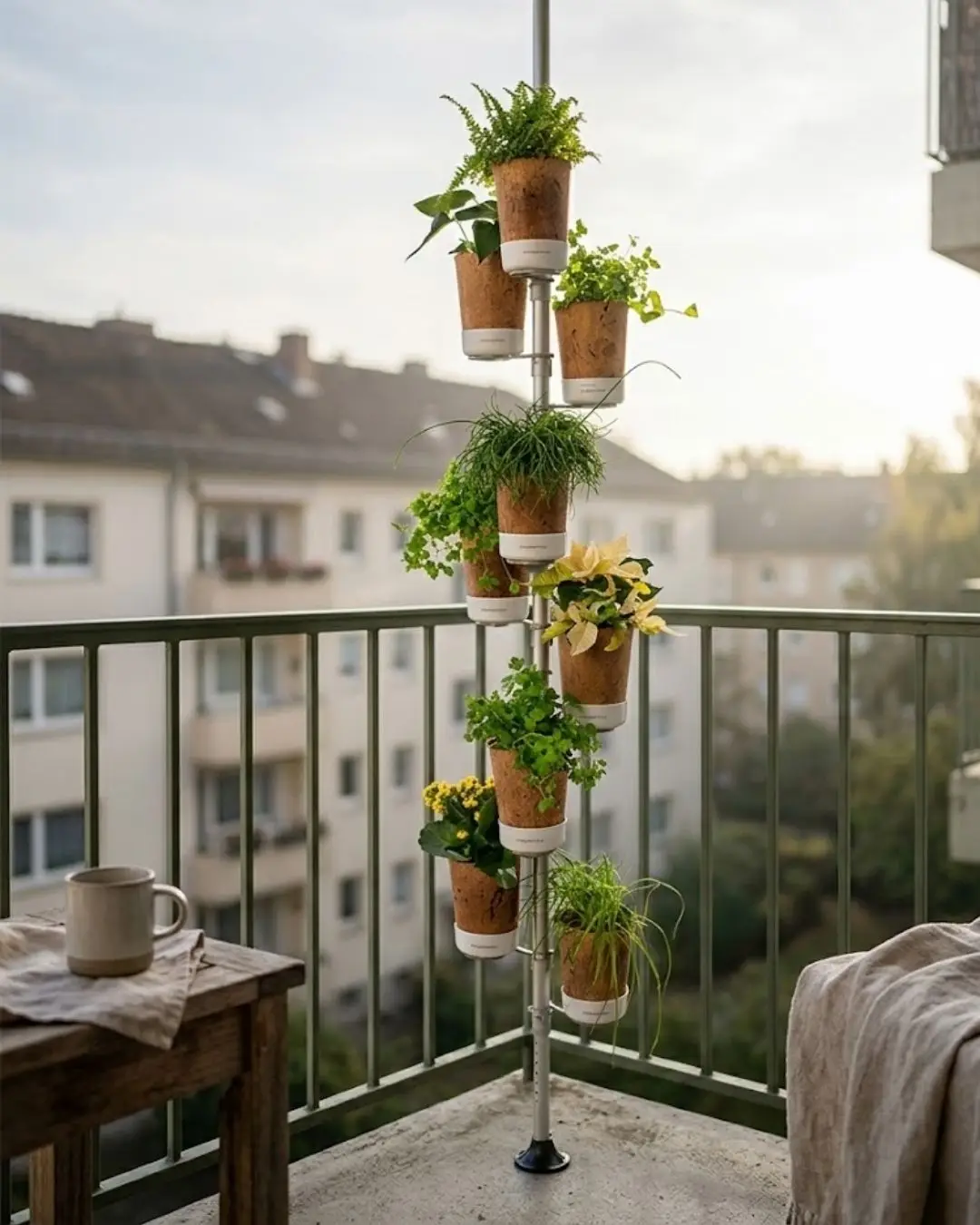
The Urban Planty Vertical Garden has pots like this. A telescopic pole clamps between floor and ceiling, so there is no drilling, which matters in a rented flat. It holds nine plants on less than a square metre of floor, and each pot has a 300 ml water reservoir, so you water once or twice a week. You can read more about this vertical garden without drilling, which costs €149 with free delivery.
From late May to September it can stand on the balcony; in winter, next to your brightest window. Put basil in the top pots, where the light is best, and parsley or chives lower down, as they cope with a little more shade. See also our balcony herb garden guide.

Frequently asked questions
Why does supermarket basil die so quickly?
A supermarket basil pot holds dozens of seedlings competing for water and light. If you split it into three or four clumps and repot each into a larger pot, the basil can last for months.
Can basil survive winter on a windowsill?
Yes, basil survives winter indoors on a south-facing sill or under a grow light, as long as it stays above 12–15 °C. It grows more slowly in winter, so water and harvest less.
How often should I water basil in a pot?
Water potted basil when the top 1–2 cm of compost is dry. In summer that may be daily, in winter roughly once a week, and water should never sit in the saucer.
Where should I pinch basil to make it bushy?
Pinch basil just above a pair of leaves once the plant has three or four leaf pairs. Two new shoots grow from that leaf joint, so the plant becomes bushier.
Why are my basil leaves turning black?
Basil leaves usually turn black from cold below 12 °C, contact with cold window glass or draughts. Move the plant away from the glass at night and keep it away from open windows.