
Lavender, lemon balm and the so-called mosquito plant are sold every summer as natural protection for the balcony. The honest answer is that a pot of herbs on its own keeps very few mosquitoes away. The scented oils in crushed leaves can help for a short while, but the measures that really work are less romantic.
That does not make the herbs pointless. They smell good, they are useful in the kitchen and, used the right way, they add a little to the protection you get from more effective methods.
Below is what the evidence says, which plants are worth growing, how to use them, and what to do first if mosquitoes are spoiling your summer evenings.
Living plants repel few mosquitoes on their own. Crushed leaves of lemon balm, catmint, lemongrass, basil or lavender release oils that may deter them briefly, usually for well under an hour. Far more effective are emptying standing water every week, a fan blowing across the table, insect screens and a skin repellent approved in the EU or UK, such as DEET, icaridin or IR3535.
Do plants really keep mosquitoes away?
Not to any useful degree, if the plant simply stands in its pot. Mosquitoes find people mainly by the carbon dioxide we breathe out, by body heat and by skin odour. A lavender plant a metre away does not mask any of that.
Studies of the popular scented geranium sold as the mosquito plant found that the intact plant gave little or no protection. The fragrant compounds sit in tiny glands on the leaves and are released mainly when the leaves are bruised or crushed.
Crushed leaves are a different matter. Oils such as citronellal, citral, linalool and nepetalactone do deter mosquitoes in laboratory tests. The catch is that they evaporate quickly, so the effect fades within minutes to, at most, about an hour.
Which plants are used against mosquitoes on a balcony?
The plants below are the ones most often recommended. Their scent comes from the same groups of compounds used in some commercial repellents, though at far lower and less reliable concentrations. All of them grow well in pots on a sunny or partly sunny balcony.
| Plant | Scent | Light | Care | How to use |
|---|---|---|---|---|
| Lemon balm (Melissa officinalis) | Lemony | Sun to part shade | Hardy perennial; keep moist, cut back after flowering | Rub a few leaves between your fingers near the table |
| Lavender (Lavandula angustifolia) | Floral, sweet | Full sun | Gritty compost, water sparingly, trim after flowering | Place by the seating; brush the flower spikes |
| Basil | Spicy, clove-like | Full sun, warm | Tender annual; outdoors only from late May or June | Pick and crush leaves; use the rest in the kitchen |
| Catmint (Nepeta cataria) | Minty, sharp | Sun | Hardy, undemanding; cats love it | Crush leaves; scent is strongest when bruised |
| Scented pelargonium ‘Citrosa’ | Lemony | Sun | Not frost-hardy; overwinter indoors | Brush leaves; little effect as a standing plant |
| Rosemary | Resinous | Full sun | Dry, well-drained compost; protect from hard frost | Throw a sprig on the barbecue or crush it |
| Mint | Fresh, menthol | Part shade | Its own pot, as it spreads; keep moist | Crush leaves near the seating |
| Lemongrass (Cymbopogon citratus) | Lemon | Full sun, warm | Tender; bring indoors before frost | Crush or cut stems |
| French marigold (Tagetes) | Strong, pungent | Full sun | Annual; deadhead to keep it flowering | Mainly decorative; evidence is weak |
The mosquito plant: why the evidence is weak
The plant sold as ‘Citrosa’ or the mosquito plant is a scented pelargonium with a citronella-like smell. It is not the source of citronella oil, which comes from tropical grasses related to lemongrass.
Tests in which people sat next to the plants showed almost no reduction in bites. As a pretty, lemon-scented balcony plant it is fine; as protection it should not be relied on.
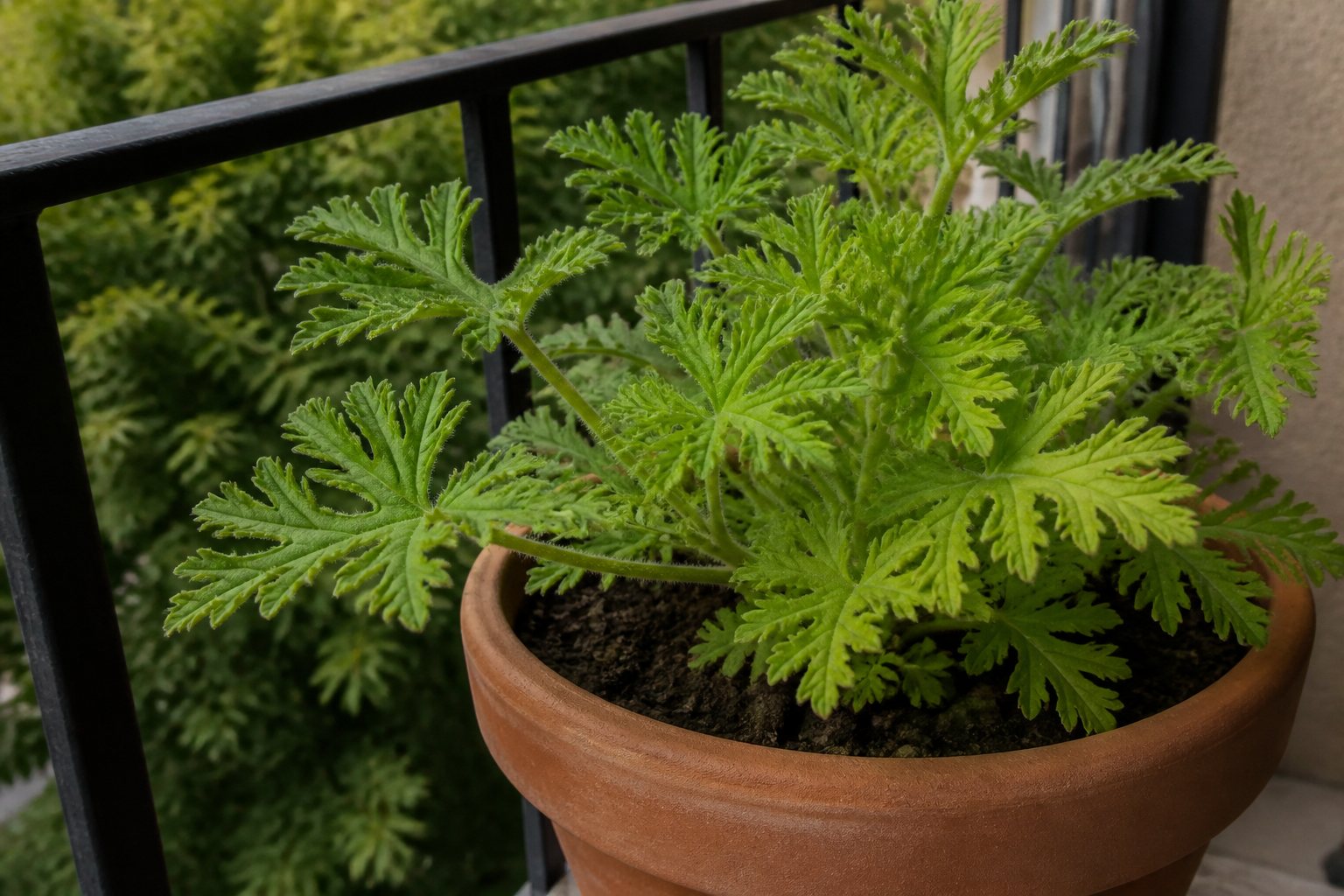
Catmint and lemongrass
Catmint has the best laboratory results of the group. Nepetalactone, the compound that excites cats, repelled mosquitoes in several studies. Whether a plant on the balcony achieves anything similar has not been well tested.
Lemongrass contains citral, which also has some repellent effect. It needs warmth and will not survive a British or central European winter outdoors, so treat it as a summer plant or bring it inside to a bright windowsill.
How should you use the plants to get any benefit?
- Put them right by the seating. A pot at the far end of the balcony does nothing. Group the herbs within arm’s reach of the table.
- Release the scent. Brush or crush a few leaves when you sit down, and again after half an hour.
- Be careful on skin. Rubbing leaves on your arms gives brief protection at best and can irritate sensitive skin. Test a small patch first, keep it away from eyes and do not use it on young children.
- Do not expect miracles in still air. On a warm, windless evening near water, no plant will make a noticeable difference.
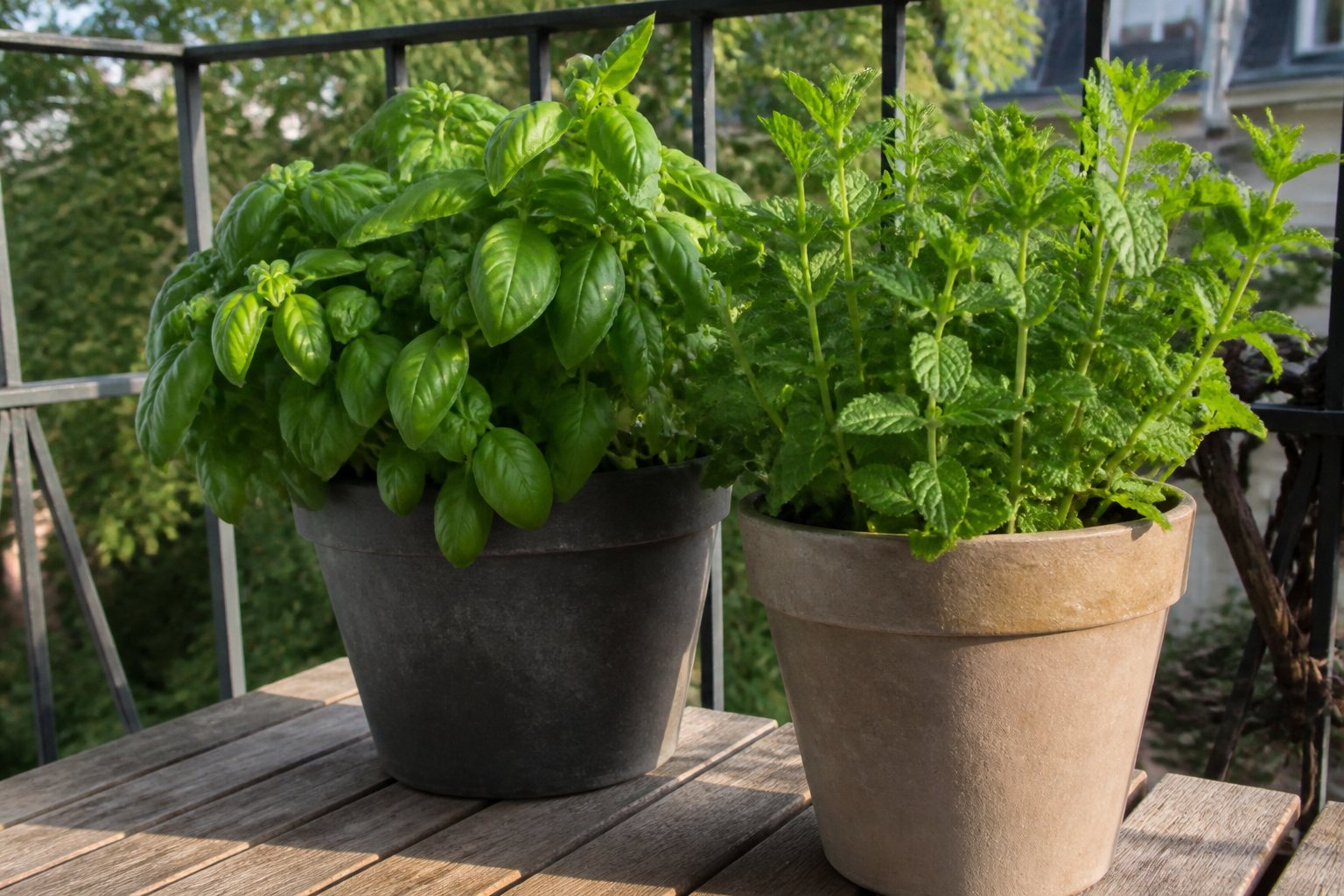
A pleasant side effect is that the same plants go straight into the kitchen. Basil, mint, lemon balm and rosemary are all worth growing for their leaves alone, as described in our guide to a balcony herb garden.
What works better against mosquitoes than plants?
- No standing water. Mosquitoes lay eggs in tiny amounts of water: plant saucers, watering cans, buckets, blocked gutters. In warm weather the larvae can develop into adults in about a week, so empty and wipe saucers at least once a week.
- A fan. Mosquitoes are weak fliers. A small fan blowing across the table makes it hard for them to land and disperses the carbon dioxide they follow.
- Insect screens. Fly screens on windows and balcony doors keep mosquitoes out of the flat, especially at night.
- Approved repellents. Skin repellents based on DEET, icaridin, IR3535 or PMD (from lemon eucalyptus oil) have been tested in trials and protect for several hours. Follow the label, especially for children.
- Clothing. Light-coloured long sleeves and trousers in the evening reduce the skin area available.

What should you know about the Asian tiger mosquito?
The Asian tiger mosquito (Aedes albopictus) is black with white stripes on its body and legs. It is now common in Italy and Slovenia and is spreading in Germany, Austria, Hungary and other parts of central Europe. In Britain it is not established, though it has been detected occasionally.
Unlike most native species, it bites mainly during the day, especially in the morning and late afternoon. It breeds in very small containers, exactly the kind found on balconies, and its eggs can survive dry on the walls of a saucer for months.
So the advice is the same, only stricter: no standing water, and scrub saucers and pots rather than just tipping them out. Plants will not stop a tiger mosquito any more than an ordinary one.
How can you arrange herbs near the seating area?
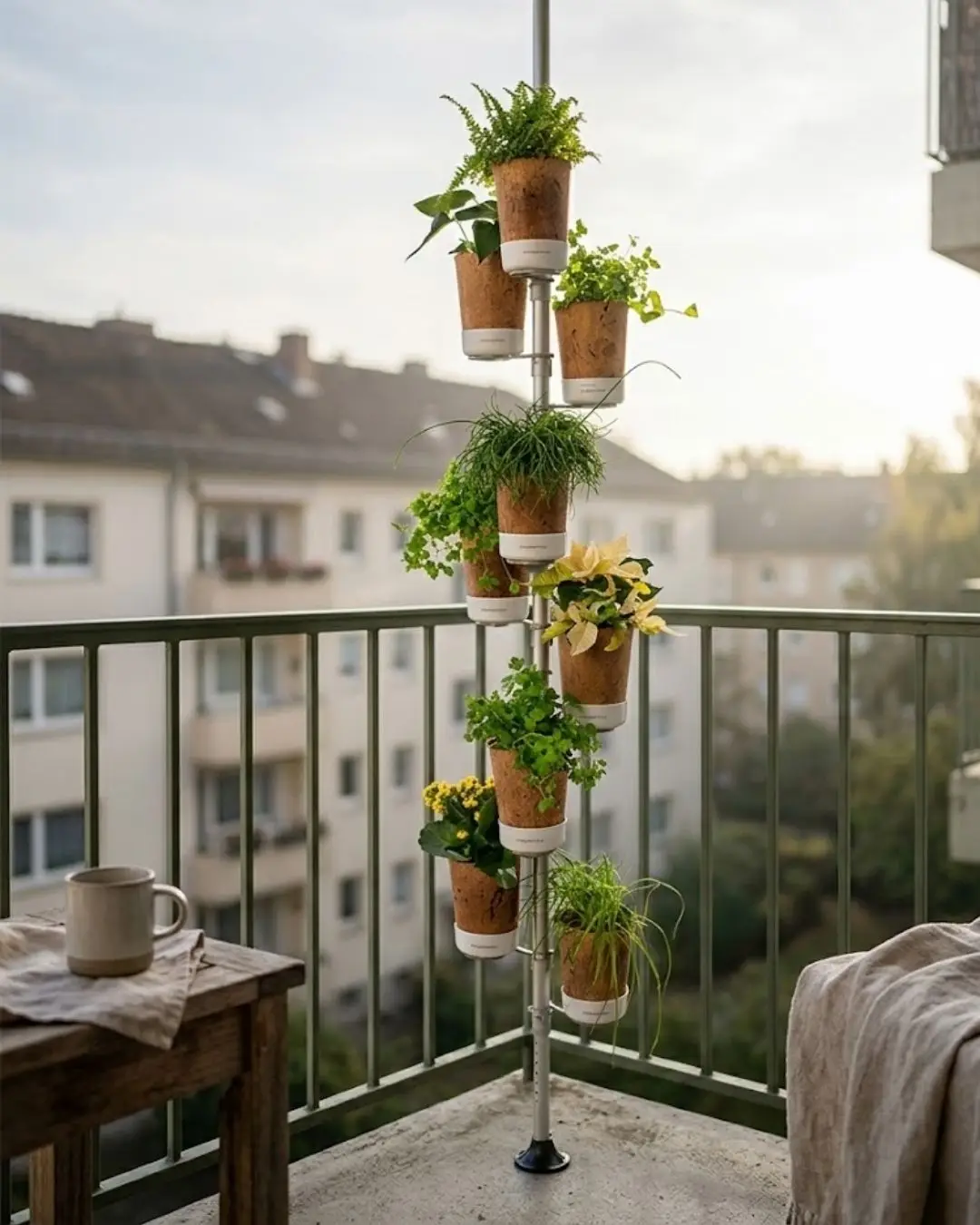
On a small balcony there is rarely room for nine separate pots next to the table. A vertical garden without drilling groups them on one pole: the Urban Planty Vertical Garden clamps between floor and ceiling, holds nine plants on less than a square metre, and each pot has a 300 ml reservoir, so watering once or twice a week is enough. It costs €149 with free delivery. If basil is on your list, our basil growing guide explains how to keep it going.
Frequently asked questions
Do plants that repel mosquitoes actually work?
Plants standing in a pot repel very few mosquitoes. Crushed leaves of lemon balm, catmint, basil or lemongrass release oils that may deter mosquitoes for a short time, usually well under an hour.
Does the mosquito plant (Pelargonium 'Citrosa') keep mosquitoes away?
Studies found that the intact ‘Citrosa’ scented pelargonium gives little or no protection from bites. It is a pleasant lemon-scented balcony plant, but not a reliable repellent.
Can I rub lavender or lemon balm leaves on my skin?
Crushed lavender or lemon balm leaves give only brief protection and can irritate sensitive skin. Test a small patch first, avoid the eyes and do not use them on young children.
What is the most effective way to keep mosquitoes off a balcony?
The most effective measures are emptying standing water from saucers and containers every week, a fan across the seating area, insect screens and an approved repellent with DEET, icaridin or IR3535.
Do plants help against the Asian tiger mosquito?
Plants do not stop the Asian tiger mosquito, which bites during the day and breeds in small containers. Scrubbing saucers and removing standing water every week matters most.