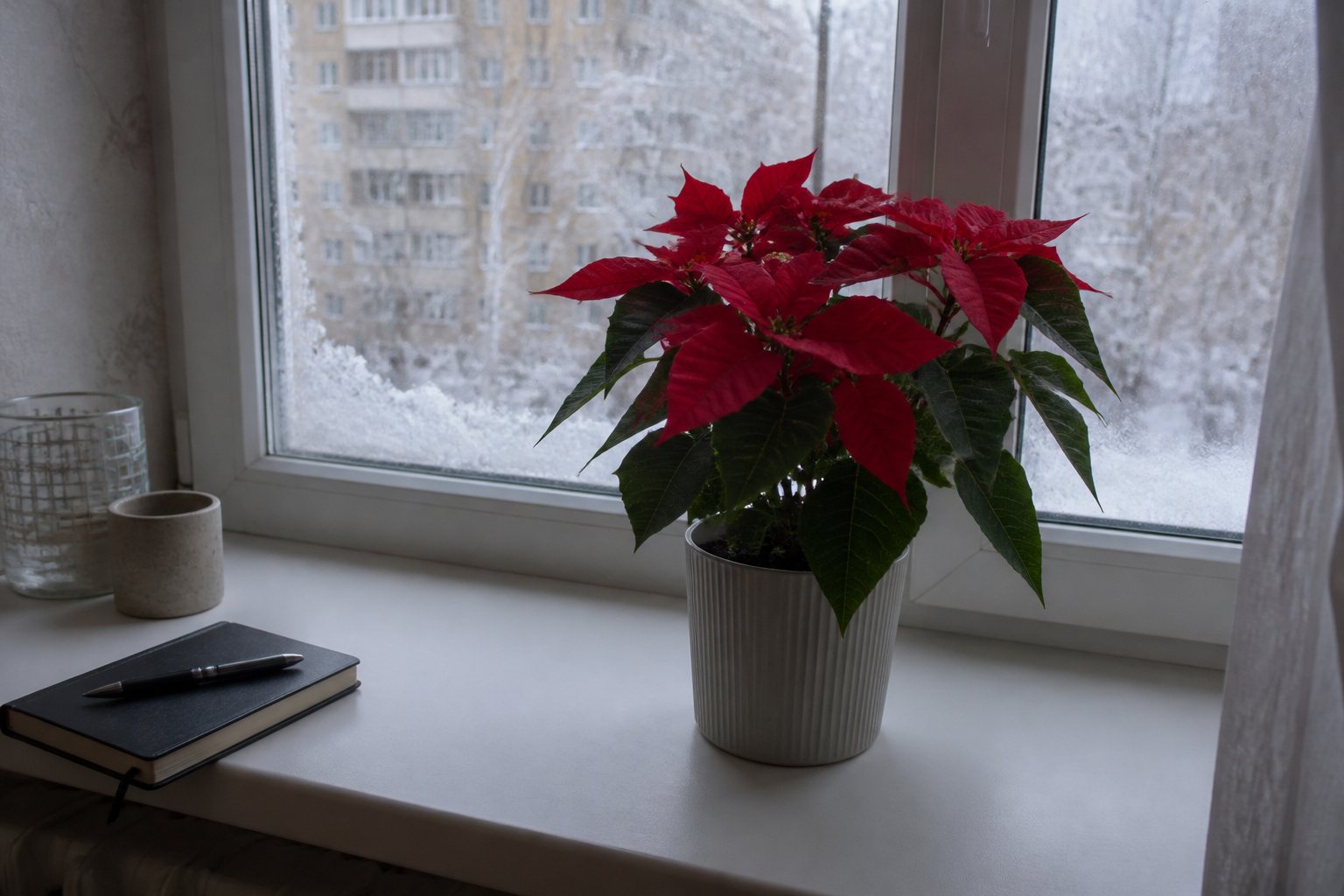

The poinsettia is the best-selling pot plant in December and, quite often, the first casualty of the festive season. It rarely fails because of pests or disease. Cold on the way home, draughts and too much water account for most losses, and all three are easy to avoid.
Euphorbia pulcherrima is a shrub from western Mexico, used to warmth and fairly dry air. A British living room in winter offers short days, hot radiators and cold window panes, which explains most of the problems people see.
The red “petals” are in fact modified leaves called bracts. The true flowers are the small yellow-green cyathia in the centre.
A poinsettia needs a bright spot out of hot direct sun, 15 to 22 °C, no draughts and lukewarm water only when the top of the compost feels dry. Tip out any water left in the saucer after 15 minutes. Leaves usually drop because of cold, draughts or overwatering. To turn red again it needs about 14 hours of total darkness a night for 8 weeks from early autumn.
How do you choose a healthy poinsettia in the shop?
Look at the centre of the bracts first. The small yellow cyathia should be fresh and tight or only just opening. If they have dropped or are shedding pollen, the plant is older and will fade sooner.
Green leaves should reach right down to the rim of the pot, with no yellowing or drooping at the base. The compost should feel slightly moist, neither sodden nor bone dry.
- Bracts: evenly coloured, no brown edges or green patches.
- Cyathia: yellow or yellow-green and still on the plant.
- Leaves: dense and dark green, including low down on the stems.
- Where it is sold: avoid plants on outdoor market stalls, by supermarket doors or in draughty garden centre entrances. A few hours below 10 °C damages the plant, and the leaves often fall days later at home.
- Plastic sleeves: a plant left in its sleeve for a long time starts to droop. Choose one standing unwrapped if you can.

Where should you put a poinsettia indoors?
The best spot is bright, close to an east or west-facing window, but not pressed against the glass where low sun can scorch the leaves on a clear day. Winter light in Britain is weak, so a dim corner of the sitting room will not do, however festive it looks there.
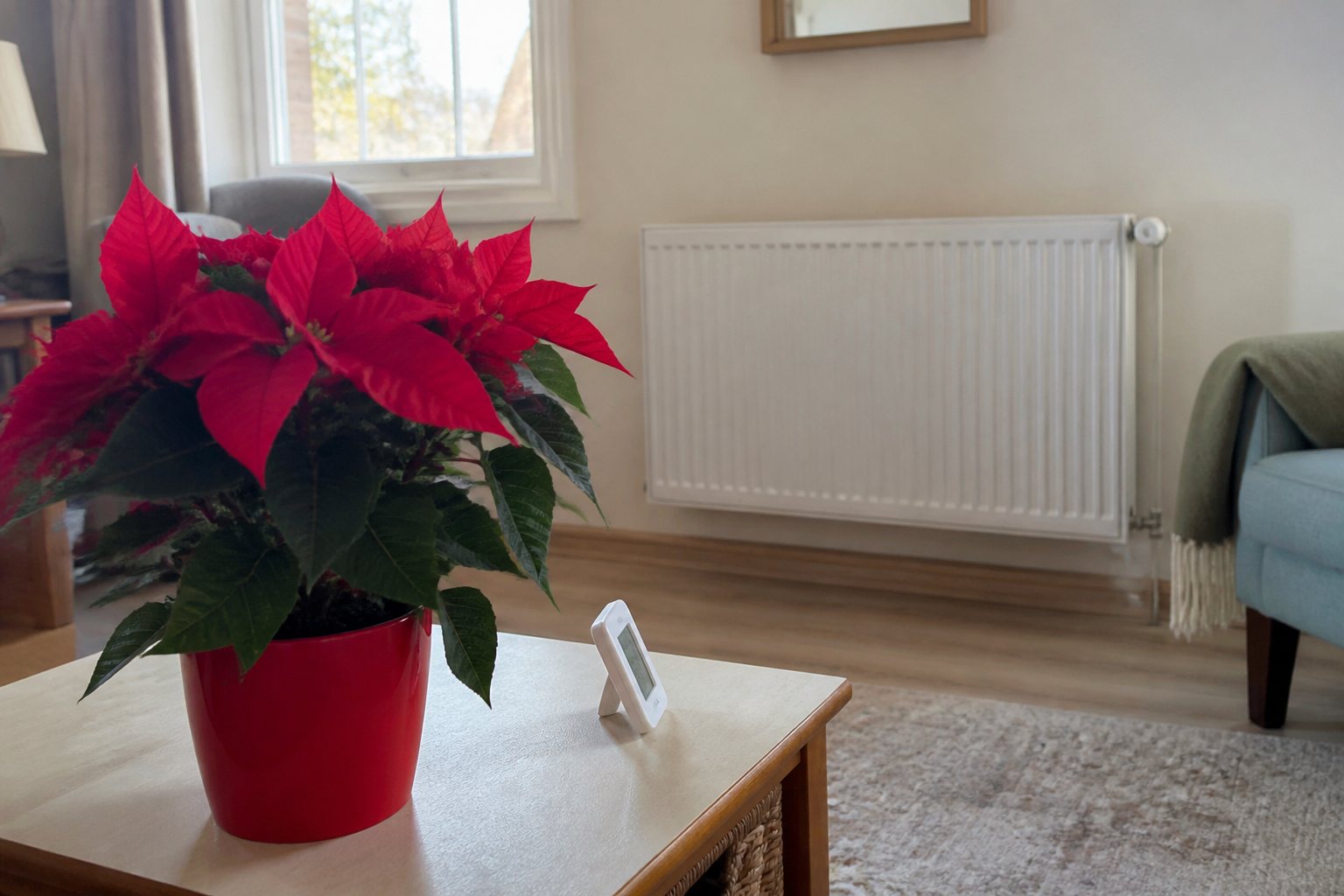
Aim for 15 to 22 °C. The plant dislikes both cold and heat, so keep it off a windowsill above a radiator, away from a wood burner and well clear of a back door that is opened all day. When you air the room in the morning, move it away from the open window: one blast of cold air can cost it its leaves.
How often should you water a poinsettia?
There is no “once a week” rule. Water when the top centimetre or two of compost feels dry. In a warm room that is usually every five to seven days, less often in a cooler one.
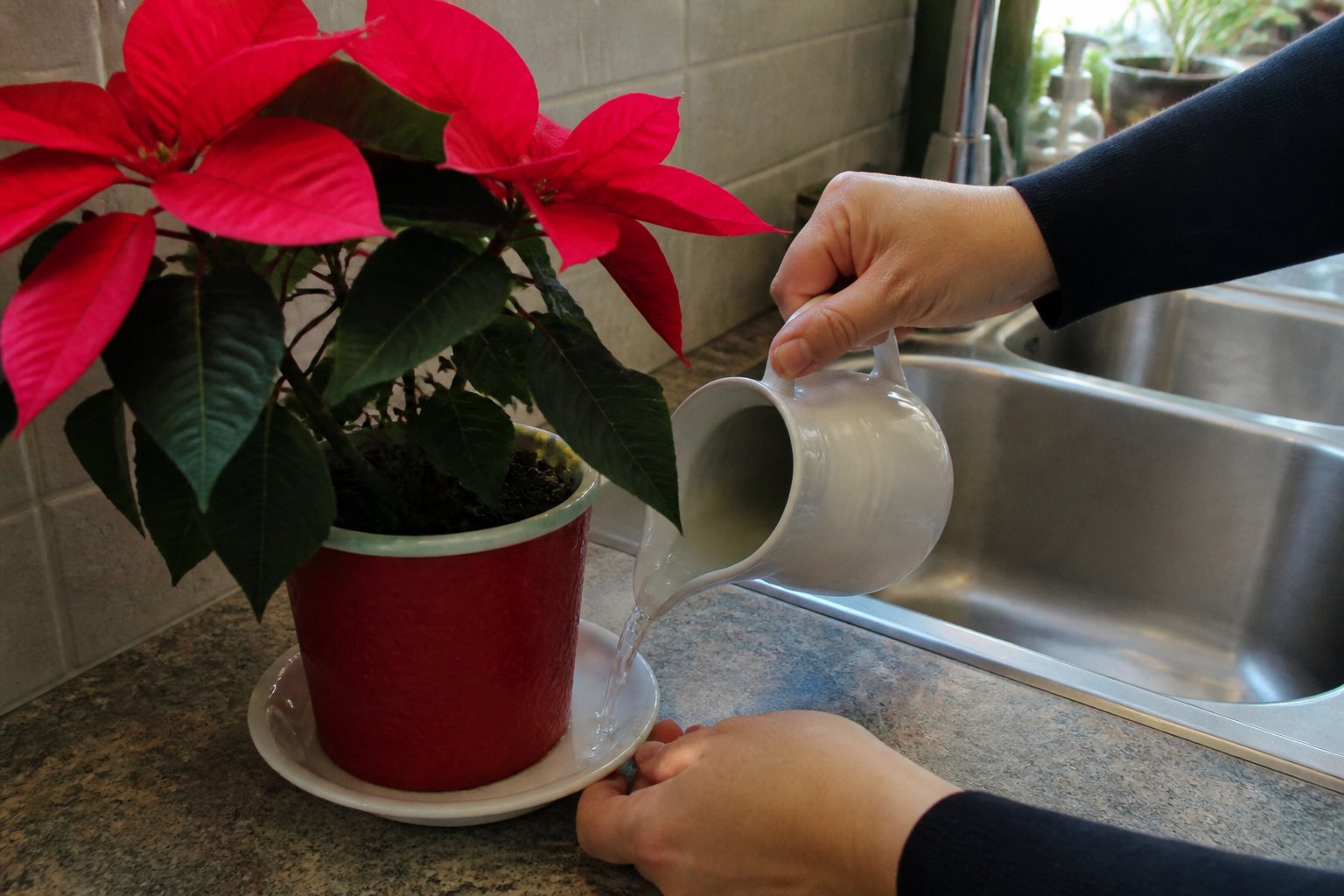
- Use lukewarm water at room temperature. Cold water straight from the tap chills the roots.
- Water until it runs from the drainage holes, or stand the pot in a saucer of water and let it soak up from below.
- After about 15 minutes, empty whatever is left in the saucer or decorative pot.
- Pierce or remove any foil wrap around the pot so water cannot collect at the bottom.
Standing water is more dangerous than a short dry spell. Roots in waterlogged compost rot, and the plant wilts even though the soil is wet, which tempts many people to water it even more.
Why is my poinsettia dropping its leaves?
- Cold: even a short spell below 10 °C on the way home or by an open window. Leaves fall a few days later, often all at once.
- Draughts: a spot by a door or a window that is opened often. The plant reacts by shedding green leaves.
- Overwatering: lower leaves yellow and drop, the compost stays wet and the plant looks limp.
- Underwatering: leaves and bracts wilt, edges dry out and the compost shrinks from the side of the pot.
- Hot, dry air: next to a radiator the leaf edges crisp and the cyathia drop early.
A plant that has lost a few lower leaves can recover. Remove the cause, resist watering “just in case” and give it time. If the bracts have gone too and the stems are soft at the base, the roots have most likely rotted.
Poinsettia care at a glance
| Factor | What it needs |
|---|---|
| Temperature | 15–22 °C, never below 10 °C; no draughts, no radiator heat |
| Light | bright spot near a window, no hot direct sun behind glass |
| Water | when the top 1–2 cm is dry; lukewarm water; empty the saucer after 15 minutes |
| Humidity | around 40–60 %; not directly above a radiator |
| Feeding | none while in colour; every 2 weeks with liquid houseplant feed from May to September |
How do you look after a poinsettia after Christmas?
With good care the bracts keep their colour until February or March. Carry on as before until then. Once they fade and start to drop, the plant needs a rest.
- March and April: water less, just enough to stop the compost drying out completely, and move the plant to a slightly cooler bright spot at around 15 to 18 °C for four to six weeks.
- April or May: cut the stems back to 10 to 15 cm, repot into a slightly larger pot with fresh houseplant compost and resume normal watering.
- Summer: once nights stay above about 15 °C it can go outside in partial shade. Pinch out the tips of new shoots until the end of August for a bushier plant.
- September: bring it back indoors to a bright spot before nights drop below 12 °C.
How do you make a poinsettia turn red again?
The poinsettia is a short-day plant. The bracts colour only when the nights are longer than the days, which is why growers bring them into colour in autumn. Indoors, a table lamp, the television or a street light outside the window is enough to interrupt the process.
- Start in late September or early October.
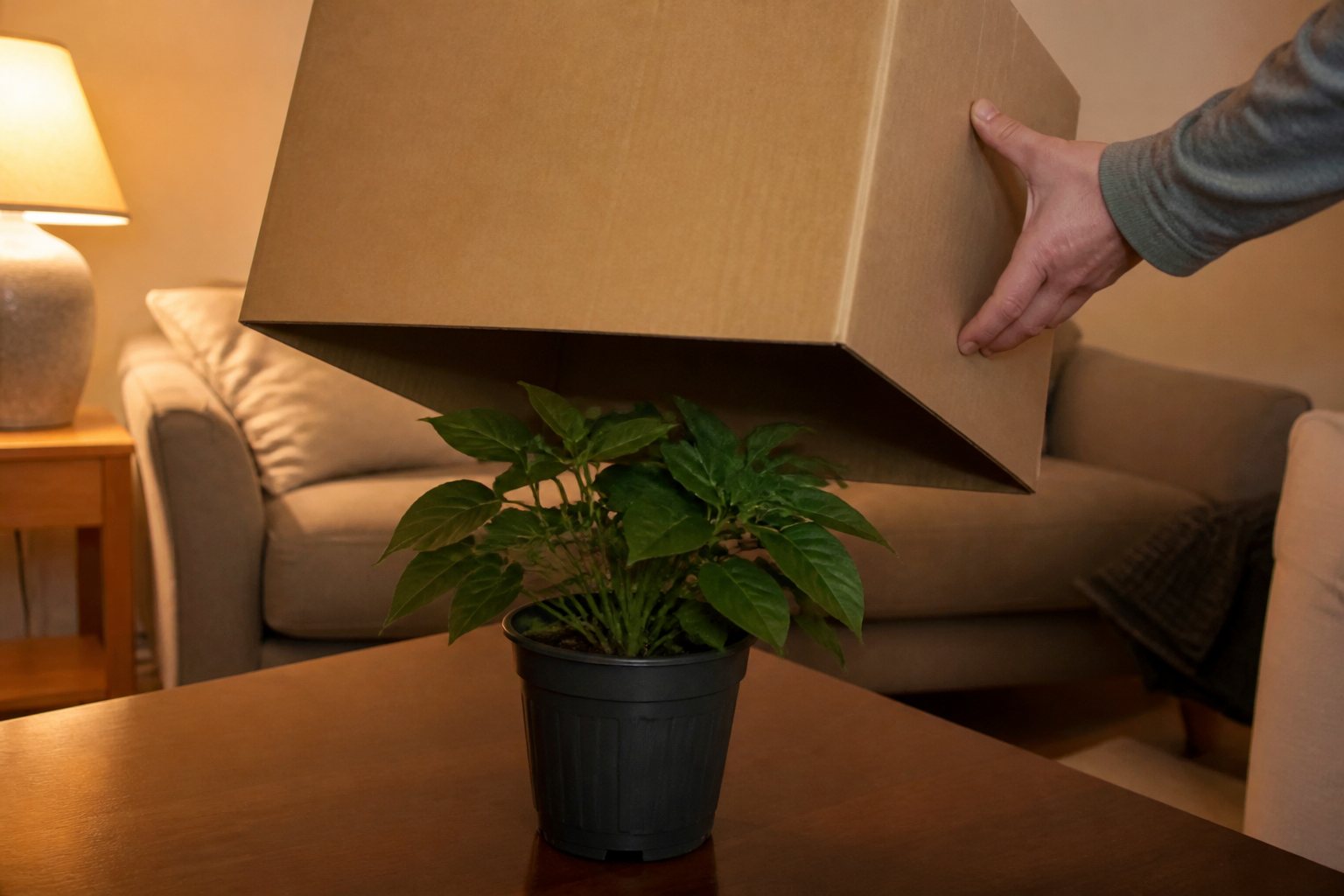
- Give it about 14 hours of complete darkness every day, for example from 6pm to 8am. Cover it with a cardboard box or put it in a cupboard that lets in no light.
- During the day, keep it in a bright spot so it can keep growing.
- Keep it at around 18 to 20 °C, water moderately and feed less often.
- Repeat for roughly eight weeks without skipping nights. Even a few interruptions delay the colour.
- Once the bracts have coloured, usually in late November or early December, stop the treatment.
When and what should you feed a poinsettia?
A plant bought in colour has enough nutrients in its compost for the winter, so do not feed it while it is in bracts. Start once it puts out new leaves after pruning, usually in May.
From May to September, give it a liquid houseplant or flowering plant feed every two weeks at the dose on the label. Reduce the dose during the darkness treatment and stop altogether once the bracts have coloured, until spring.
Is a poinsettia poisonous to cats, dogs and children?
Poinsettias are not deadly, despite the old myth. The milky sap that seeps from broken stems and leaves can irritate skin and eyes, so wear gloves when pruning and wash your hands afterwards. People with a latex allergy should take particular care.
Cats and dogs that chew the plant may drool, vomit or have mild diarrhoea. Serious poisoning is rare. Keep the plant out of reach all the same, and call your vet if symptoms are marked or do not settle.
What can go on the windowsill after Christmas?
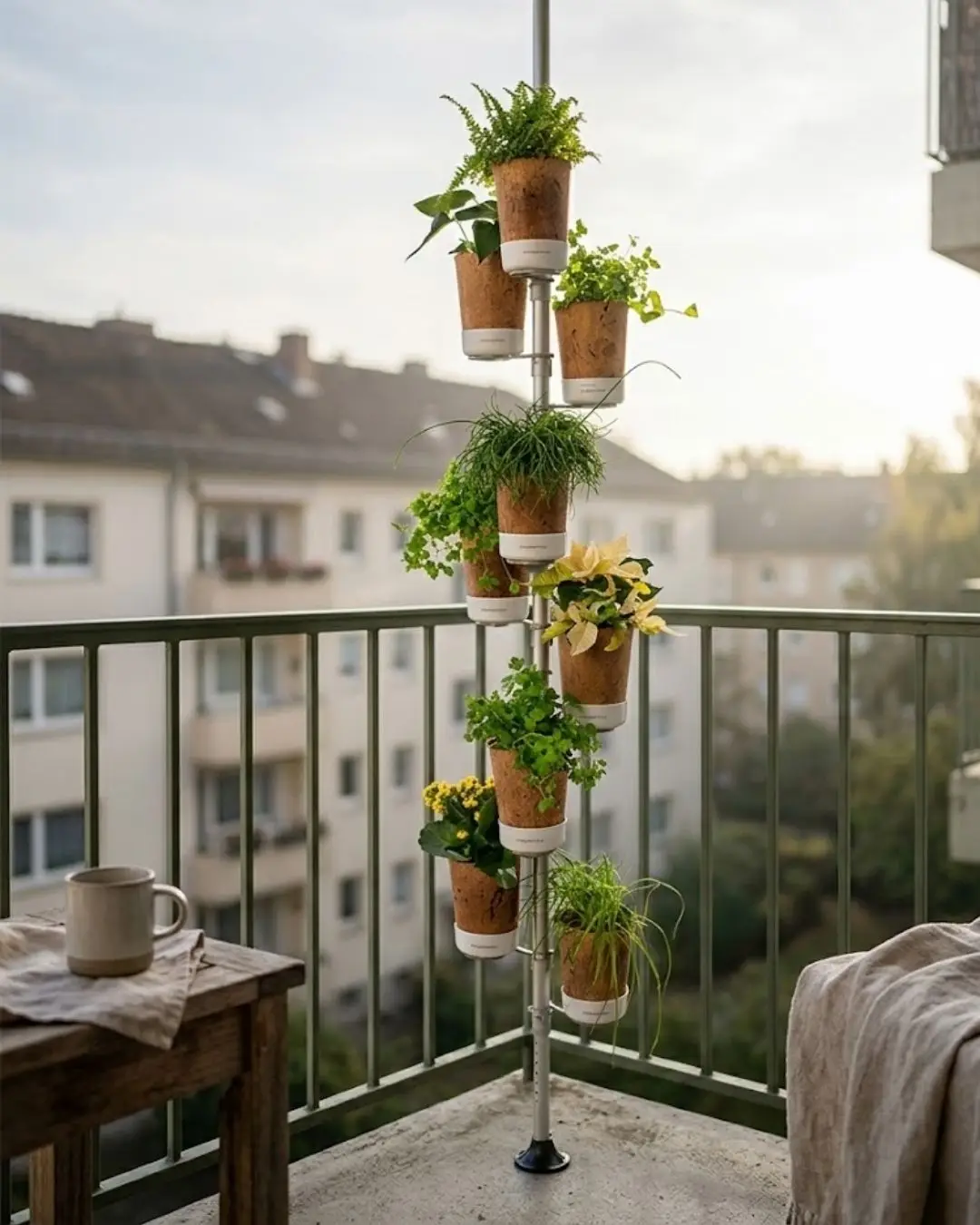
When the poinsettia steps aside in January, the window frees up for herbs such as parsley, chives and mint. If the sill is too narrow, a vertical garden without drilling by the window holds nine pots on less than 1 m² of floor, each with a 300 ml water reservoir, on a telescopic pole that clamps between floor and ceiling. The Urban Planty Vertical Garden costs €149 with free delivery. Which herbs cope best is covered in our balcony herb garden guide.
Frequently asked questions
How long does a poinsettia last?
With the right care it keeps its colour from December to February or March. It is a perennial shrub, so you can keep it for years and bring it back into colour each autumn.
Why are my poinsettia leaves drooping?
Usually because of water standing in the saucer or, the opposite, compost that has dried out completely. Check with a finger: if it is wet, tip out the water and wait; if it is dry, water thoroughly with lukewarm water.
Can a poinsettia go outside?
Not in winter, as temperatures below 10 °C damage it. In summer, when nights stay above about 15 °C, it can stand outside in partial shade.
Is a poinsettia dangerous for my cat?
A poinsettia is mildly toxic to cats. Its sap can cause drooling, vomiting or diarrhoea, but serious poisoning is rare. Keep it out of reach and call the vet if symptoms are marked.