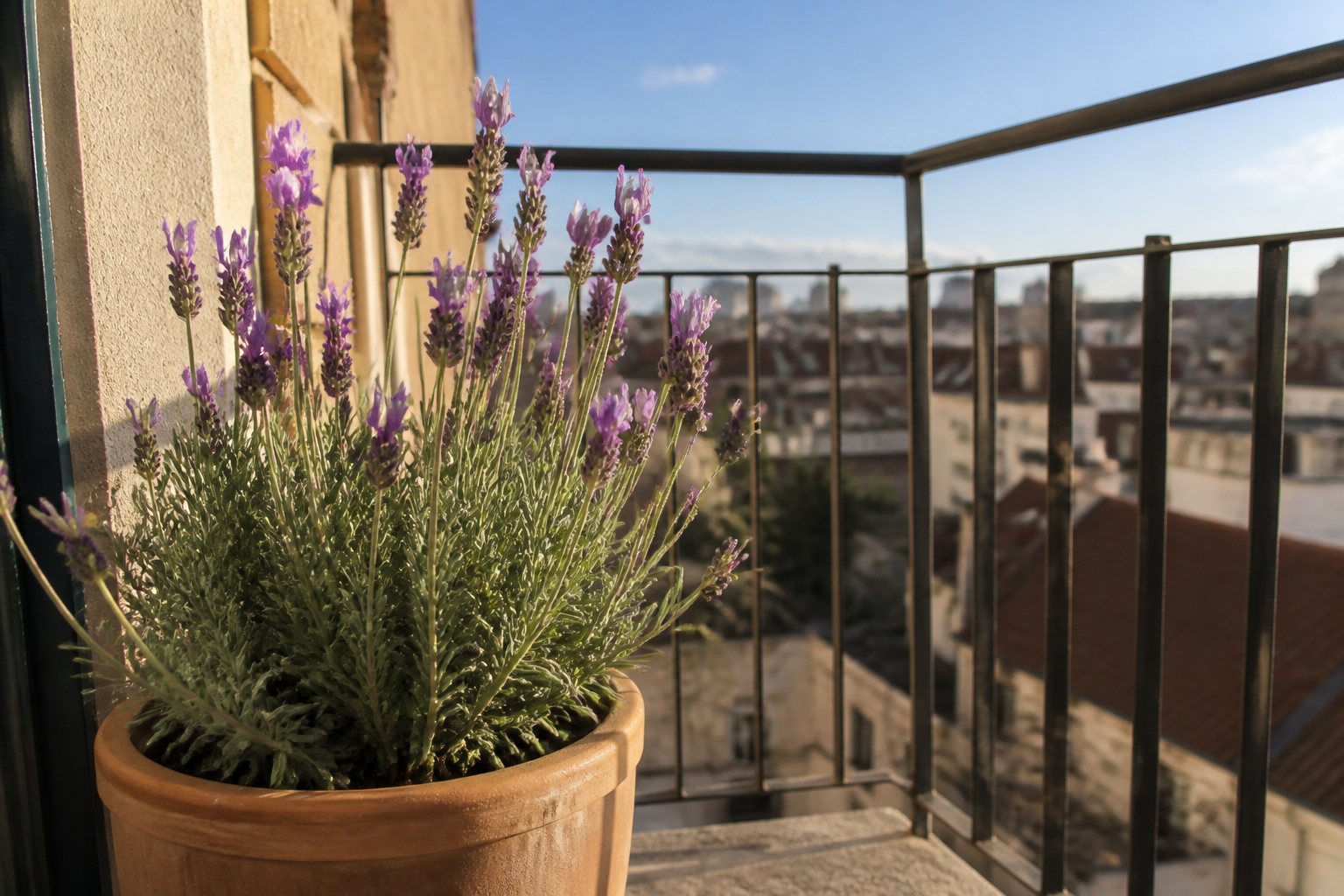

Lavender is one of the best plants for a sunny balcony, yet many potted plants die in their first winter or turn into a sprawl of bare wood within three years. The reasons are almost always the same: the wrong kind of lavender, compost that stays wet and pruning at the wrong time or not at all.
Lavender comes from dry, stony hillsides around the Mediterranean. It wants full sun, poor, free-draining soil and very little attention. In a pot that means doing less rather than more: less water, less feed and a lean, gritty mix.
For lavender in pots, choose English lavender (Lavandula angustifolia), which is the hardiest. Use a terracotta pot 25–30 cm across or larger, with drainage holes, and a gritty, lean compost. Give it full sun, water only when the compost has dried out, prune after flowering and again in spring without cutting into old wood, and keep the pot dry and sheltered in winter.
Which lavender is best for growing in a pot?
For a balcony that sees frost, the safest choice is English lavender, Lavandula angustifolia. Planted in the ground it tolerates around -20 °C. Compact varieties such as ‘Hidcote’ and ‘Munstead’ stay at 40–60 cm and suit pots well.
Lavandin (Lavandula × intermedia), for example ‘Grosso’, is larger, more strongly scented and somewhat less hardy. It needs a bigger pot and a more sheltered spot.
French or Spanish lavender, Lavandula stoechas, with its distinctive ‘rabbit ear’ bracts, is the one garden centres sell in flower in April. It is the least hardy of the three and is often lost at around -5 to -10 °C, especially in wet compost.
| Lavender | Height | Hardiness (in the ground) | In a pot over winter |
|---|---|---|---|
| L. angustifolia (‘Hidcote’, ‘Munstead’) | 40–60 cm | about -20 °C | outside, sheltered, roots protected |
| L. × intermedia (‘Grosso’) | 60–90 cm | about -15 °C | outside in a sheltered corner, fleece in cold spells |
| L. stoechas | 30–60 cm | about -5 to -10 °C | bright, frost-free place at 5–10 °C |
What pot does lavender need?
Terracotta is the best material. It breathes, so the compost dries out faster, and it is heavy enough not to blow over in wind.
Drainage holes are essential. A pot without holes, or a decorative cover with water collecting at the bottom, is the most common reason potted lavender dies.
For a young plant from a 9–12 cm nursery pot, start with a container 25–30 cm across and at least as deep. A mature ‘Hidcote’ is happy in 30–35 cm, lavandin in 40 cm or more.
What is the best compost for lavender in a pot?
Lavender needs a lean mix that drains quickly. A reliable recipe is two parts peat-free multipurpose or loam-based compost (John Innes No. 2 works well) to one part horticultural grit or fine gravel of 2–5 mm. Avoid rich ericaceous compost, as lavender prefers neutral to slightly alkaline soil.
A layer of gravel on the surface keeps the base of the stems dry, which reduces the risk of rot.
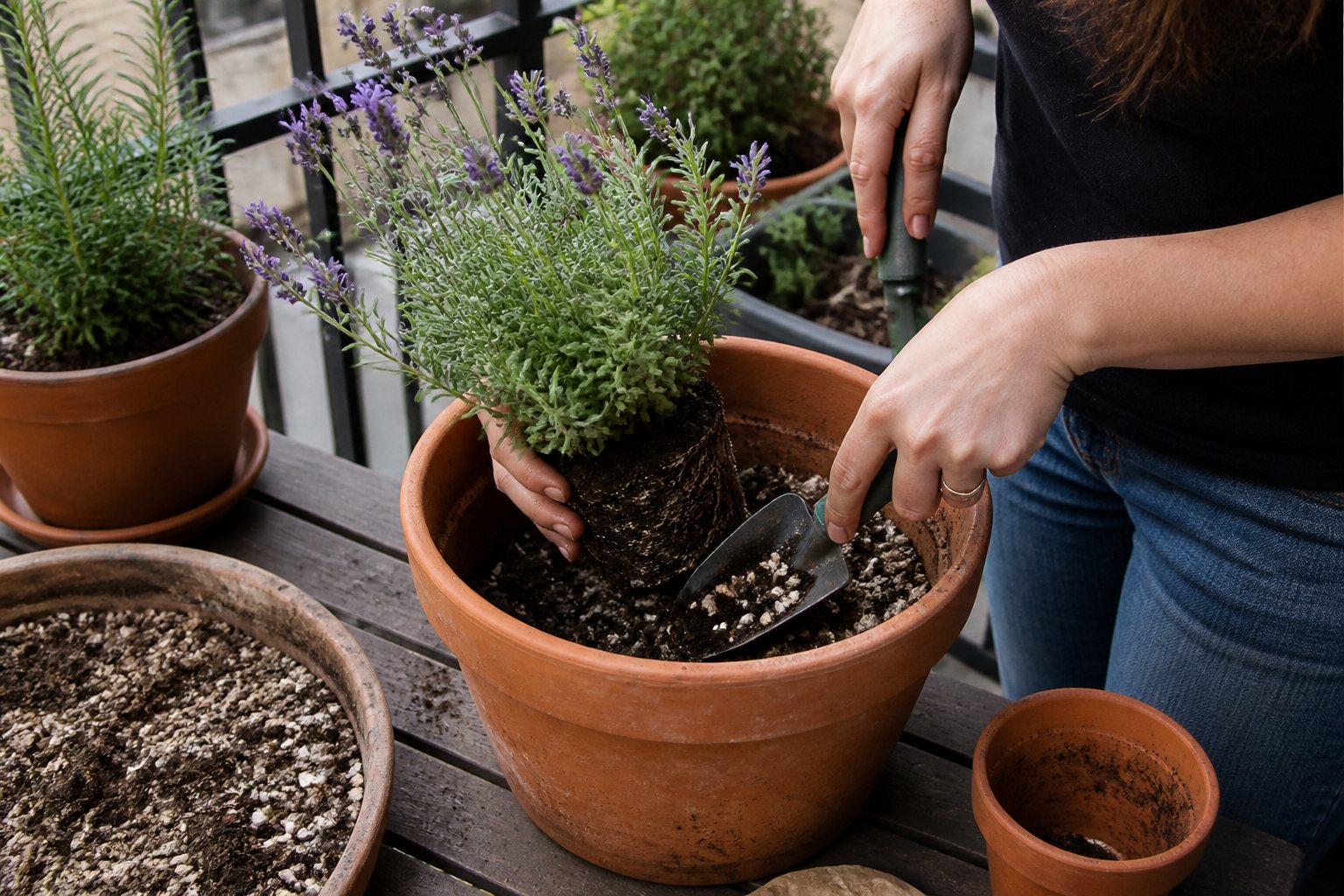
Repot every two to three years in April, moving up only one size, by 5 cm or so.
How much sun and water does lavender need?
Lavender needs at least six to eight hours of direct sun a day. A south or west-facing balcony is ideal. In partial shade it grows leggy, flowers poorly and the scent is weaker.
Water a newly potted plant regularly for the first few weeks, until it roots into the new compost. After that, water only when the top 3–4 cm of compost is dry. In a hot spell that may mean every three or four days, in a cool, cloudy spell once every week or two.
When you do water, water thoroughly until it runs out of the drainage holes, then let it dry out again.
Does lavender in a pot need feeding?
Hardly at all. Too much fertiliser, especially nitrogen, produces soft, floppy growth with fewer flowers and less scent, and makes the plant more vulnerable to frost.
Fresh compost after repotting is usually enough for a full season. In the years between, you can add a small handful of slow-release fertiliser in April. Do not feed from late summer onwards.
When and how should you prune lavender in a pot?
Pruning keeps lavender compact and stops the base from turning woody and bare. The golden rule is simple: never cut into old, leafless wood. English lavender rarely produces new shoots from bare wood, so the cut must always leave some green leaves on each stem.
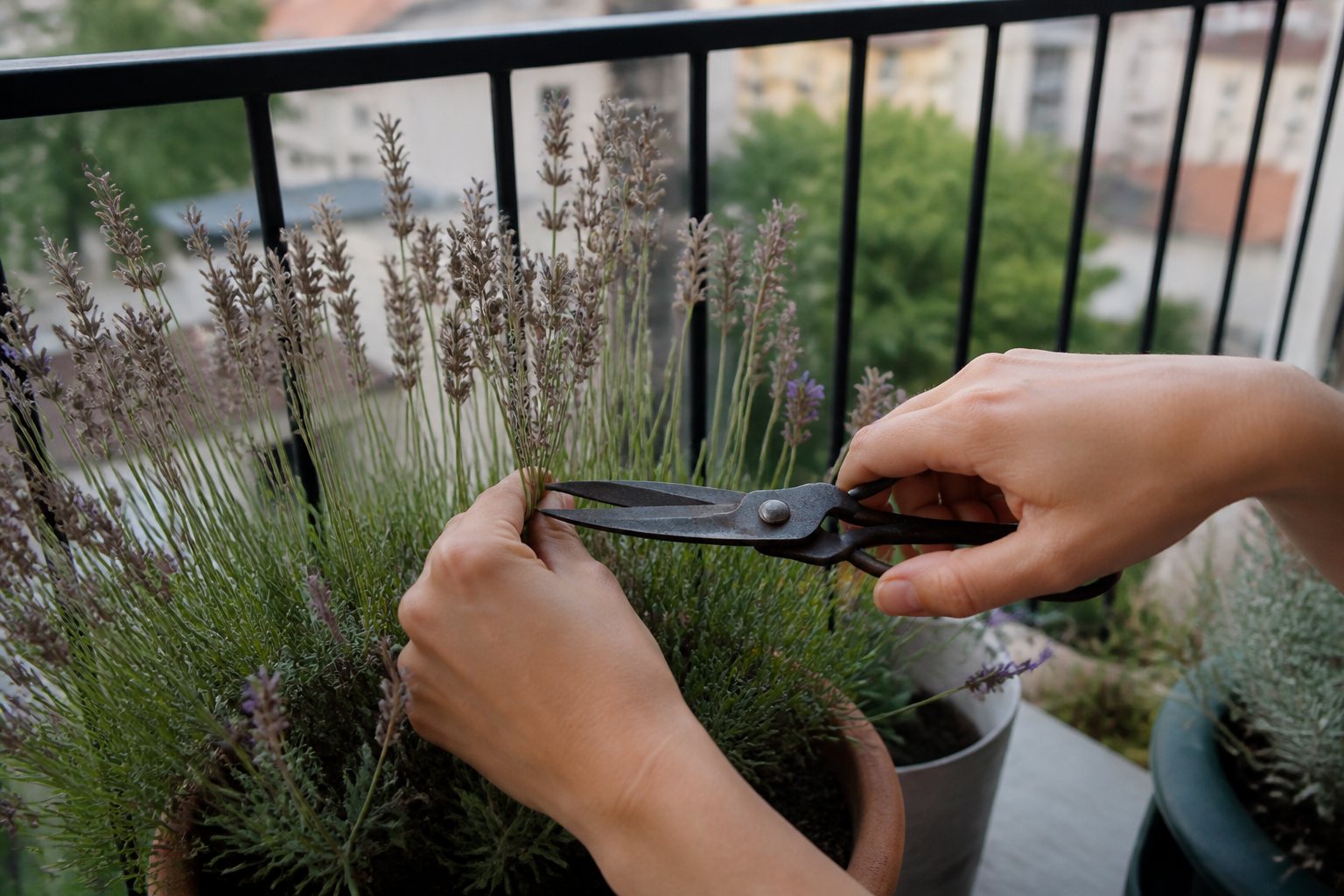
- After flowering, July to August: cut off the spent flower stems together with 2–3 cm of leafy growth. The plant has time to make new shoots before autumn.
- In spring, late March to April: once the worst frosts are over and fresh growth appears, trim the plant into a rounded dome, removing about a third of the green growth.
- French lavender: deadhead regularly during summer, which encourages further flowering, and only shape it lightly.
How do you overwinter lavender in a pot on a balcony?
In a pot the roots are far more exposed than in the ground. While the shoots of English lavender cope with hard frost, roots in a pot can be damaged at around -10 °C. In winter, lavender is usually killed by a combination of cold and wet, not by cold alone.
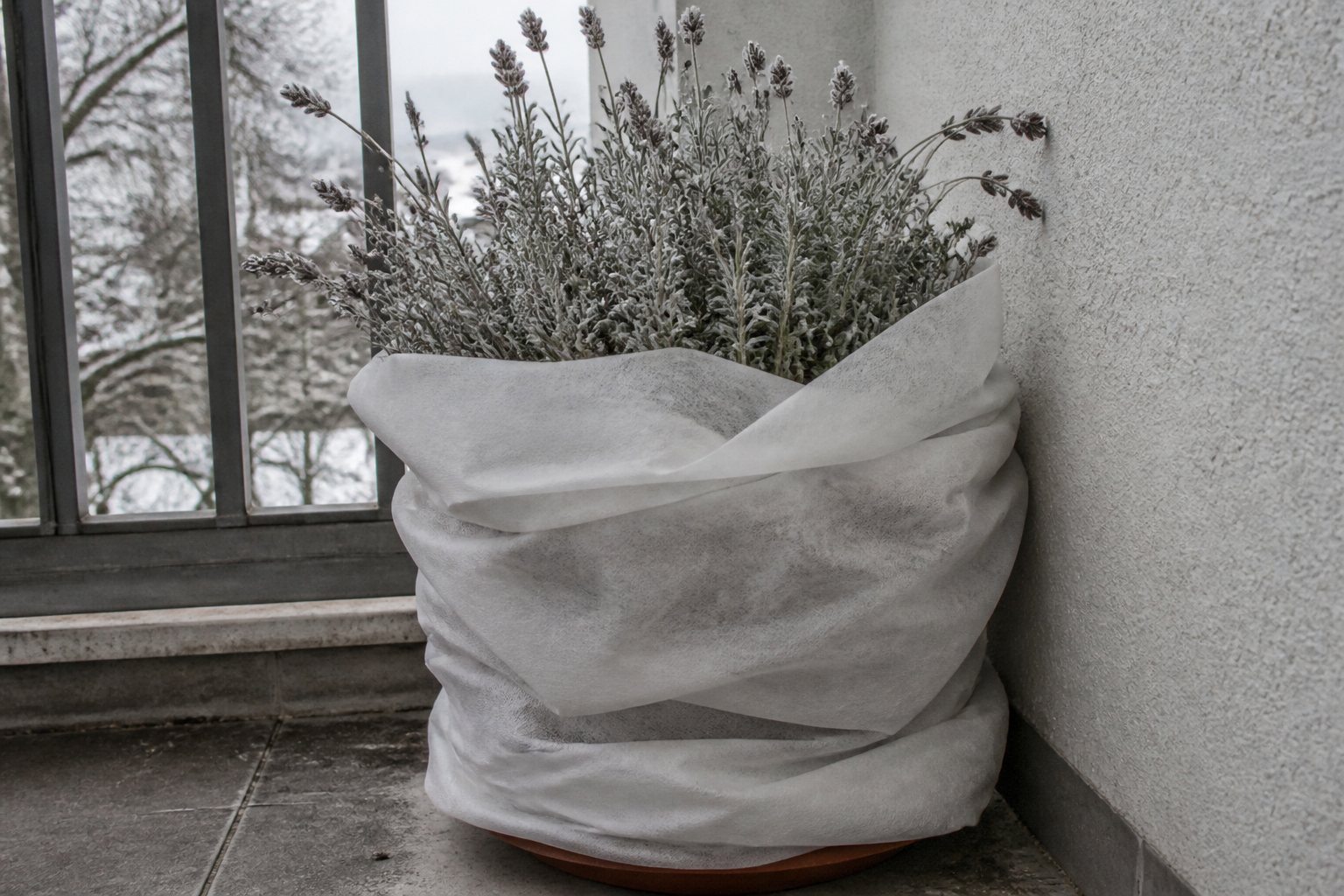
- Move the pot against the house wall, under a roof overhang, where rain does not reach it.
- Stand it on wood or polystyrene and wrap the pot itself in bubble wrap, hessian or a double layer of fleece.
- In periods of hard frost, cover the plant loosely with fleece as well, and remove it when temperatures rise.
- Water only rarely, on frost-free days, and only if the compost is completely dry.
- Bring French lavender into a bright, cool room at 5–10 °C, such as an unheated stairwell.
What are the most common problems with potted lavender?
- Grey, wilting shoots despite moist compost: root rot from waterlogging. Check the drainage holes, repot into a grittier mix and water less.
- Bare, woody base and few flowers: the plant was not pruned for several years. It can rarely be rejuvenated; a new plant is usually the better option.
- Metallic green and purple striped beetles: rosemary beetle. Pick off adults and larvae by hand or shake them onto a sheet of paper.
- Foamy blobs on stems in early summer: cuckoo spit, made by froghopper nymphs. It looks unsightly but does little harm; wash it off with water.
When should you harvest and dry lavender?
For drying, cut the stems when about half the flowers on each spike are open. That is when the scent is strongest and the buds do not drop. Cut in the morning, once the dew has dried, together with the long stem.
Tie the stems into small bunches and hang them head down in a dark, dry and airy place. After one to two weeks the flowers rub off easily. Store them in a glass jar away from light.
What to do with lavender month by month
| Month | What to do |
|---|---|
| January–February | keep the pot dry and sheltered, water rarely, check the fleece |
| March | remove winter protection in mild weather, check for damage |
| April | spring pruning, repotting every 2–3 years, light feed if needed |
| May | plant new lavender, French lavender goes back outside |
| June–July | flowering, harvest for drying, water when the compost is dry |
| August | prune after flowering, cut 2–3 cm into the leafy growth |
| September–October | reduce watering, no feeding or hard pruning |
| November–December | move pot to shelter, wrap it, French lavender indoors at 5–10 °C |
Where does lavender fit on a small balcony?
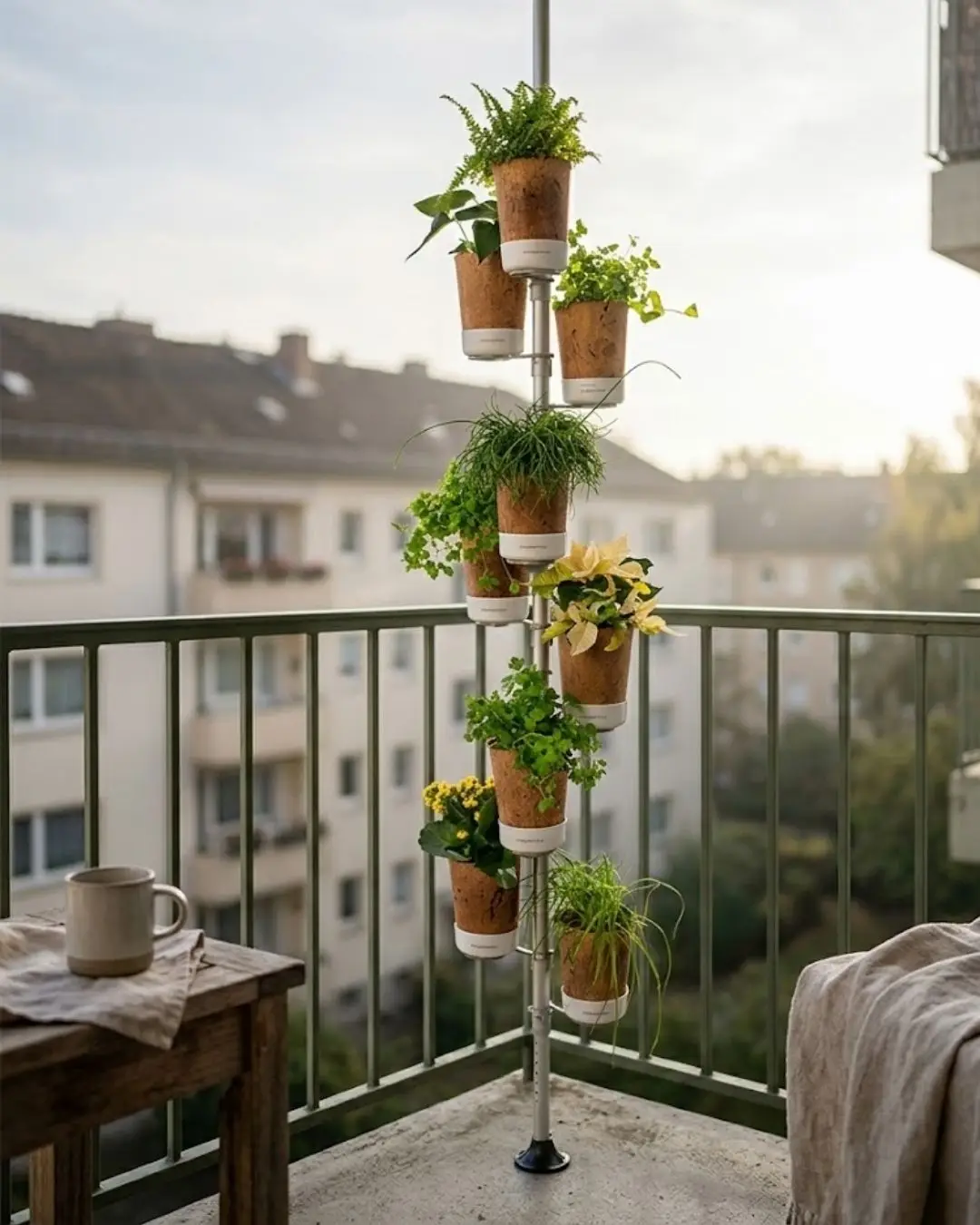
Lavender needs the sunniest spot and does best in its own terracotta pot on the floor. Herbs that want more water, such as basil, parsley and chives, can go upwards, for example in the Urban Planty Vertical Garden, which holds nine plants on less than a square metre of floor and has a 300 ml reservoir in each pot. Its pole clamps between floor and ceiling, so this vertical garden without drilling also suits rented flats. It costs €149 with free delivery. For herb combinations, see our balcony herb garden guide.
Frequently asked questions
Can lavender stay outside in a pot over winter?
English lavender (Lavandula angustifolia) can overwinter outside in a pot if it stands sheltered from rain, the pot is wrapped and the compost stays fairly dry. French lavender (Lavandula stoechas) is better kept in a bright, frost-free place at 5–10 °C.
How often should you water lavender in a pot?
Water potted lavender only when the top 3–4 cm of compost is dry, which in summer heat may be every three to four days. In winter it needs water only rarely, on frost-free days.
Why is my potted lavender turning grey and dying?
Potted lavender most often dies from root rot caused by waterlogged compost, a blocked drainage hole or a saucer full of water. Repot it into a gritty mix and water much less.
Can you cut lavender back hard?
Lavender should never be cut into old, leafless wood, as it rarely regrows from bare stems. Always leave some green leaves on every stem, both after flowering and in spring.
What size pot does lavender need?
A young lavender plant needs a pot at least 25–30 cm wide with drainage holes, and a mature English lavender is happiest in 30–35 cm. Lavandin needs 40 cm or more.