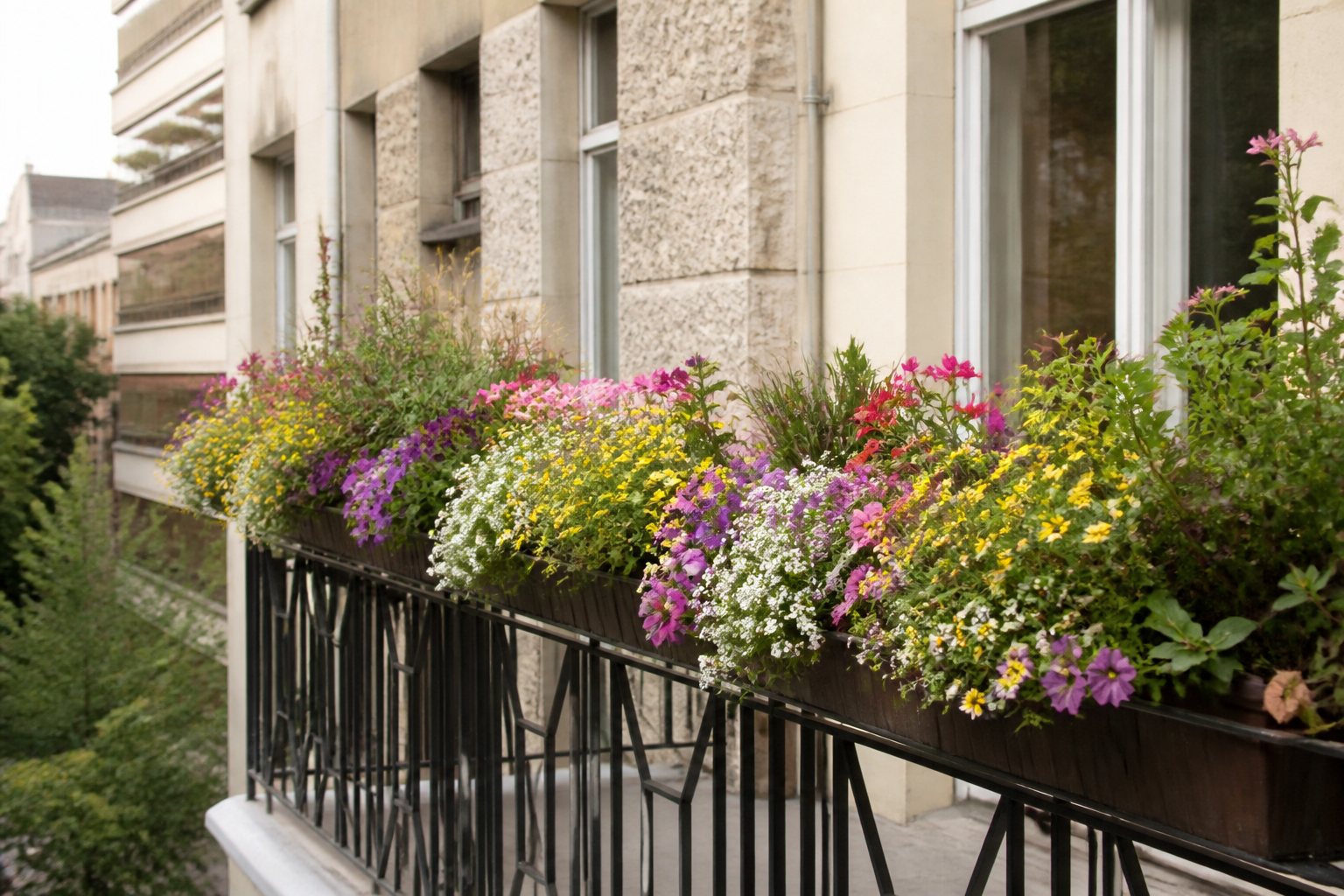

A well-planted window box flowers for six months with surprisingly little fuss. The difference between a box that is still full in October and one that gives up in August is decided at planting: the size of the box, the compost, the spacing and the feed you mix in on day one.
Most balcony boxes fail for the same few reasons. They are too shallow, they dry out by lunchtime in July, and the plants starve once the compost is exhausted. Choosing window box plants that suit the light on your balcony solves most of the rest.
Use a box at least 18–20 cm deep with drainage holes, a 2–3 cm layer of clay pebbles and peat-free container compost. Plant five per metre after the last frost, about mid-May. In sun choose geraniums, petunias, calibrachoa and verbena; in shade begonias, fuchsias and busy lizzies. Mix in slow-release fertiliser, water every morning in summer and deadhead weekly.
What size and material should a window box be?
Depth matters more than length. A box 18–20 cm deep and about as wide holds 20–30 litres of compost per metre, which is enough to carry plants through a hot afternoon.
- Plastic: light, cheap and holds moisture well. Pale colours stay cooler than black or dark green in full sun.
- Wood: insulates the roots from heat. Line it with plastic sheet, leaving the drainage holes open, so it lasts longer.
- Self-watering boxes: a reservoir in the base holds 2–5 litres. In a heatwave this can buy you a day between waterings.
How do you set up drainage and compost in a window box?
Every box needs drainage holes. Without them, rain and over-watering collect at the bottom and the roots rot within a couple of weeks.
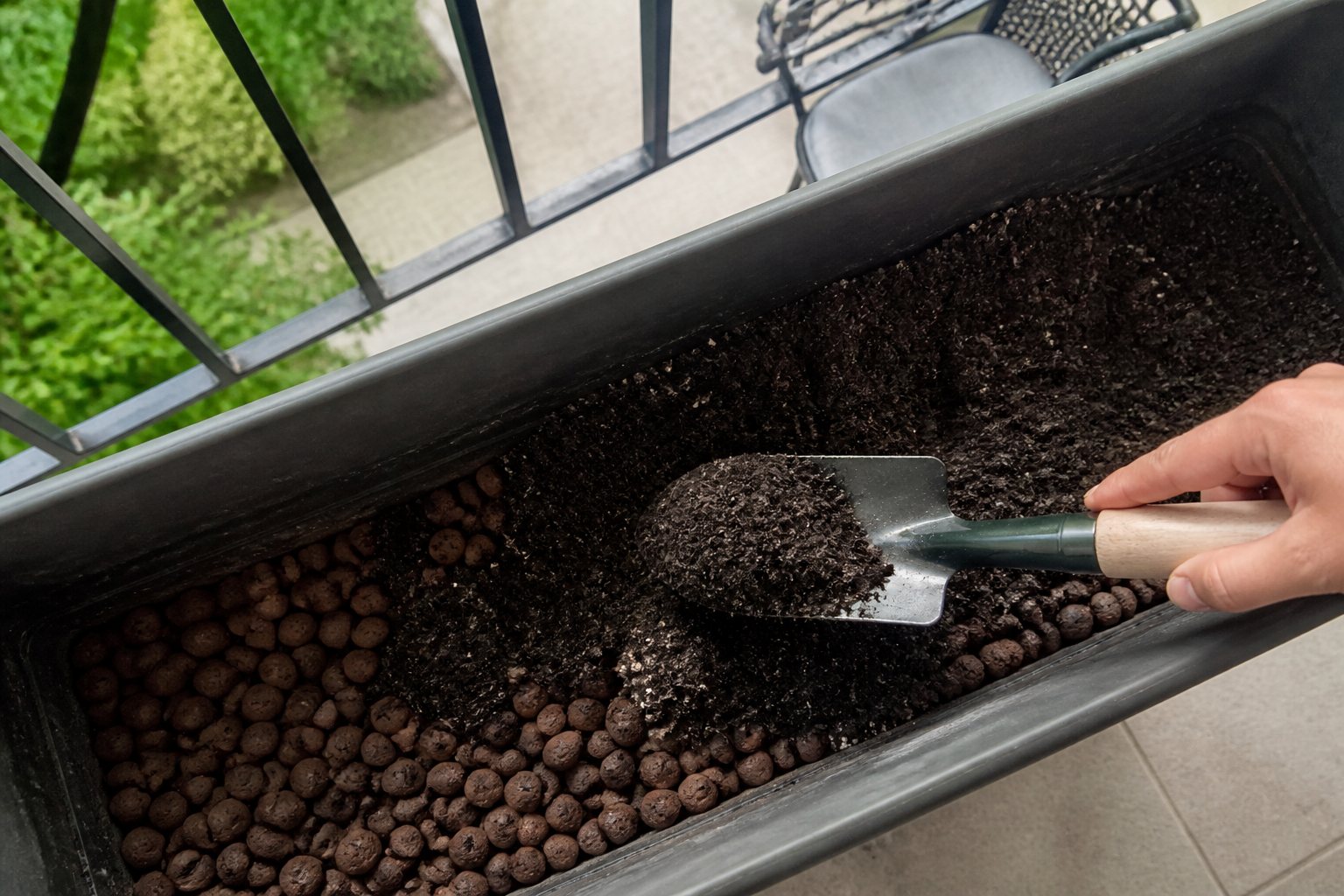
Cover the base with 2–3 cm of clay pebbles or coarse grit. A piece of garden fleece on top stops compost washing down and blocking the holes. Fill with peat-free container or multipurpose compost, ideally one with added loam, which holds water and nutrients better than a light, fluffy mix.
Leave 2 cm between the compost and the rim. That gap is your watering reservoir; a box filled to the brim simply sheds water over the edge.
How many plants go in a window box per metre?
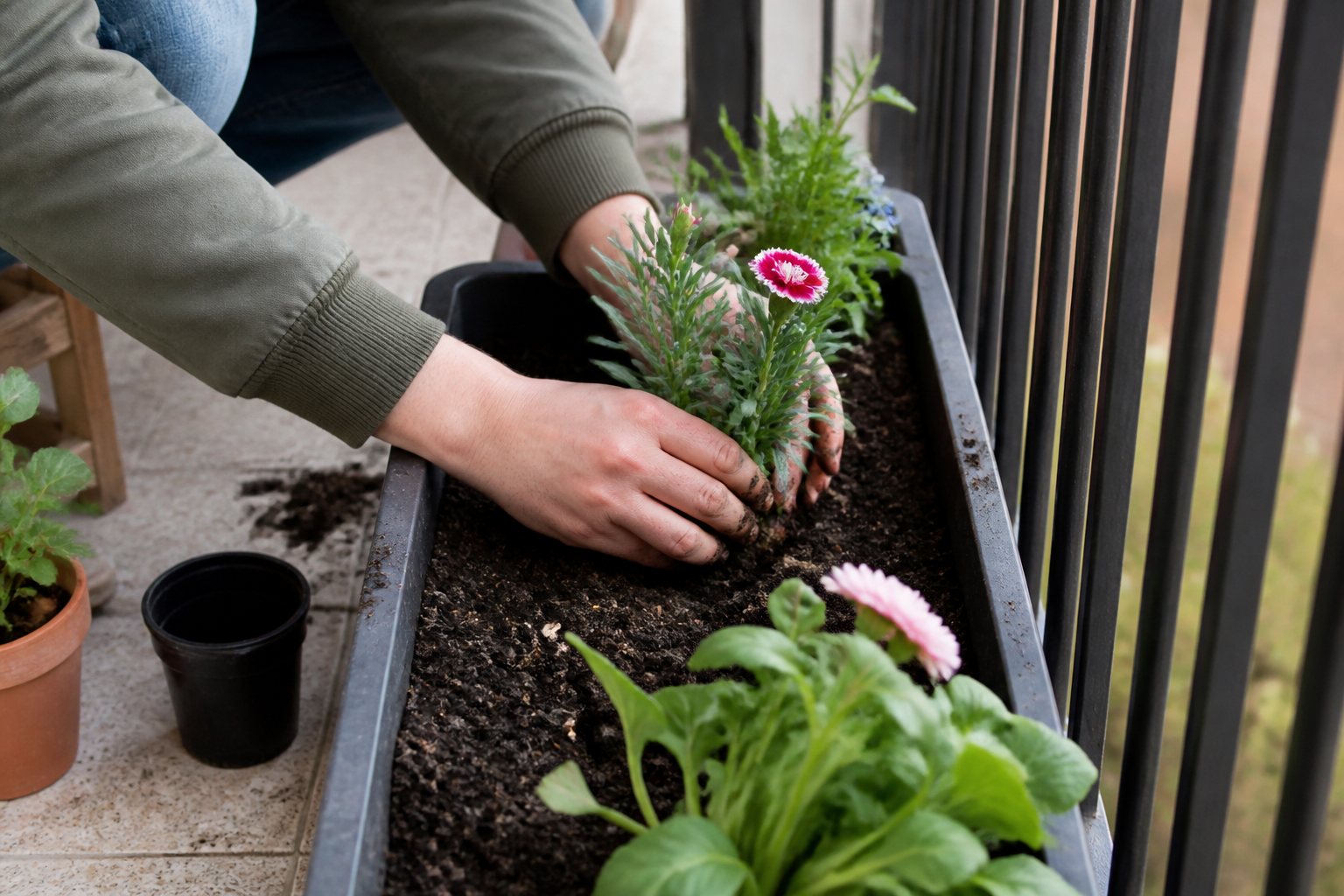
The usual rule is about five plants per metre, spaced roughly 20 cm apart. That means four in an 80 cm box and three in a 60 cm box. Compact plants such as calibrachoa or bedding begonias can go in at six per metre.
Cram in eight or ten and by July they compete for water and light, the box dries out twice a day and the plants in the middle stop flowering. Give them room and the box fills out by late June.
When should you plant a window box?
Summer bedding is tender. In most of Britain the safe time is mid to late May, once frosts are over; in the north and in exposed spots, wait until early June. Geraniums and petunias stop growing below about 10 °C and are damaged by frost.
For flowers from April, plant the box in autumn or early spring with violas, pansies, primulas and small bulbs such as dwarf tulips or Muscari. In May, lift them and replant with summer plants in fresh compost. The summer box then flowers until the first frost, usually in October.
Which window box plants suit a sunny or a shady balcony?
A south or west-facing balcony gets six hours or more of direct sun and heats up fast. An east-facing one gets gentle morning sun, and a north-facing balcony gets little direct sun at all.
| Aspect | Direct sun | Suitable plants | Watch out for |
|---|---|---|---|
| South | 6+ hours, hot | Geraniums (pelargoniums), trailing petunias, calibrachoa, verbena, lantana | Daily watering in July and August; pale boxes |
| West | Afternoon sun | Geraniums, petunias, calibrachoa, verbena, scaevola | Hot afternoons, wind |
| East | Morning sun | Begonias, fuchsias, lobelia, New Guinea impatiens, geraniums | Slower drying, so water less |
| North | Little or none | Fuchsias, fibrous and tuberous begonias, busy lizzies (impatiens), ivy | Do not overwater; slugs |
Sunny balconies
Geraniums are the classic choice because they tolerate heat, wind and the odd missed watering. Upright zonal geraniums suit the back of the box; ivy-leaved geraniums trail over the front. Petunias and calibrachoa, sometimes sold as million bells, flower non-stop but are hungry and thirsty.
Shady balconies
Begonias are the most dependable shade plants, either fibrous bedding begonias or the larger tuberous kinds. Fuchsias like cool, sheltered spots and suffer in midday sun. Busy lizzies flower in deep shade; New Guinea impatiens cope with a little more sun.
What is the thriller, filler, spiller rule?
It is a simple way to plan a box that looks full rather than flat. The thriller is an upright plant at the back or centre, the filler is a bushy plant around it, and the spiller trails over the front edge.
- Sunny box: zonal geranium (thriller), calibrachoa or verbena (filler), trailing petunia or ivy-leaved geranium (spiller).
- Shady box: upright fuchsia (thriller), begonia (filler), trailing lobelia or ivy (spiller).
How do you feed and water a window box in summer?
Fresh compost feeds plants for four to six weeks. After that a box packed with roots runs out of nutrients. The easiest answer is slow-release fertiliser granules mixed into the compost at planting, at the dose on the pack; most last three to six months.
Petunias and calibrachoa need more. From July give them a liquid feed for balcony flowers once a week. Yellowing leaves with green veins usually point to a lack of iron, which these two are prone to.
Why should you deadhead window box flowers?
A plant that sets seed stops making new flowers. Removing spent blooms once a week keeps geraniums, verbena and fuchsias flowering into autumn. On geraniums, snap off the whole flower stalk where it joins the stem, not just the dead petals.
Modern trailing petunias and calibrachoa drop their old flowers on their own. If they turn long and bare in midsummer, cut them back by about a third and feed; they flower again within two to three weeks.
How do you fix a window box safely to a balcony railing?
A one-metre box of wet compost and plants weighs 20–30 kg. Use brackets designed for your railing profile, adjusted to its width and screwed tight so the box cannot tip in wind.
Where you can, hang boxes on the inside of the railing. Many buildings restrict boxes on the outside, and water dripping onto the balcony below causes disputes. Check the lease or building rules before you buy.
Can you grow herbs in a window box?
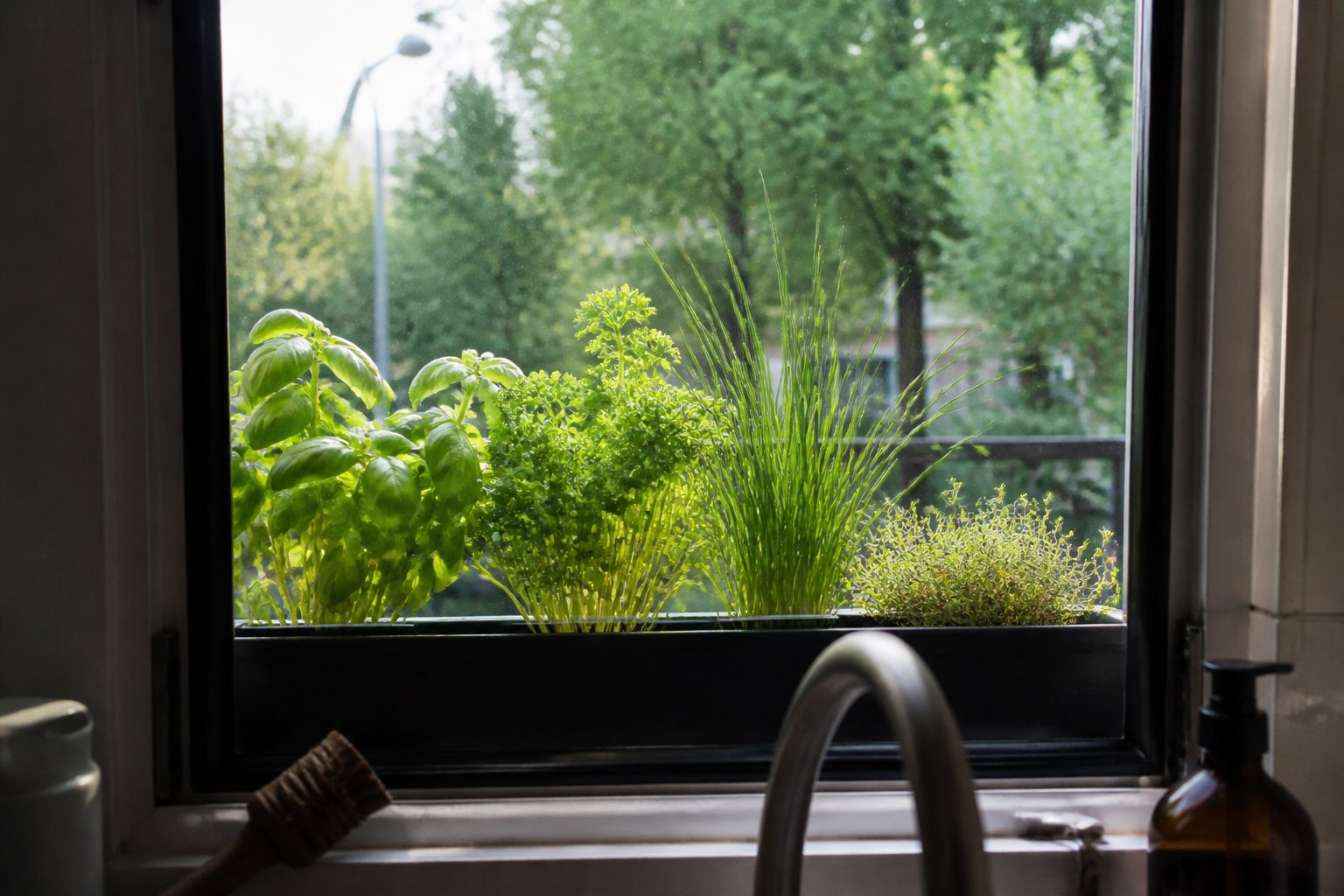
Yes, and a herb box by the kitchen window is one of the most useful things a balcony can hold. Thyme, oregano, sage and rosemary like full sun and fairly lean, free-draining compost, so mix in a handful of grit. Parsley and chives cope with partial shade and want more moisture.
Grow basil in its own pot or box: it needs more water and warmth than the Mediterranean herbs. Our guide to the balcony herb garden covers the most common mistakes.
What if there is no more room on the railing?
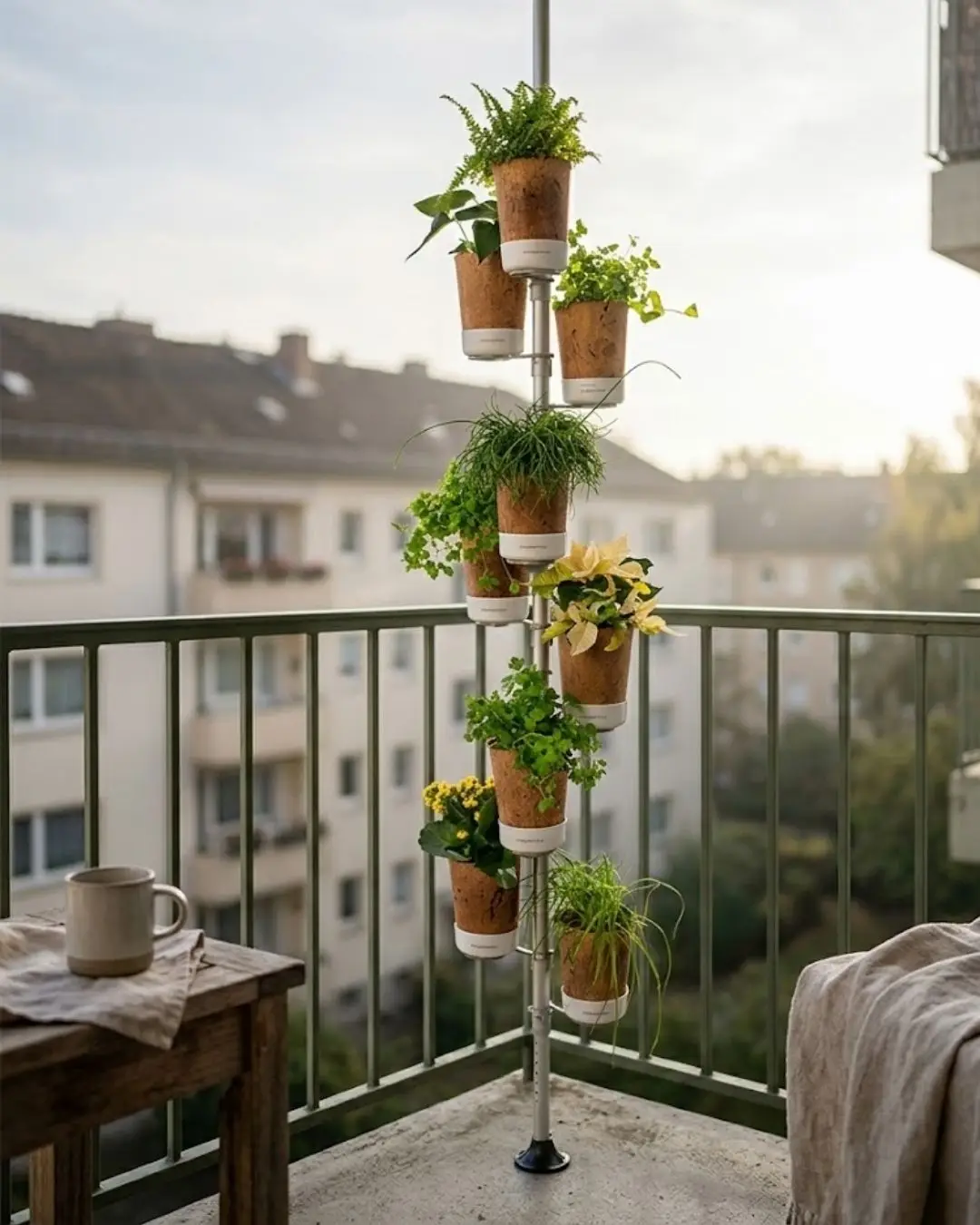
Railing space runs out quickly, especially on a small balcony. Once every metre is taken, the next place to grow is upwards. A vertical garden without drilling uses floor-to-ceiling height instead of railing length.
The Urban Planty vertical garden is a telescopic pole that clamps between floor and ceiling, adjusts up to 285 cm and needs no drilling, which suits rented flats. It holds nine pots, each with a 300 ml water reservoir, so it usually needs watering once or twice a week. It takes up less than 1 m² of floor and costs €149 with free shipping.

Frequently asked questions
How many plants do you need for a 1 metre window box?
A 1 metre window box takes about five plants spaced 20 cm apart; compact plants such as calibrachoa or bedding begonias can go in at six. Overcrowded boxes dry out quickly and flower less by midsummer.
Which window box plants flower longest in full sun?
Geraniums (pelargoniums), trailing petunias, calibrachoa and verbena flower from late May until the first frost on a sunny balcony, provided they are fed weekly and watered every day in hot weather.
Which flowers grow in a window box on a north-facing balcony?
Begonias, fuchsias and busy lizzies (impatiens) flower well in a shady window box. They need less water than sun plants, so check the compost before watering.
How often should a window box be watered in summer?
In July and August a window box in full sun usually needs watering every morning, sometimes again in the evening. Water until it runs from the drainage holes and check the compost 2 cm down first.
Do window boxes need a drainage layer?
A window box needs drainage holes and benefits from a 2–3 cm layer of clay pebbles or grit at the bottom, so excess water drains away and roots do not rot.