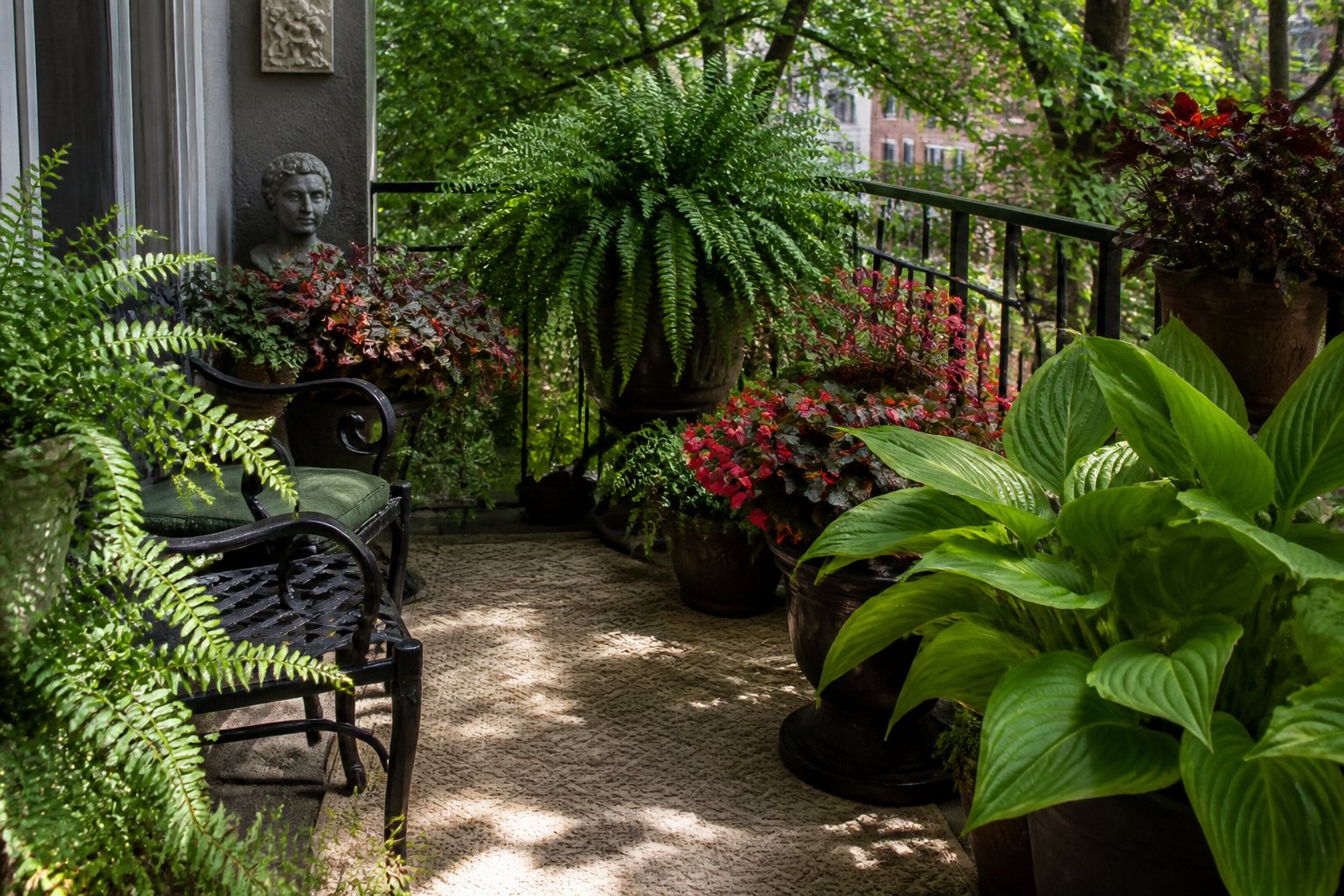

A north-facing balcony is not a lost cause. It simply needs different plants from the geraniums and tomatoes that fill sunny ones. Begonias, fuchsias, hostas, ferns and several kitchen herbs grow well with little direct sun, and they need less watering in July than anything on a south-facing balcony.
The usual mistake is buying what looks good at the garden centre in May and hoping it adapts. Sun-loving plants do not adapt. They grow leggy, flower poorly and give up by August.
Good plants for a shady balcony are begonias, fuchsias, busy lizzies and hydrangeas for flowers, and hostas, hardy ferns, heuchera and ivy for foliage. Mint, parsley, chives, lemon balm and wild garlic cope with partial shade. Tomatoes, chillies, lavender, basil and rosemary need six or more hours of sun and will disappoint. Water less often than on a sunny balcony and check the compost first.
What counts as a shady balcony?
Gardeners measure shade in hours of direct sun, not in brightness. A balcony can feel light and still count as shady if the sun only reaches the pots for an hour in the evening.
- Full sun: six or more hours of direct sun a day, typical for south and west-facing balconies.
- Partial shade: roughly three to six hours, often morning sun on an east-facing balcony or a south-facing one shaded by trees.
- Shade: less than three hours of direct sun. Most north-facing balconies fall here, as do lower floors facing a building across the street.
In Britain and central Europe a north-facing balcony gets a little direct sun early in the morning and late in the evening from May to August, and almost none in winter. Watch your balcony on a clear day in June and note when the sun actually touches the pots. That single observation decides more than any plant label.
Which flowering plants do well on a shady balcony?
Most summer bedding sold for balconies comes from sunny climates, but a handful of popular plants genuinely prefer shade. All of the flowering ones below are tender, so plant them out once the risk of frost has passed, usually in the second half of May.
| Plant | Light | Hardy outside in a pot? | Note |
|---|---|---|---|
| Begonia | partial shade to shade | no | flowers from June to the first frost |
| Fuchsia | partial shade, no midday sun | most varieties no | overwinter cool and frost-free |
| Busy lizzie (Impatiens) | shade to partial shade | no | treat as an annual |
| Hydrangea | partial shade | yes, roots need protection | pot of at least 30–40 cm, thirsty |
| Hosta | partial shade to shade | yes | dies back in autumn, returns in April |
| Hardy ferns | shade | yes | keep the compost evenly moist |
| Heuchera | partial shade | yes | leaves from lime green to deep purple |
| Ivy | shade to partial shade | yes | evergreen, poisonous if eaten |
Begonias
Begonias are the most reliable flowering plants for a north-facing balcony. Wax begonias (Begonia semperflorens) stay compact and flower without a break. Tuberous begonias and the trailing Begonia boliviensis have larger flowers and suit hanging baskets.
Water when the top of the compost is dry, never leave them standing in water, and feed every two weeks from June to August.
Fuchsias
Fuchsias like bright shade or a little morning sun and dislike hot midday sun. Trailing varieties look best in a hanging pot or at the edge of a tall container, where the flowers hang at eye level.
They need evenly moist compost in summer and regular feeding. Most balcony fuchsias are not hardy. In October, bring them into a bright, cool room at 5–10 °C, or cut them back and keep them in a dark, frost-free cellar with only occasional watering.
Busy lizzies and hydrangeas
Busy lizzies (Impatiens walleriana) flower in fairly deep shade and are cheap enough to replace each year. New Guinea impatiens have larger flowers and cope with a little more sun.
Hydrangeas (Hydrangea macrophylla) are the largest option and can stay outside all year. They need a large pot and plenty of water. Blue flowers only stay blue in acidic compost; in ordinary compost most turn pink over time.
Which foliage plants suit a north-facing balcony?
Foliage plants are the backbone of a shady balcony. Unlike annual bedding, most of the plants below are hardy perennials that come back for years if the pot does not freeze solid or stay waterlogged.
- Hostas: broad leaves in green, blue-grey or variegated forms. They die back in autumn and sprout again in spring. On a high balcony they are usually spared the slug damage common in gardens.
- Hardy ferns: male fern (Dryopteris filix-mas), lady fern (Athyrium) and the evergreen hart’s-tongue fern (Asplenium scolopendrium) suit pots. Boston ferns sold as houseplants are not hardy.
- Heuchera: compact mounds of coloured leaves that add contrast to green ferns. Many keep their leaves through mild winters. Check the roots for vine weevil grubs when repotting.
- Ivy: trails over railings and stays green all winter. It is poisonous to children and pets if eaten.
Which herbs grow on a balcony in partial shade?
Herbs with soft leaves generally cope with less sun than Mediterranean ones. They still need some light, ideally three to four hours of direct sun or very bright shade. In deep shade they survive but grow slowly.
- Mint: one of the most shade-tolerant herbs. Give it its own pot, as it spreads quickly, and keep the compost moist.
- Parsley: does well in partial shade and bolts later than in full sun.
- Chives: hardy, come back every spring and cope with half a day of sun.
- Lemon balm: grows in partial shade and is hardy. Cut it back after flowering for fresh leaves.
- Wild garlic: a woodland plant that likes shade and moisture. Leaves appear from March to May, then the plant dies back until the next spring. Buy plants or bulbs from a nursery rather than digging them up in the wild.
Basil, rosemary, thyme and sage are a different matter. They need the sunniest spot you have. Our guide to a balcony herb garden covers the mistakes that kill herbs most often.
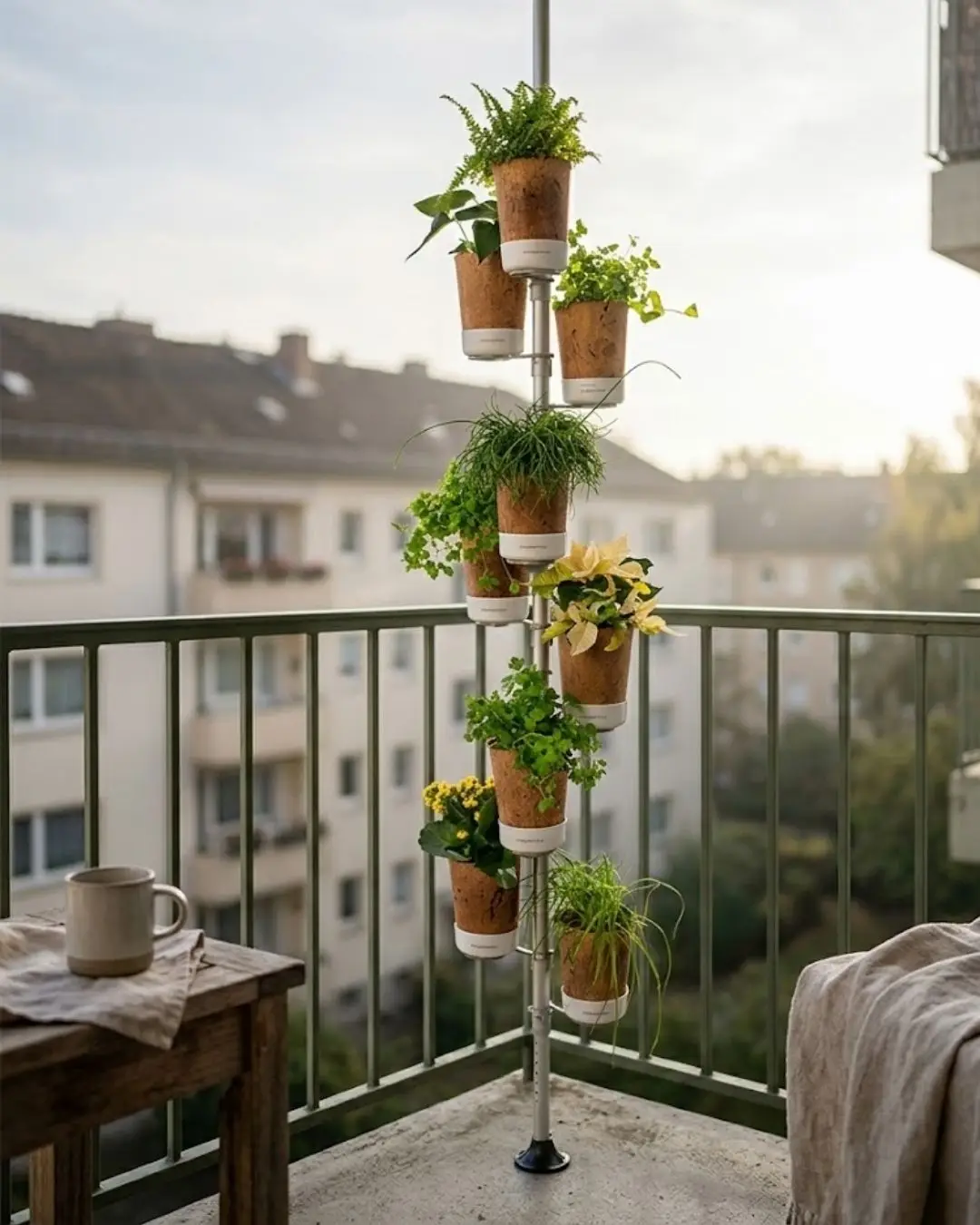
Where floor space is short, a vertical garden without drilling can hold nine herbs on less than 1 m². The Urban Planty vertical garden clamps between floor and ceiling up to 285 cm, and each pot has a 300 ml water reservoir, which suits moisture-loving mint and parsley.
What will not grow on a shady balcony?
Some plants simply need more sun than a north-facing balcony can give. Spare yourself the disappointment:
- Tomatoes: need at least six to eight hours of direct sun. In shade they grow tall and thin and set few fruit that rarely ripen.
- Chillies and peppers: need even more warmth and sun than tomatoes. In shade the fruit stay small or never colour.
- Lavender: grows leggy, flowers poorly and tends to rot in compost that stays damp.
- Geraniums, petunias, rosemary and basil: survive in partial shade but flower or grow far less than in sun.
How is caring for plants on a shady balcony different?
The biggest difference is water. Compost in shade dries out more slowly, so plants need watering less often than on a south-facing balcony. In a July heatwave a sunny balcony may need watering every day, a shady one every two to four days.
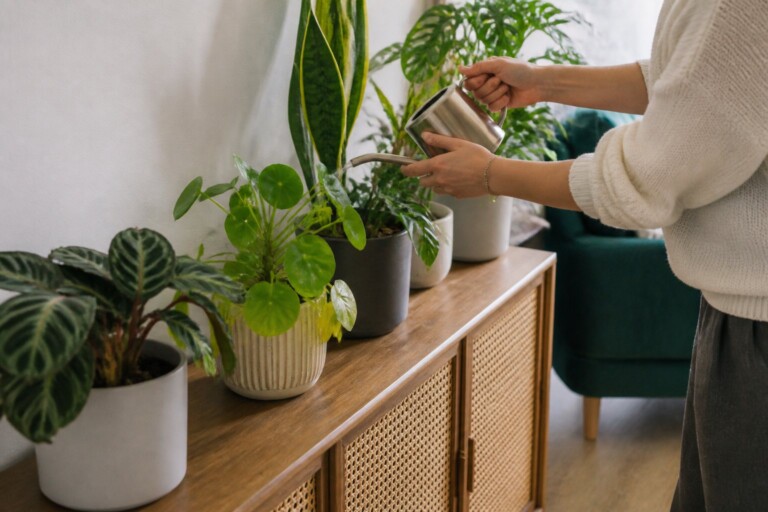
Always check before watering: push a finger 2–3 cm into the compost and water only if it feels dry. Overwatering is the most common way to lose plants in shade, because wet compost also stays cold. If you also grow plants indoors in a north-facing room, the same rule applies there, as our list of low light houseplants explains.
- Pots with drainage holes are essential. Empty saucers after rain.
- Feed flowering plants such as begonias and fuchsias every two weeks in summer. Foliage plants need much less.
- Light-coloured pots and pale flowers, such as white begonias or variegated hostas, brighten a dark corner.
- Winter protection: hardy perennials can stay outside, but wrap the pot in fleece or bubble wrap and stand it on wood or polystyrene so the roots do not freeze through.
Frequently asked questions
What flowers grow on a north-facing balcony?
On a north-facing balcony, begonias, fuchsias and busy lizzies flower reliably from June until the first frost. Hydrangeas also flower in partial shade and can stay outside all year in a large, protected pot.
Can you grow herbs on a shady balcony?
Yes, mint, parsley, chives, lemon balm and wild garlic grow on a shady balcony if they get at least a few hours of light. Basil, rosemary and thyme need full sun and do poorly in shade.
Will tomatoes grow on a north-facing balcony?
Tomatoes rarely succeed on a north-facing balcony because they need six to eight hours of direct sun. In shade they grow thin and set little fruit that seldom ripens.
How often should you water plants on a shady balcony?
Plants on a shady balcony need watering less often than in sun, in summer typically every two to four days. Check the compost with a finger and water only when the top 2–3 cm is dry.
Which shade plants stay outside on the balcony all winter?
Hostas, hardy ferns, heuchera, ivy and hydrangeas can stay outside all winter in central Europe. Wrap the pots and lift them off cold tiles so the roots do not freeze through.