EN
 Italiano
 Slovenščina
 Čeština
 Deutsch
 Magyar
 polski
 Slovenčina


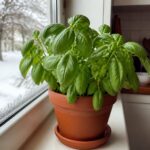



A pothos that has grown too long, a leggy tradescantia or a pot of supermarket basil can all be turned into new plants for nothing. Most popular houseplants root readily from a short piece of stem, provided it is cut in the right place and kept warm and bright. Here is what works, what does not, and why.
Success depends on three conditions: a node on the cutting, roughly 20 to 25 °C, and bright light without harsh midday sun.
The harder part comes later, when roots grown in a jar have to adapt to compost. That step, rather than the rooting itself, is where many cuttings are lost.
To propagate a houseplant, cut a 10 to 15 cm piece of stem just below a node, remove the lowest leaves and stand it in water or moist, airy compost in a bright, warm spot. Pothos, philodendron, tradescantia, coleus, mint and basil usually root in one to three weeks. Pot water-rooted cuttings when the roots are about 3 to 5 cm long.
When is the best time to take cuttings?
Spring and early summer are the most reliable months, roughly from March to July. Days are getting longer, plants are in active growth, and a cutting taken in April will root noticeably faster than the same cutting taken in December.
Cuttings taken from November to February still root, but more slowly. Light is weak even on a south-facing sill, and a sill above a radiator is too warm and dry, so choose the brightest window and keep the jar away from direct heat.
What is a node and where should you cut?
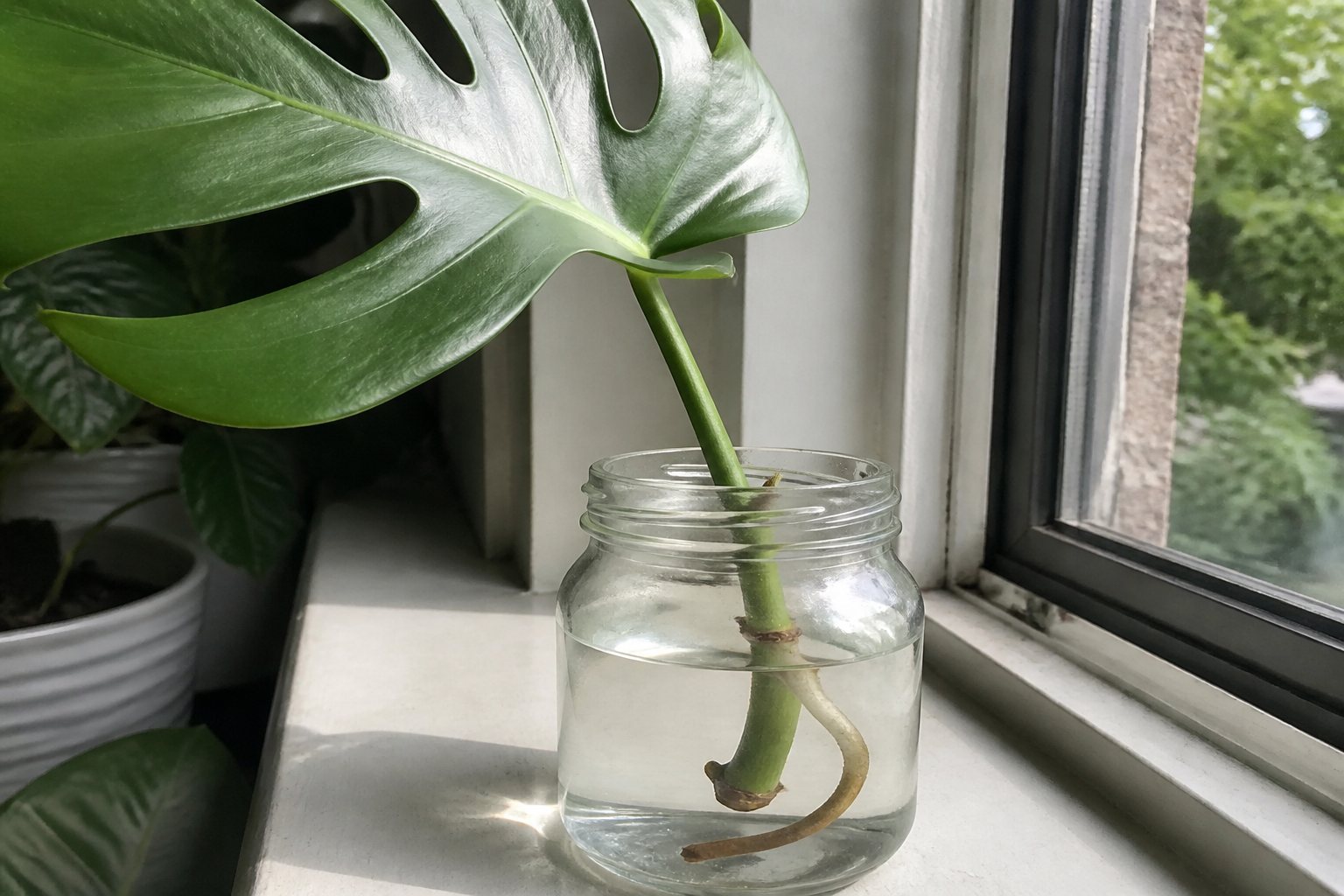
A node is the slightly thickened point on a stem where a leaf grows out. It holds the dormant buds and, in climbing plants such as pothos and monstera, it is also where the small brown aerial roots appear. New roots form at or near the node, so a cutting without one will not grow into a new plant.
Use clean, sharp scissors or secateurs and cut about 0.5 to 1 cm below a node. For most trailing plants a piece of 10 to 15 cm with two or three nodes is ideal. Longer cuttings lose more water through their leaves before they have roots to replace it.
- Cut 0.5 to 1 cm below a node, leaving two or three nodes on the cutting.
- Remove the leaves from the lowest node so nothing sits below the waterline or in the compost.
- Keep two to four leaves at the top. On large-leaved plants, one leaf is enough.
Is it better to root cuttings in water or in soil?
Both work. Water lets you watch the roots grow and spot rot early. Roots formed in soil need no adjustment later.
- Water: use a clear glass with room-temperature tap water, keep the leaves above the surface and change the water every few days, or at least once a week. It suits pothos, philodendron, tradescantia, coleus, mint and basil.
- Soil: use a light mix, for example houseplant compost with about a third perlite, kept moist but never wet. A clear plastic bag or an upturned jar over the pot keeps humidity up. It suits succulents, leaf cuttings and anything that rots easily in water.
Which houseplants root most easily from cuttings?
The plants below are among the most forgiving, which is also why many of them appear on lists of easy houseplants for beginners. Rooting times are typical for a warm, bright room in spring and summer; in winter, allow longer.
| Plant | Best method | First roots after about | What to watch |
|---|---|---|---|
| Pothos (Epipremnum) | Stem cutting in water or soil | 1 to 3 weeks | Needs a node; a leaf alone will not grow a new shoot |
| Heartleaf philodendron | Stem cutting in water or soil | 2 to 3 weeks | Treat like pothos |
| Tradescantia | Stem cutting in water or soil | 1 to 2 weeks | Very fast; pot several cuttings together for a fuller plant |
| Monstera | Node cutting with aerial root in water | 3 to 6 weeks | Slow; the node is essential, a leaf without one fails |
| Spider plant | Plantlets in water or pinned on soil | 1 to 2 weeks | Use babies that already show small root nubs |
| Coleus | Shoot tip in water | 1 to 2 weeks | Pinch off flower spikes |
| Basil | Non-flowering shoot in water | 1 to 2 weeks | Needs warmth; struggles below about 15 °C |
| Mint | Shoot in water or soil | About 1 week | Roots so easily that it can become invasive outdoors |
Spider plants are the simplest of all: plantlets on the runners often already have short roots. Cut them off and stand them in water, or pin them onto a pot of compost while still attached and cut the runner once they have rooted.
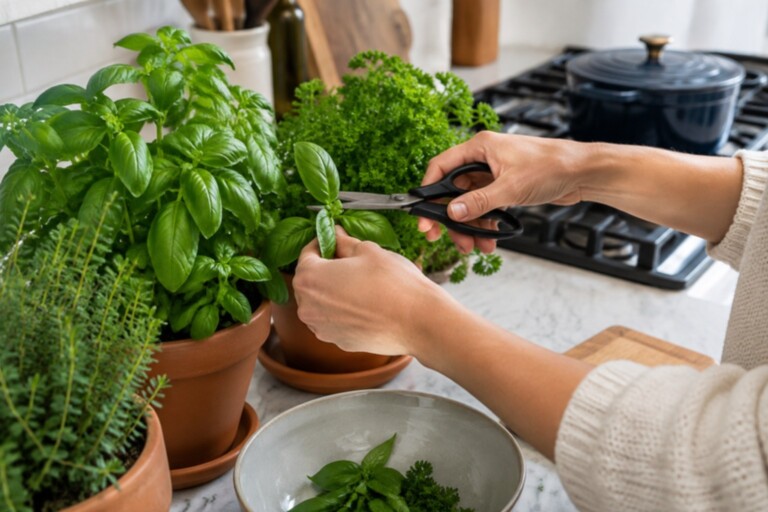
Herbs from a supermarket pot are worth trying too: take 8 to 10 cm shoots of basil or mint, strip the lower leaves and stand them in a glass on a bright sill.
Can you grow a new plant from a single leaf?
Only some plants can do this. Succulents such as echeveria and many sedums form tiny rosettes at the base of a leaf laid on dry, gritty compost. African violets root from a leaf with a short stalk, and rex begonias from leaf sections pressed onto moist compost.
Snake plants grow from leaf sections 5 to 8 cm long pushed upright into compost, but it takes months, and forms with yellow edges usually lose the margin. Division keeps it.
Pothos, philodendron and monstera leaves without a node may produce roots in water and survive for months, but they will not make a new shoot. This is the most common reason a monstera cutting from a friend never grows.
When is division better than cuttings?
Plants that grow in clumps rather than along a stem cannot be propagated from cuttings in the usual way. Peace lilies, snake plants, calatheas, many ferns and ZZ plants are divided instead.
Do it when you repot in spring. Loosen the root ball and pull or cut it into two or three sections, each with its own shoots and roots. Pot each in fresh compost and keep it out of direct sun for a week or two.
How do you move water-rooted cuttings into soil?
Pot cuttings when the roots are about 3 to 5 cm long, ideally with a few side roots. Waiting until the jar is full of long, tangled roots makes the move harder, not easier, because water roots are fragile and adapted to constant moisture.
- Choose a small pot, 8 to 10 cm across, with a drainage hole.
- Fill it with light houseplant compost, ideally mixed with some perlite.
- Make a hole with a finger or a pencil and lower the roots in without bending them.
- Firm the compost gently and water until it is evenly moist.
- For the first one to two weeks keep the compost slightly moister than you would for an established plant, then let the top centimetre dry between waterings.
Why do cuttings rot or fail to root?
- No node: the cutting was taken between nodes or is a leaf alone. Recut below a node if possible.
- Rot: a soft, brown or black stem usually means warm, stale water or leaves below the waterline. Cut back to healthy tissue, rinse the glass and use fresh water.
- Too cold or too dark: below about 18 °C or on a dim north sill, rooting can stall for weeks. Move the cutting to a brighter, warmer spot.
- Flowering shoots: basil, mint and coleus root poorly from stems that are already flowering. Choose leafy shoots or pinch off flower buds.
- Overwatering after potting: the most common late failure. The compost should be moist, not soggy.
Where can young plants go once they have rooted?
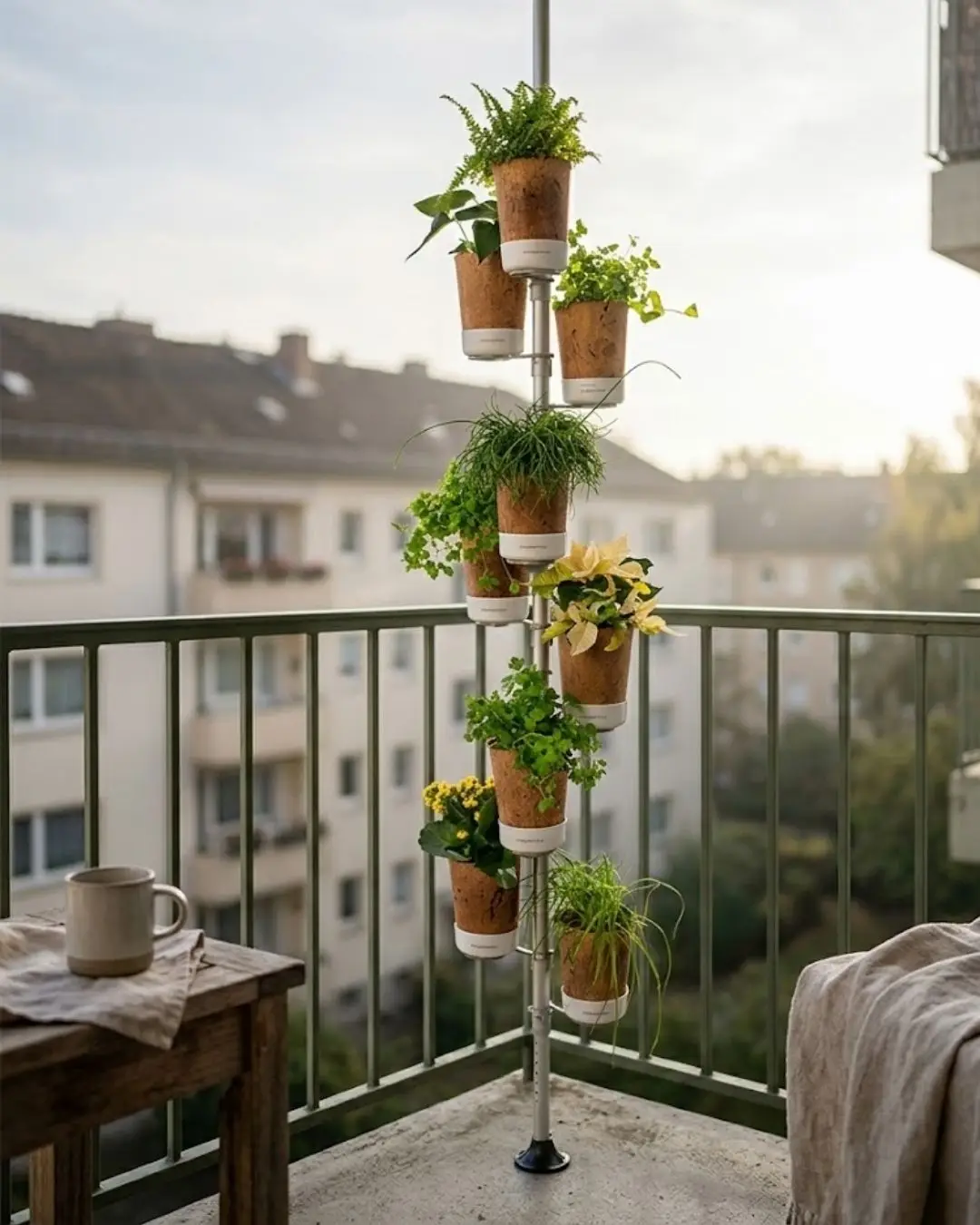
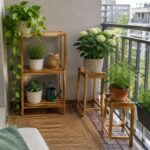
Propagation tends to fill a windowsill quickly. If space runs out, the area next to a window can be used upwards: our vertical garden without drilling clamps between floor and ceiling, adjusts up to 285 cm and holds nine pots on less than 1 m² of floor, each with a 300 ml water reservoir. Once rooted cuttings are established, the Urban Planty vertical garden (€149, free shipping) gives them a place in the light.
Frequently asked questions
How long do pothos cuttings take to root in water?
Pothos cuttings usually show their first roots in water after one to three weeks in a warm, bright room. In winter it can take longer. Pot them when the roots are about 3 to 5 cm long.
Can you propagate a monstera from a leaf?
No. A monstera leaf without a node may grow roots in water, but it will not produce a new shoot. A monstera cutting needs at least one node, ideally with an aerial root.
Is it better to propagate houseplants in water or soil?
Both methods work for easy houseplants such as pothos, philodendron and tradescantia. Water lets you see roots and rot, while cuttings rooted in soil avoid the adjustment when they are potted. Succulents and leaf cuttings do better in soil.
Why is my cutting rotting in water?
A cutting usually rots in water because the water is stale and warm or because leaves sit below the surface. Cut back to firm, healthy stem, clean the glass and change the water every few days.