EN
 Italiano
 Slovenščina
 Čeština
 Deutsch
 Magyar
 polski
 Slovenčina








A balcony in a rented flat comes with two limits: you cannot drill into walls, ceilings or railings without permission, and whatever you put up has to come down without a trace when you leave. Within those limits there is far more room for plants than most tenants assume.
The solutions that work are freestanding, clamped or hung, never screwed. Before buying anything, though, it pays to read two documents and ask one question.
On a rented balcony, first check the tenancy agreement and the building’s house rules, and ask the landlord how much weight the railing and floor may carry. Then choose solutions without drilling: floor-to-ceiling tension poles, railing planters that hang on the inside, freestanding shelves and weighted privacy screens. Use saucers so water does not drip onto the balcony below, and protect the floor so you can move out without damage.
What does a tenancy agreement usually say about the balcony?
The balcony is part of the flat you rent, so you may normally use it for plants and furniture. What is restricted is anything that changes the building: holes in the façade, walls or railings, fixed awnings, or screens that alter how the block looks from the street. These usually need the landlord’s written consent.
Many buildings also have house rules from the management company or freeholder. Common points are that planters must hang on the inside of the railing, that nothing may hang over the edge, that drainage must not affect neighbours and that privacy screens must be a certain colour or height. Read both documents, and if something is unclear, ask by email so you have the answer in writing.
How much weight can a balcony railing hold?
There is no figure that applies to every building, and we will not guess one. Load depends on the construction, the age of the balcony and how the railing is fixed. Ask the landlord or managing agent how much the railing and the balcony floor may carry, and follow that answer.
Keep in mind that compost is much heavier wet than dry, and that a planter full of soil after rain weighs considerably more than it did in the shop. A row of large planters on one railing, or a heavy raised bed in one corner, is exactly the kind of load worth checking first. Light materials such as plastic or fibreglass pots instead of concrete or stone reduce the problem from the start.
Which solutions work without drilling?
Floor-to-ceiling tension poles
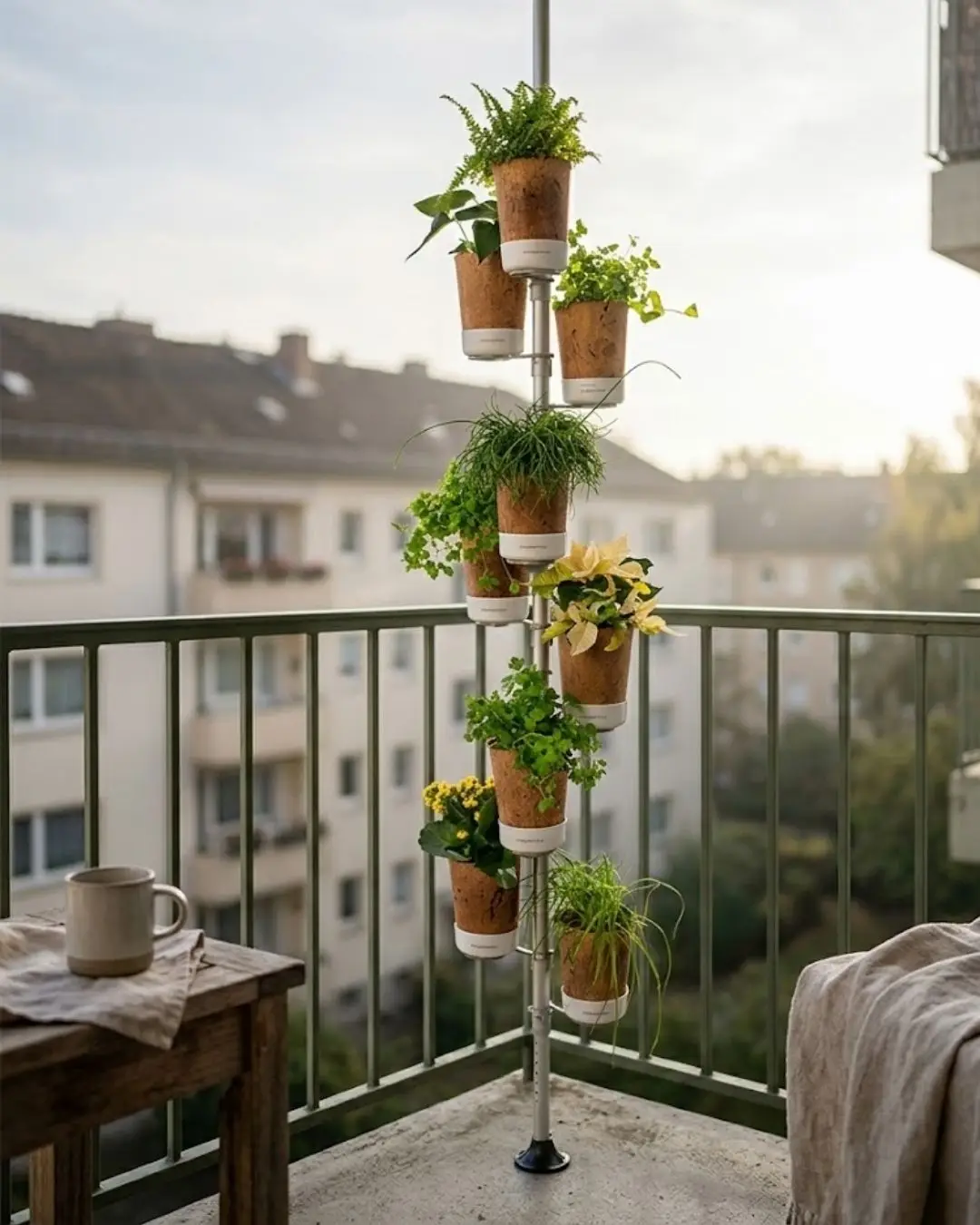
A pole that is spring-loaded or screwed out between floor and ceiling holds itself in place by pressure. It works where the balcony has a solid, level ceiling, typically the underside of the balcony above. Use the protective pads at both ends, check after a few days that the pole is still tight and check again after strong wind or frost.
Railing planters with hooks or brackets
Planters with adjustable brackets clamp around the top rail without screws. Hang them on the inside, so that nothing can fall onto the street or a neighbour’s balcony. Fill them with light compost and plant them with species suited to the aspect of your balcony.
Freestanding shelves and plant ladders
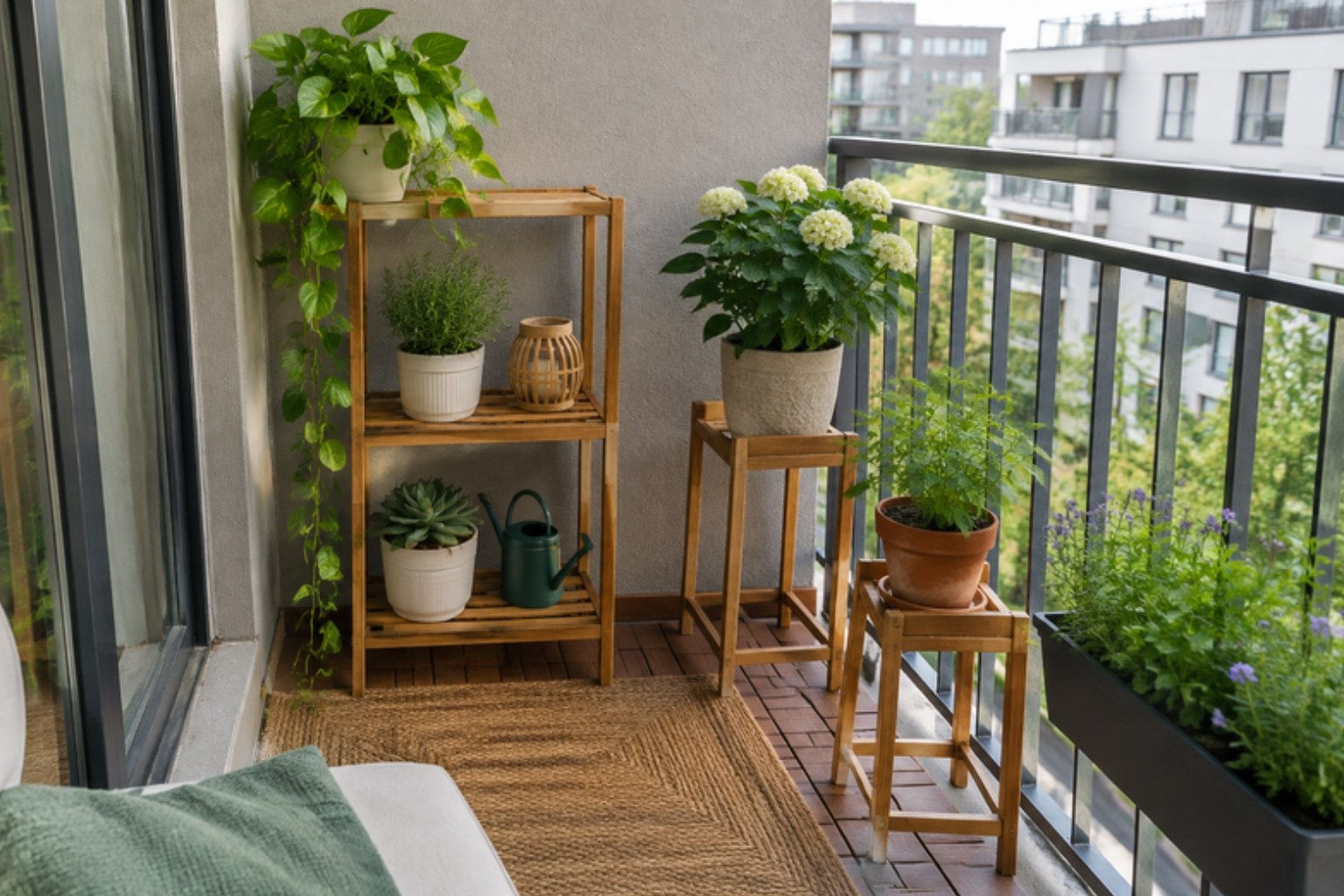
A metal or wooden shelf that stands against the wall needs no fixings at all. Put the heaviest pots on the lowest shelf so it cannot tip, and leave a few centimetres between the shelf and the wall so air can circulate. On windy upper floors, choose a shelf with a wide base.
Privacy screens
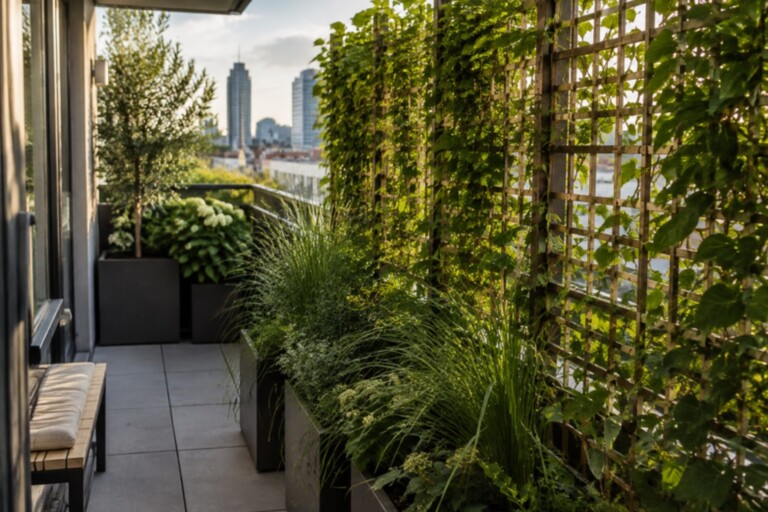
Reed, bamboo or fabric screens can be tied to the inside of the railing with cable ties or straps, and freestanding screens with weighted bases stand on their own. Remember that a screen catches wind like a sail, so every fixing must be firm. Check the house rules for colour and height before buying.
- Allowed in most leases: pots on the floor, freestanding shelves, tension poles, planters hung on the inside of the railing.
- Usually needs consent: anything screwed into the façade, walls, ceiling or railing, fixed awnings, screens visible from the street.
- Check the house rules: planters on the outside of the railing, colours of privacy screens, use of hanging baskets.
How do you water without annoying the neighbours below?
Dripping water is the most common source of balcony disputes. Put a saucer under every pot, water slowly and stop as soon as water appears in the saucer. Empty saucers after half an hour, both to avoid overflow and because standing water breeds mosquitoes.
Never let soil or leaves block the balcony drain, and do not tip excess water over the edge. Pots with water reservoirs help, because they hold the water instead of letting it run out. If you are away in summer, our guide to watering plants on vacation compares methods that do not flood the balcony.

How can you get more plants onto a small rented balcony?
Grow upwards rather than outwards. A single vertical structure uses the height of the balcony and leaves the floor free for a chair. The Urban Planty Vertical Garden is one such option: a telescopic pole clamped between floor and ceiling, with nine pots on less than one square metre and no drilling. Each pot has a 300 ml water reservoir. It costs €149 with free shipping. More about the vertical garden without drilling.
For more layouts on a few square metres, see our small balcony garden ideas.
How do you move out without leaving damage?
Take dated photos of the balcony when you move in, including the floor, railing and ceiling. They are useful if there is a dispute about the deposit later.
While you live there, stand pots on feet, saucers or felt pads, because terracotta and metal can leave lime, rust or water stains on tiles and wood. When you leave, remove every pot, hook and pole, sweep out the compost, clean marks on the floor and check the ceiling where the pole pads sat. Hand back the balcony as you found it, and the plants can move with you.
Frequently asked questions
Can I put plants on the balcony of a rented flat?
Plants on the balcony of a rented flat are normally allowed, as the balcony is part of the rented space. Drilling into the façade, walls or railing usually needs the landlord’s consent, so choose freestanding or clamped solutions.
How heavy can planters on a balcony railing be?
The safe load of a balcony railing depends on the building, so ask the landlord or managing agent for the permitted weight. Remember that wet compost is much heavier than dry, and hang railing planters on the inside.
Are tension poles allowed in a rented flat?
Tension poles that stand between floor and ceiling without screws are generally possible in a rented flat, because they leave no holes. Use protective pads and check the pole regularly; if in doubt, confirm with the landlord.
How do I stop balcony plants dripping on the neighbours?
To stop balcony plants dripping on the neighbours below, use a saucer under every pot, water slowly, empty saucers after watering and keep the balcony drain free of soil and leaves.