EN
 Italiano
 Slovenščina
 Čeština
 Deutsch
 Magyar
 polski
 Slovenčina





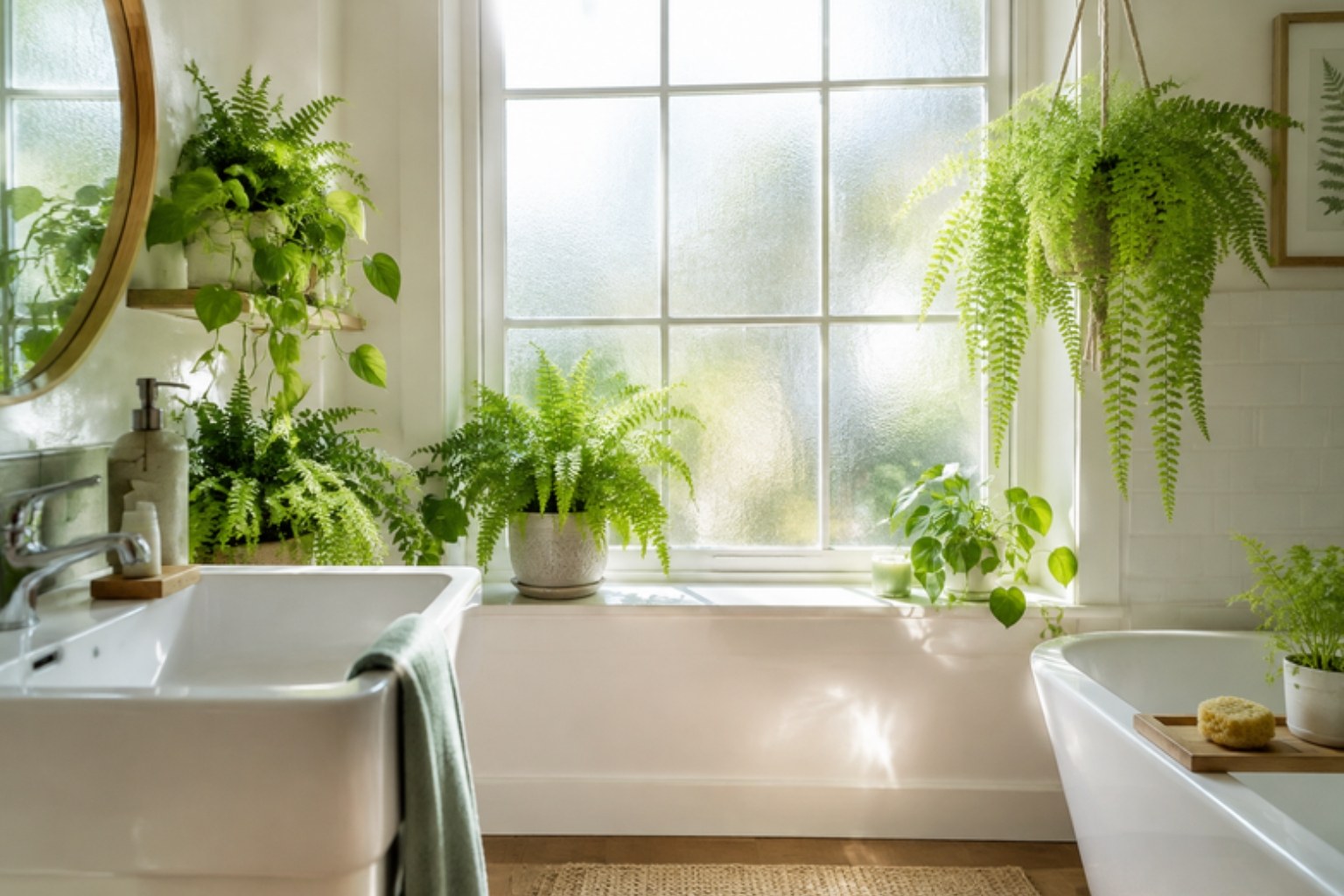

A bathroom seems the natural home for tropical houseplants: warm, steamy and rarely dry. Several plants do thrive there, but humidity is only half the story. What decides success is light, and many bathrooms have far less of it than the living room.
A bathroom with a window can hold ferns, orchids and calatheas that struggle in centrally heated rooms. A windowless one needs a grow light, or the plants slowly starve.
Below: which plants suit a bathroom, how much light they need, how to deal with temperature swings, ventilation and mould, and where to put them.
The best plants for the bathroom are ferns, calathea, moth orchids, pothos, peace lily and tillandsia, all of which like humidity. They still need daylight: a bathroom with a window works well, a windowless one needs a grow light for 10 to 12 hours a day. Keep plants away from cold windows in winter, ventilate after showers and do not let the compost stay soggy.
Which plants grow well in a bathroom?
The plants that do best come from humid tropical forests, where they grow in the shade of trees. They like warmth, moist air and bright light without direct sun.
- Boston fern (Nephrolepis): needs constantly moist compost and humid air, which is why it often browns in a dry living room. Bright, indirect light.
- Calathea: patterned leaves that curl and brown at the edges in dry air. Prefers soft water such as rainwater or filtered water, and steady warmth.
- Moth orchid (Phalaenopsis): enjoys the humidity and does well on a bright bathroom windowsill out of midday sun. Our guide to orchid care explains watering and reblooming.
- Pothos: the most tolerant of the group. Copes with less light and trails attractively from a shelf. More in our guide to pothos care.
- Peace lily (Spathiphyllum): tolerates lower light than most flowering plants and droops visibly when it needs water.
- Tillandsia (air plants): grow without compost and take moisture through their leaves, but need more light than people expect.
| Plant | Light | Pets (ASPCA) |
|---|---|---|
| Boston fern | Bright, indirect | Non-toxic |
| Calathea | Medium to bright, indirect | Non-toxic |
| Moth orchid | Bright, indirect | Non-toxic |
| Pothos | Low to bright, indirect | Toxic |
| Peace lily | Low to medium | Toxic |
How much light do bathroom plants need?
More than most bathrooms provide. A frosted window, a north-facing aspect and a small window high on the wall all reduce the light considerably. As a rough test, if you need the light on to read during the day, the room is too dark for most plants except pothos and peace lily.
Place plants as close to the window as possible: on the sill, on a shelf next to it or hanging in front of it. A metre or two further into the room the light drops sharply.
Can plants live in a bathroom without a window?
Not for long without help. No plant can photosynthesise in a room lit only for a few minutes a day. If the bathroom has no window, there are two options.
The first is a grow light. An LED grow light or a full-spectrum bulb on a timer, running 10 to 12 hours a day, keeps pothos, peace lily and ferns healthy. Ordinary ceiling lights are not enough, as they are too weak and switched on too briefly.
The second is rotation: keep two sets of plants and swap them every week or two between the bathroom and a bright windowsill elsewhere in the flat.
Do temperature swings in the bathroom harm plants?
They can. A bathroom may reach 25 °C during a shower and drop well below 15 °C on a winter night if the heating is low or the window is left open. Tropical plants such as calathea and ferns prefer a steady 18 to 24 °C and suffer from cold more than from steam.
In winter, move plants away from a cold windowsill at night, or at least make sure leaves do not touch the glass. Do not place them directly on or above a hot heated towel rail, which dries and scorches leaves.
How do you prevent mould with plants in the bathroom?
Plants do not cause mould on walls; poor ventilation does. Air the bathroom for five to ten minutes after every shower or run the extractor fan. The plants will still benefit from the humidity, which builds up again with every wash.
Mould on the surface of the compost is a sign that it stays wet for too long. Scrape off the top layer, let the compost dry more between waterings and empty saucers. Constantly wet compost also attracts fungus gnats. The higher humidity means bathroom plants usually need watering less often than the same plants in a living room.
Where should plants go in a bathroom?
- On or next to the windowsill: for orchids, calathea and tillandsia, which need the most light.
- Hanging from a ceiling hook or curtain rail: for pothos and ferns, whose fronds and trails hang down.
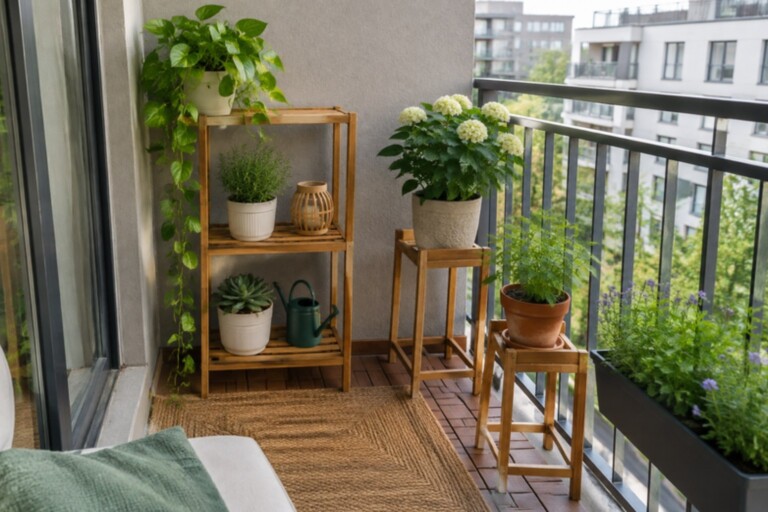
- On a shelf above the bath: if it gets light, but not where hot water sprays directly onto the plants.
- Not on the floor in a dark corner: the light there is too weak for almost anything.
If you have cats or dogs, note that pothos and peace lily are toxic to them. Our list of pet-safe houseplants suggests alternatives.
How can you fit more plants into a small bathroom?

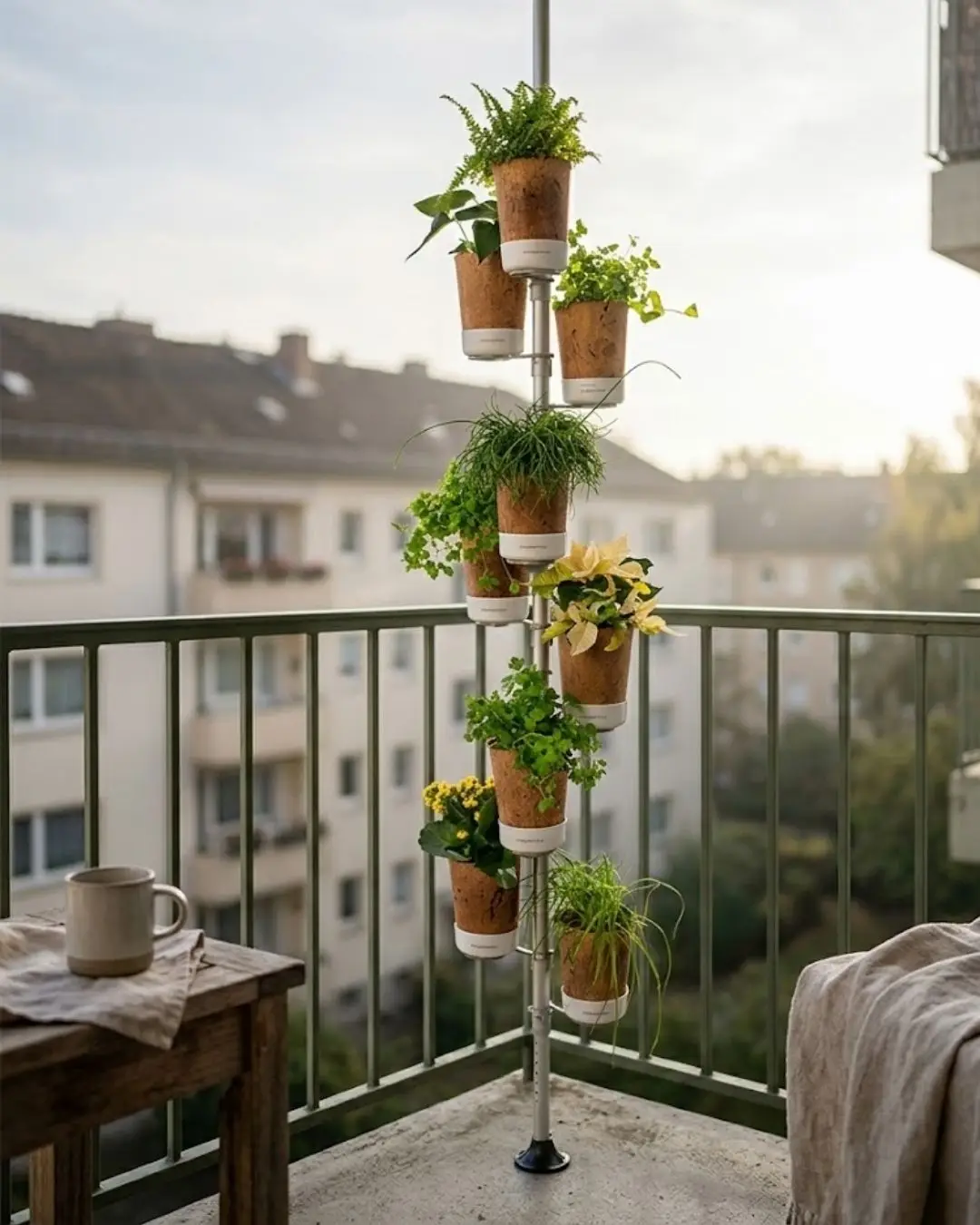
Shelf space is usually the limit. In a bathroom with a window, or in a bright room next to it, the Urban Planty Vertical Garden holds nine pots on a telescopic pole that clamps between floor and ceiling, each pot with a 300 ml water reservoir, on less than one square metre and without drilling. Orchids, small ferns and pothos fit its pots well. It costs €149 with free shipping. More about the vertical garden without drilling.
Frequently asked questions
What are the best plants for a bathroom?
The best plants for a bathroom are humidity lovers such as Boston fern, calathea, moth orchid, pothos, peace lily and tillandsia, provided the room has a window or a grow light.
Can plants grow in a bathroom without a window?
Plants in a bathroom without a window need a grow light running 10 to 12 hours a day, or they should be swapped regularly with plants from a bright windowsill.
Do bathroom plants cause mould?
Bathroom plants do not cause mould on walls; poor ventilation does. Airing the bathroom after showers and not overwatering prevents mould on walls and on the compost.
Which bathroom plants are safe for cats?
Of the common bathroom plants, Boston fern, calathea and moth orchid are listed by the ASPCA as non-toxic to cats, while pothos and peace lily are toxic.