EN
 Italiano
 Slovenščina
 Čeština
 Deutsch
 Magyar
 polski
 Slovenčina





The best herbs to grow are the ones you actually cook with. A pot of basil you pick twice a week is worth more than a collection of rare herbs that never leave the windowsill.
Start from your cooking, not from the garden centre shelf. Someone who makes pasta three times a week needs different plants from someone who cooks curries or Sunday roasts. The number of plants matters too: one parsley plant does not go far in a family kitchen.
Below: which herbs suit which cuisine, which grow indoors and which need the balcony, how many plants of each a family uses, how to pick so they keep producing, and a starter set of nine.
For most kitchens, start with basil, flat-leaf parsley, chives, thyme, oregano, rosemary, mint and sage, then add one herb for the cuisine you cook most, such as coriander. Soft herbs like parsley, chives and mint grow on a bright windowsill; Mediterranean herbs need full sun on a balcony. A family of four uses about three basil and three parsley plants. Pick little and often.
Which herbs suit which cuisine?
| Cuisine | Herbs to grow | Typical uses |
|---|---|---|
| Italian | Basil, flat-leaf parsley, oregano, rosemary, sage | Pesto, tomato sauces, roast potatoes, butter and sage with pasta |
| Mediterranean and French | Thyme, rosemary, marjoram, tarragon, chives | Roast vegetables, lamb, stews, omelettes, béarnaise |
| Asian | Coriander, Thai basil, mint, garlic chives, lemongrass | Curries, stir-fries, noodle soups, fresh spring rolls |
| British and Central European | Parsley, chives, dill, mint, sage, thyme | New potatoes, mint sauce, stuffing, fish, soups, cucumber salad |
Some herbs appear in almost every column. Parsley, chives and thyme are the workhorses of most European kitchens, which is why they belong in any first set. Coriander and Thai basil only make sense if you cook Asian food often; lemongrass needs a large pot and a frost-free place in winter, so it suits keen cooks with space.
Which herbs grow indoors and which need a balcony?
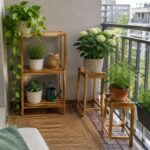
Light decides. Mediterranean herbs, such as rosemary, thyme, oregano and sage, come from dry, sunny hillsides and need at least six hours of sun a day. Indoors behind glass they grow thin and weak, so they belong on a sunny balcony or terrace from April to October. Our guide to thyme and oregano in pots goes into detail.
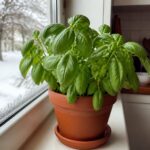
Soft, leafy herbs cope better with a bright kitchen windowsill: parsley, chives, mint, chervil and, in summer, basil. Basil wants warmth more than anything and suffers below about 12 °C, so it goes outside only after mid-May and comes in again in September. See how to grow basil indoors.
In winter, light is the limit everywhere. Between November and February even a south-facing window gives herbs only enough light to tick over, so expect to pick less.
How many plants of each herb does a family need?
| Herb | Plants for a family of four | Note |
|---|---|---|
| Basil | 3, or 6 if you make pesto | Pick weekly, remove flower buds |
| Flat-leaf parsley | 3 | Slow to regrow after a heavy cut |
| Chives | 2 | Hardy, returns every spring |
| Coriander or dill | 1 pot, resown every 3 to 4 weeks | Both run to seed quickly in heat |
| Mint | 1 | Always in its own pot |
| Thyme, oregano, sage, rosemary | 1 of each | A little goes a long way |
These are rough figures for a household that cooks most days. Supermarket pots of basil and coriander contain dozens of seedlings crowded together; split one into three or four clumps and pot them separately, and they last for months instead of a week.
How should herbs be picked so they keep growing?
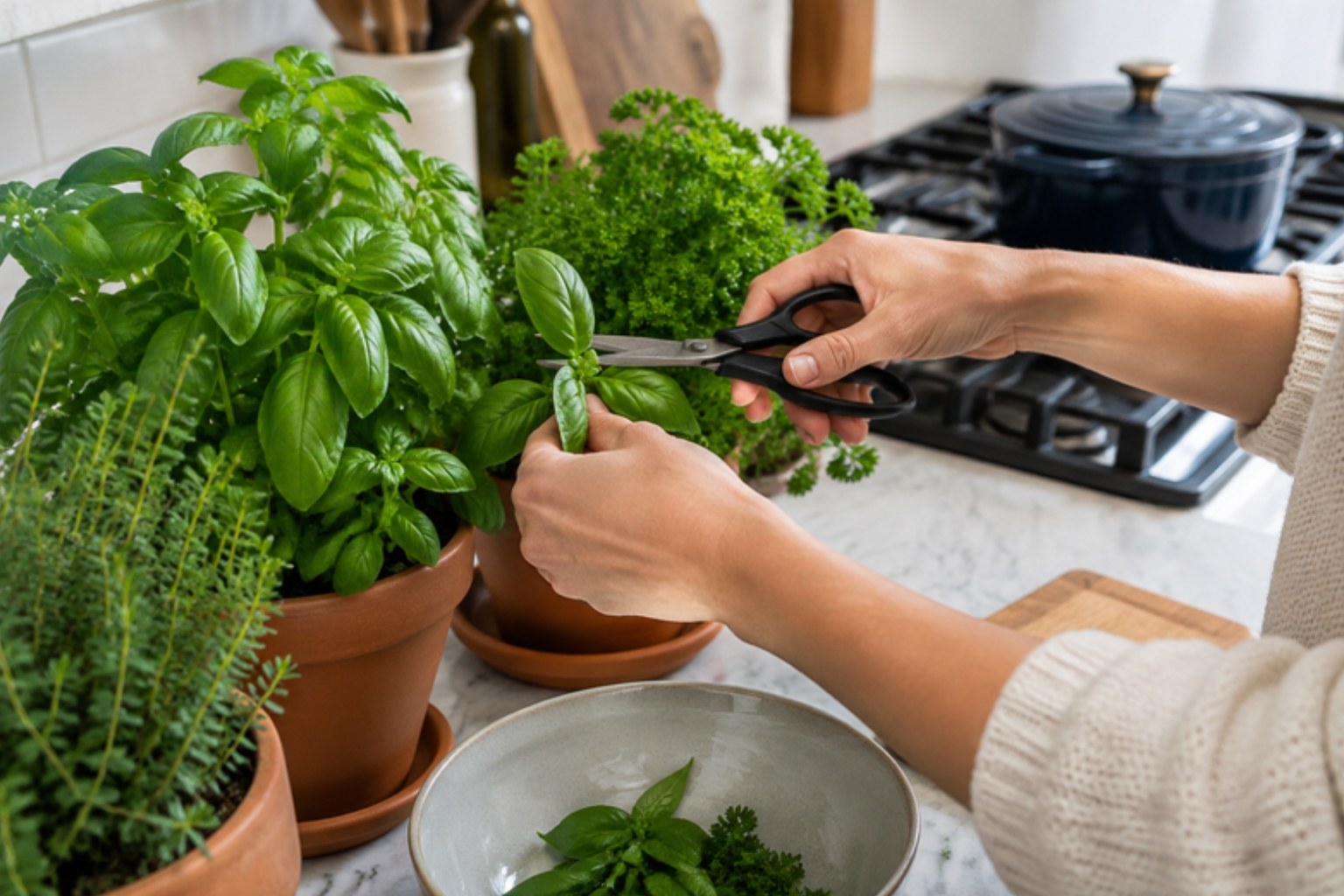
- Basil: pinch off the top of each stem just above a pair of leaves. Two new shoots grow from there. Do not strip the large lower leaves, and remove flower buds as they appear.
- Parsley: cut whole outer stalks at the base and leave the young centre to grow.
- Chives: cut a whole bunch 3 to 5 cm above the compost rather than snipping tips; it regrows in two to three weeks.
- Thyme, rosemary, sage and oregano: cut the soft green tips. Never cut back into old, bare wood, which rarely sprouts again.
- Mint: cut stems by up to half; it responds with bushier growth.
Pick little and often, ideally in the morning, and never take more than a third of a plant at once. Regular picking keeps herbs compact and leafy. A surplus in summer can be dried or frozen for winter.
What is a good starter set of nine kitchen herbs?
- Basil
- Flat-leaf parsley
- Chives
- Thyme
- Oregano
- Rosemary
- Sage
- Mint
- Coriander, or the herb your favourite cuisine depends on
These nine cover most everyday recipes. Buy the woody herbs and mint as young plants; basil, parsley, chives and coriander are easy from seed. Our herb sowing calendar shows when to sow each one.

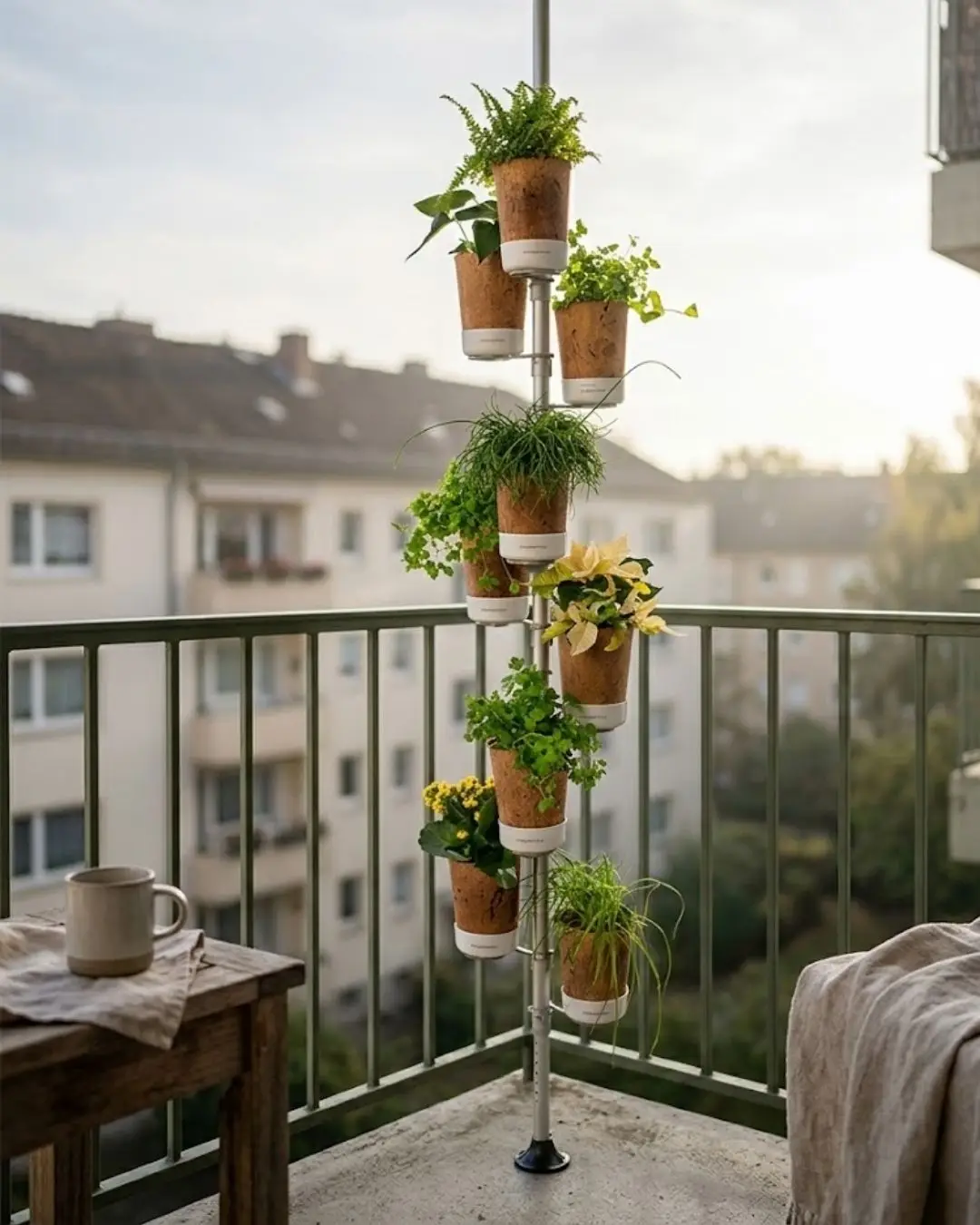
Nine herbs in separate pots take up a lot of windowsill. The Urban Planty Vertical Garden holds nine pots on a telescopic pole between floor and ceiling, each with a 300 ml water reservoir, on less than one square metre and without drilling, by a kitchen window or on the balcony. Each herb has its own pot, so mint cannot spread into the thyme. It costs €149 with free shipping. More about the vertical garden without drilling.
Can herbs grow next to the stove?
Not for long. Heat, steam and fat from cooking dry and coat the leaves, and the worktop beside the hob is often one of the darker spots in the kitchen. Herbs placed there for convenience stretch towards the light and lose flavour.
Keep the plants by the brightest window and bring a pot over to the stove while you cook, or cut what you need before you start. Turn the pots a quarter turn every few days so that they grow evenly instead of leaning towards the glass.
Frequently asked questions
What herbs are easiest to grow in the kitchen?
The easiest herbs to grow in the kitchen are chives, parsley and mint, which cope with a bright windowsill. Basil is easy in summer if it is warm.
How many basil plants does a family need?
A family of four needs about three basil plants for everyday cooking, or about six if they make pesto regularly. Pinch the tips weekly to keep the plants bushy.
Can rosemary and thyme grow indoors?
Rosemary and thyme grow poorly indoors because they need at least six hours of direct sun. They do better on a sunny balcony from spring to autumn.
Why do supermarket herbs die so quickly?
Supermarket herbs such as basil contain many seedlings crowded into one small pot. Splitting the clump into three or four smaller pots helps the herbs last for months.