EN
 Italiano
 Slovenščina
 Čeština
 Deutsch
 Magyar
 polski
 Slovenčina

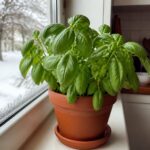


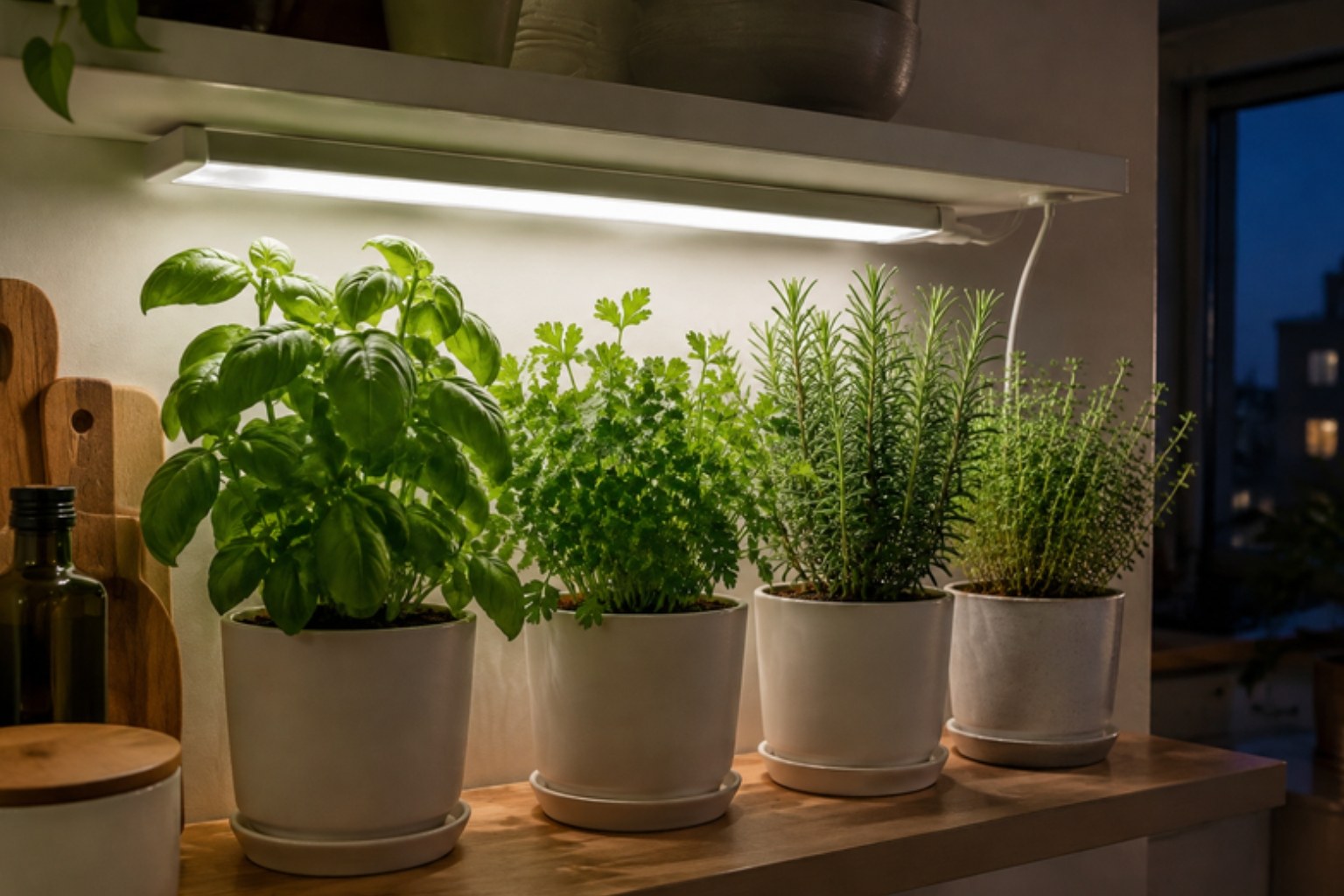

From November to February, a windowsill in central Europe or the UK gets only a fraction of the light it receives in June. Herbs grow thin and pale, seedlings stretch towards the glass and plants in north-facing rooms barely move.
A small LED grow light solves most of that. The right lamp, the right distance and a timer do most of the work.
Below: when a grow light makes sense, which type to choose, what watts and light intensity mean, how far and how long to light, what it costs to run, and the mistakes most people make.
Grow lights for plants are worth it in winter, in north-facing rooms, for herbs indoors and for raising seedlings. Choose a full-spectrum white LED, hang it roughly 15 to 40 cm above the plants as the manufacturer recommends, and run it 12 to 16 hours a day on a timer. A 20 W lamp used 14 hours a day uses about 8.4 kWh a month.
When do plants need a grow light?
- In winter: short days and a low sun mean that even a south-facing window gives too little light for herbs such as basil.
- In north-facing rooms or more than a metre or two from a window, where light drops off quickly.
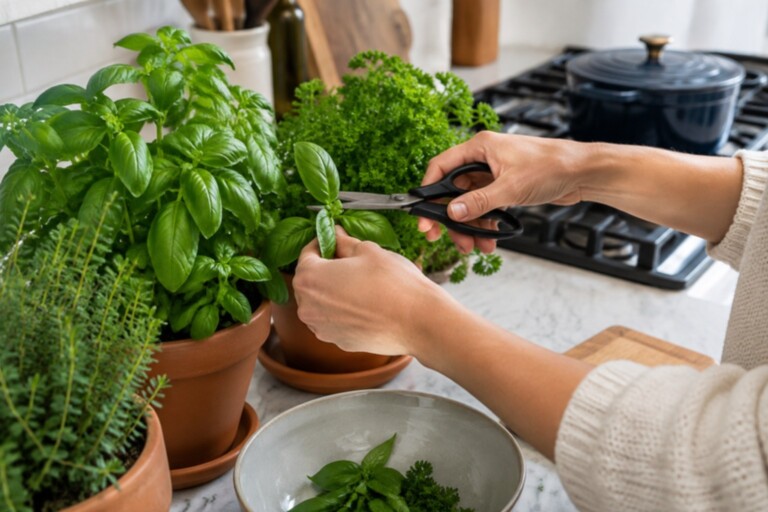
- For herbs indoors all year: basil, parsley, chives and coriander grow compact and keep their flavour under extra light.
- For seedlings: tomatoes and peppers sown on a windowsill in February and March often grow long and weak; a lamp keeps them sturdy.
Plants that are happy in lower light, such as pothos, snake plant or ZZ plant, rarely need one. Our article on houseplant care in winter covers what else changes in the dark months.
Which type of grow light is best for home use?
For a kitchen, living room or shelf, an LED lamp sold as full-spectrum white is the most practical choice. It uses little electricity, stays only slightly warm and gives light that looks natural, so the plants and the room look normal.
Bars and strips suit shelves and windowsills, clip-on lamps with a flexible arm suit one or two pots, and flat panels suit a larger group of plants. An ordinary household LED bulb in a ceiling lamp is too weak and too far away to make a real difference.
White or purple grow light: which is better?
Purple lamps combine red and blue LEDs, the colours plants use most efficiently. They grow plants well, but the light is unpleasant in a living space and makes it hard to see whether leaves are healthy, yellowing or attacked by pests.
Modern white full-spectrum LEDs contain red and blue light too, along with the rest of the spectrum, and are similarly effective for herbs and seedlings. For a home, white is the better choice.
What do watts and light intensity mean on a grow light?
Watts tell you how much electricity a lamp uses, not how much light reaches the plants.
Light for plants is measured as PPFD, in micromoles per square metre per second (µmol/m²/s). It describes how much usable light falls on the leaves at a given distance. Good manufacturers give a table or map of PPFD at different heights. As a rough guide, seedlings and leafy herbs do well at moderate intensity, while fruiting plants such as chillies need considerably more.
Be wary of labels such as “equivalent to 1000 W” on a lamp that actually draws 100 W. Look for the real power consumption, usually printed on the back or in the specifications.
How far should a grow light be from plants?
Roughly 15 to 40 cm, but follow the manufacturer’s recommendation, because it depends on the power and the lens. Light intensity falls quickly with distance.
The plants show you when the distance is wrong. Long, pale stems leaning towards the lamp mean it is too far. Bleached, yellowish or crisp patches on the top leaves mean it is too close. Choose a lamp with an adjustable height and raise it as the plants grow.
How many hours a day should a grow light be on?
Between 12 and 16 hours a day is right for most herbs, leafy greens and seedlings. Plants also need a dark period, so leaving the lamp on around the clock is not better and can harm them.
A simple plug-in timer makes the routine reliable: for example, on at 6 am and off at 8 pm. If the plants also get daylight from a window, 12 hours of lamp time is usually enough.
How much electricity does a grow light use?
The calculation is simple: power in watts multiplied by hours per day and days per month, divided by 1,000 to give kilowatt hours.
| Lamp | Hours per day | Per month (30 days) |
|---|---|---|
| 10 W clip-on lamp | 14 | 4.2 kWh |
| 20 W LED bar | 14 | 8.4 kWh |
| 40 W panel | 14 | 16.8 kWh |
To get the monthly cost, multiply the kWh by the price per kWh on your electricity tariff. For example, 20 W × 14 h × 30 days = 8,400 Wh, or 8.4 kWh. An inexpensive plug-in energy meter shows what a lamp really draws.
Is a grow light safe to use at home?
- Buy lamps with a CE mark from a known seller, and use the power supply that comes with them.
- Keep plugs, adapters and cables away from water, and never water directly above the lamp. In a humid spot, choose a lamp with a splash-proof rating.
- Do not cover the lamp or its power supply; LEDs stay warm and need a little air.
- Angle the lamp so it does not shine into your eyes, and do not look straight into strong LEDs.
- Check that the timer is rated for the lamp’s power.
What are the most common mistakes with grow lights?
- Hanging the lamp too high, so plants still stretch.
- Buying by the “equivalent” wattage instead of the real power and light data.
- Leaving the light on 24 hours a day.
- Using purple light in a living room and missing pests or yellowing leaves.
- Expecting a lamp to fix overwatering. More light speeds growth, but wet compost in a cool room still causes root rot.
How do grow lights fit with a vertical garden?

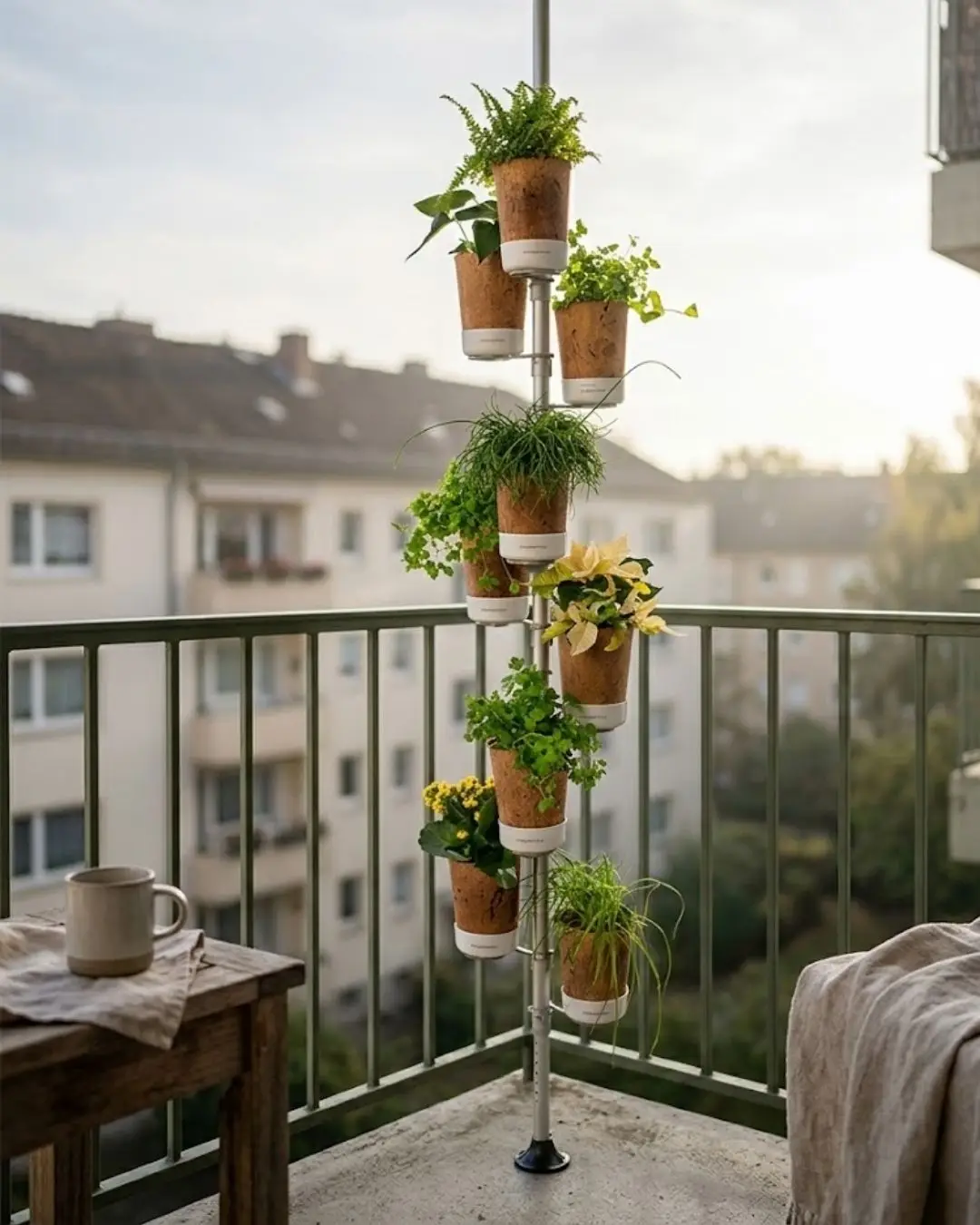
Herbs grow best next to a bright window, and in winter a light bar on the shelf or wall nearby can top up the daylight. The Urban Planty Vertical Garden holds nine pots on a telescopic pole between floor and ceiling, each with a 300 ml water reservoir, on less than one square metre and without drilling. In winter the top pots, closest to the light, suit basil and chives. It costs €149 with free shipping. More about the vertical garden without drilling.
Frequently asked questions
Do grow lights for plants use a lot of electricity?
Grow lights for plants use little electricity. A 20 W LED lamp running 14 hours a day uses about 8.4 kWh a month; multiply that by your tariff to get the cost.
How far should a grow light be from herbs?
A grow light for herbs usually hangs about 15 to 40 cm above the plants, depending on its power. Follow the manufacturer’s recommendation and raise the lamp as the herbs grow.
How many hours a day should plants be under a grow light?
Plants under a grow light need 12 to 16 hours of light a day and a dark period at night. A plug-in timer keeps the schedule consistent.
Is a white or purple grow light better?
For a home, a white full-spectrum LED grow light is better than purple. It grows herbs and seedlings just as well, looks natural and makes pests and yellow leaves easy to spot.