EN
 Italiano
 Slovenščina
 Čeština
 Deutsch
 Magyar
 polski
 Slovenčina





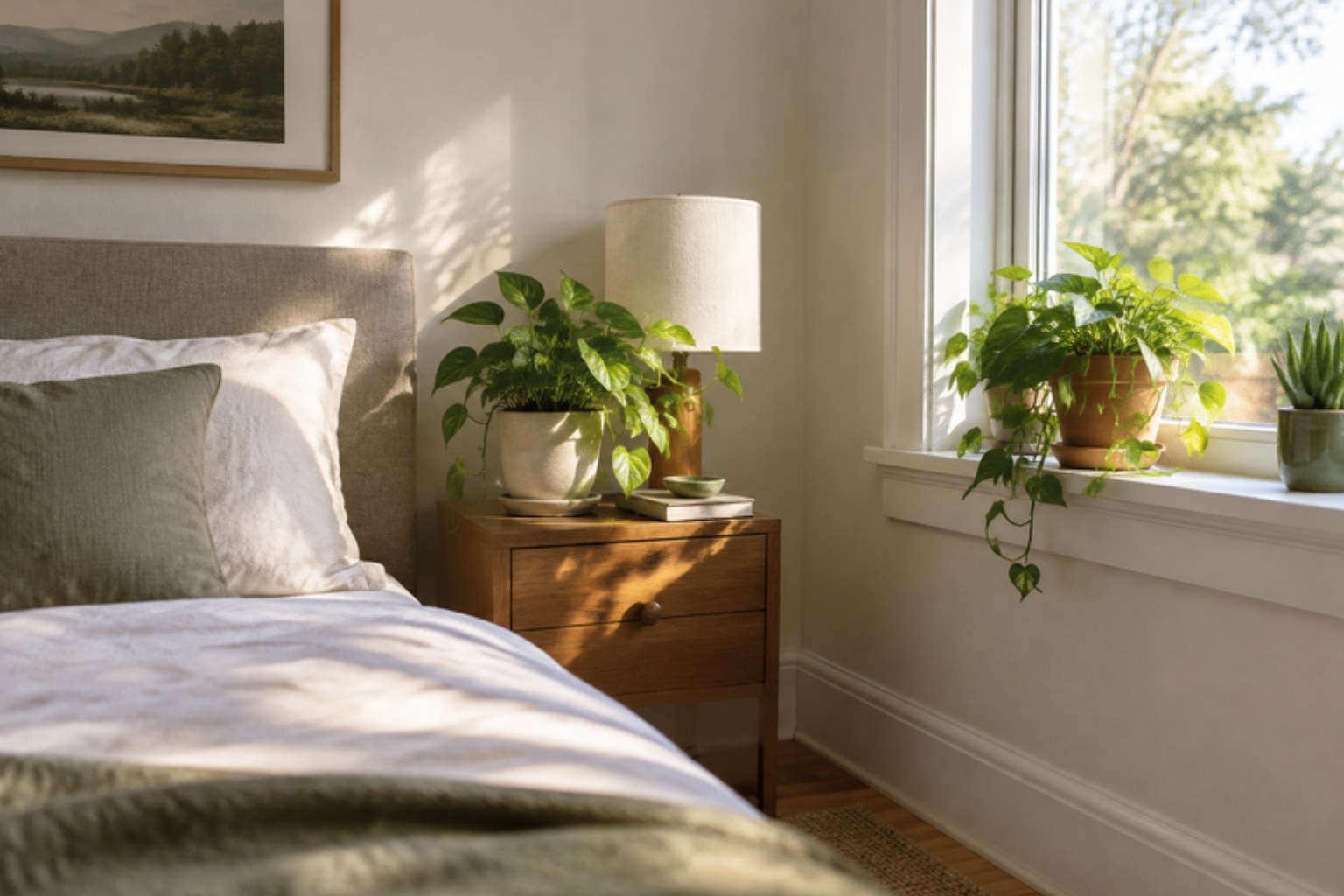

A few plants make a bedroom calmer and softer to look at. They will not noticeably change the oxygen in the room or clean the air while you sleep, and it is worth knowing that before choosing them.
The bedroom is often a tricky place for plants: curtains closed half the day, a radiator under the window, cool nights. The good news is that several common houseplants are well suited to exactly these conditions.
Below: what plants really do in a bedroom, which species cope with low light and stable temperatures, which are safe for cats and dogs, and how to keep allergies and mould in check.
The best plants for the bedroom are those that tolerate lower light and steady temperatures: snake plant, pothos, peace lily, ZZ plant and heartleaf philodendron. They make a room pleasant but do not measurably raise oxygen or purify the air. All five are toxic to pets, so with cats or dogs choose spider plant, parlour palm or calathea, and avoid overwatering to keep mould away.
Do plants in the bedroom give you more oxygen at night?
No, not in any amount you would notice. Plants release oxygen during the day through photosynthesis and at night, in the dark, they take in a little oxygen like any living thing. Either way, the quantities are tiny compared with the air in a room and what a sleeping person breathes.
The snake plant is often recommended because it opens its pores at night and takes in carbon dioxide. That is true botanically, but a few pots have no measurable effect on the air in a bedroom. Opening the window for a few minutes before bed changes far more.
Do bedroom plants purify the air?
Only in a sealed laboratory chamber. The well-known NASA study from 1989 tested plants in small closed containers, not in homes. Later analyses estimated that you would need dozens to hundreds of plants per square metre to match what ordinary ventilation does. Our article on air-purifying plants looks at the evidence in detail.
That does not make bedroom plants pointless. Many people simply find a room with living green more restful, and caring for a plant is a small daily habit. It is a good reason to keep them, as long as the expectations are realistic.
Which plants cope best in a bedroom?
Plants that tolerate lower light and are not bothered by a cool room. Most bedrooms are kept at 16 to 19 °C, which suits all of the following.
- Snake plant (Dracaena trifasciata, formerly Sansevieria): tolerates shade, needs water only every two to four weeks.
- Pothos (Epipremnum aureum): trailing, good on a shelf or wardrobe, tolerates medium to low light.
- Peace lily (Spathiphyllum): grows in shade, droops visibly when thirsty and recovers quickly after watering.
- ZZ plant (Zamioculcas zamiifolia): stores water in thick rhizomes, copes with very little light and irregular care.
- Heartleaf philodendron (Philodendron hederaceum): climbing or trailing, undemanding in medium light.
- Lavender: only in a pot directly by a sunny window. It needs at least six hours of direct sun and does poorly anywhere else indoors.
For rooms with very little light, our guide to low-light houseplants has more options.
Can plants stay on the nightstand?
Only if the nightstand gets daylight. A plant two or three metres from the window, behind curtains closed until noon, gets a fraction of the light it needs. ZZ plant and snake plant cope with that for months; peace lily and pothos slowly become sparse and leggy.
A practical approach is to keep the larger plants by the window and only small, tough ones on the nightstand. Turn the pots a quarter turn every week or two so they grow evenly, and swap the nightstand plant with one from the windowsill every few weeks.
| Plant | Light | Watering | Safe for cats and dogs? |
|---|---|---|---|
| Snake plant | Low to bright | Every 2 to 4 weeks | No |
| Pothos | Low to medium | When top 3 cm are dry | No |
| Peace lily | Low to medium | When it starts to droop | No |
| ZZ plant | Very low to bright | Every 2 to 4 weeks | No |
| Spider plant | Medium to bright | When top 2 cm are dry | Yes |
| Parlour palm | Low to medium | When top 2 cm are dry | Yes |
Which bedroom plants are safe for cats and dogs?
Most classic bedroom plants are not. According to the ASPCA, snake plant, pothos, peace lily, philodendron and lavender are toxic to cats and dogs. The ZZ plant contains the same irritating calcium oxalate crystals as pothos and should also be kept out of reach. Symptoms are usually mouth irritation, drooling and vomiting rather than serious poisoning, but a pet that sleeps in the bedroom has plenty of time to chew.
Safer choices are spider plant, parlour palm (Chamaedorea elegans), calathea and Boston fern, all listed as non-toxic by the ASPCA. More are in our list of pet-safe houseplants.
Can bedroom plants cause allergies or mould?
Plants themselves rarely cause problems in the bedroom; wet compost does. Compost that stays damp for weeks grows a white film of mould on the surface and attracts small fungus gnats. For people with a mould allergy or asthma, that is the real concern.
- Water only when the top few centimetres are dry and empty the saucer after 15 minutes.
- Cover the compost surface with a thin layer of gravel or sand, which dries quickly.
- Remove fallen leaves from the pot and wipe dust off large leaves with a damp cloth.
- Peace lily flowers release pollen; if you are sensitive, cut the flowers off.
- Avoid strongly scented flowering plants such as hyacinths next to the bed.
How should you water and place plants in a bedroom?
Less often than in the living room. A cool bedroom with low light slows plants down, and they use less water, especially from October to March. Water in the morning, so any spills dry during the day, and check with a finger rather than by the calendar.
Keep plants at least half a metre from a radiator and away from the cold glass in winter. A spot near the window, slightly to the side, usually gives the best compromise between light and stable temperature.

How can you fit several plants into a small bedroom?
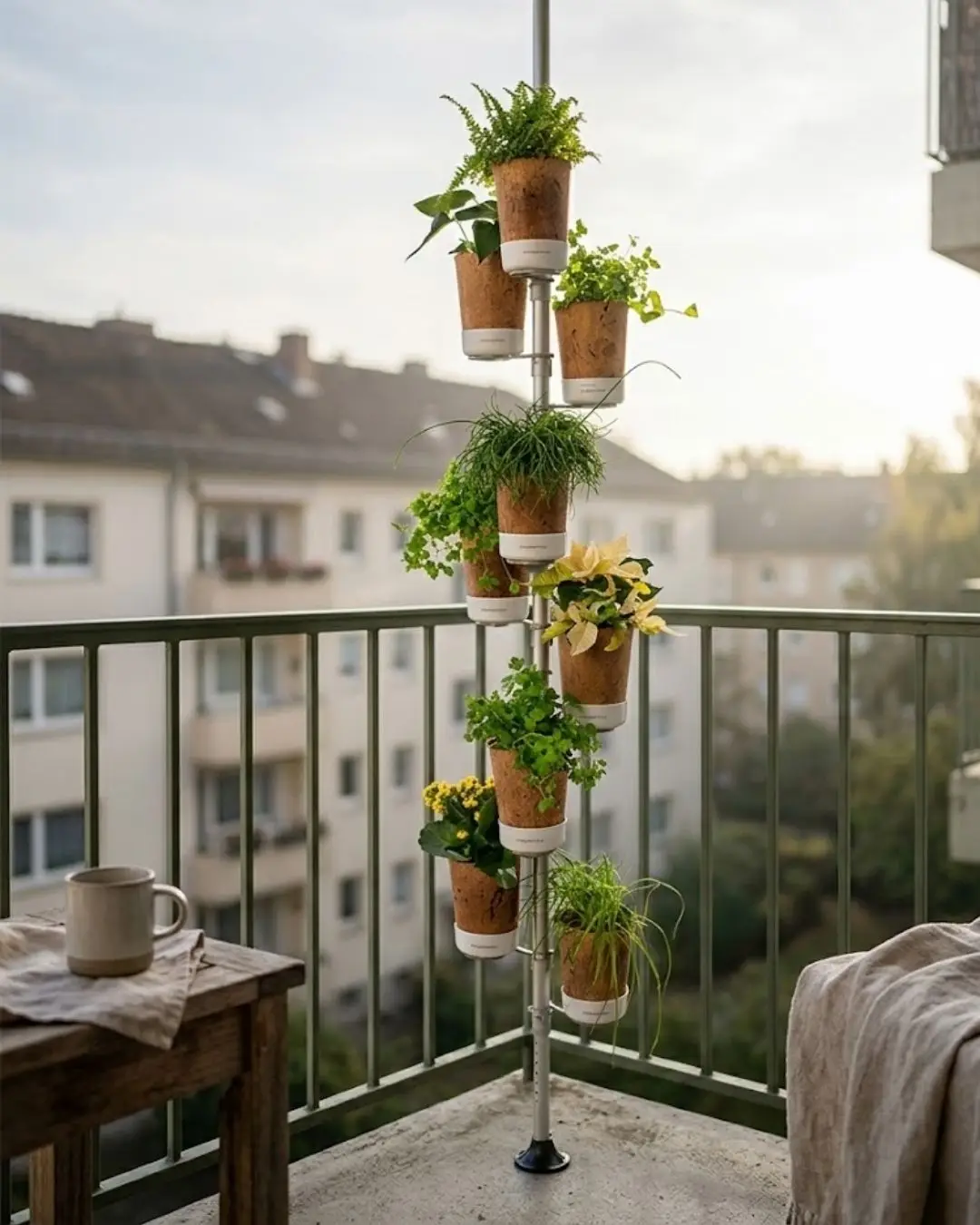
In a small bedroom the windowsill fills up quickly. The Urban Planty Vertical Garden holds nine plants on a telescopic pole between floor and ceiling, each pot with a 300 ml water reservoir, on less than one square metre and without drilling. Placed beside the window, it keeps the plants in daylight rather than spread across dim corners, and the reservoirs mean watering once or twice a week. It costs €149 with free shipping. More about the vertical garden without drilling.
Frequently asked questions
Is it healthy to sleep with plants in the bedroom?
Plants in the bedroom are harmless for most people: the oxygen they take in at night is negligible. The only real concern is mould in constantly wet compost, which is avoided by watering less.
Which plant is best for a dark bedroom?
For a dark bedroom the ZZ plant and the snake plant are the most tolerant. Both cope with low light and need watering only every two to four weeks.
Do plants in the bedroom improve sleep?
There is no good evidence that plants in the bedroom improve sleep through oxygen or cleaner air. Many people find a room with plants more restful, which is a reason to keep them.
Which bedroom plants are safe for cats?
Spider plant, parlour palm, calathea and Boston fern are safe bedroom plants for cats, as the ASPCA lists them as non-toxic. Snake plant, pothos and peace lily are toxic.