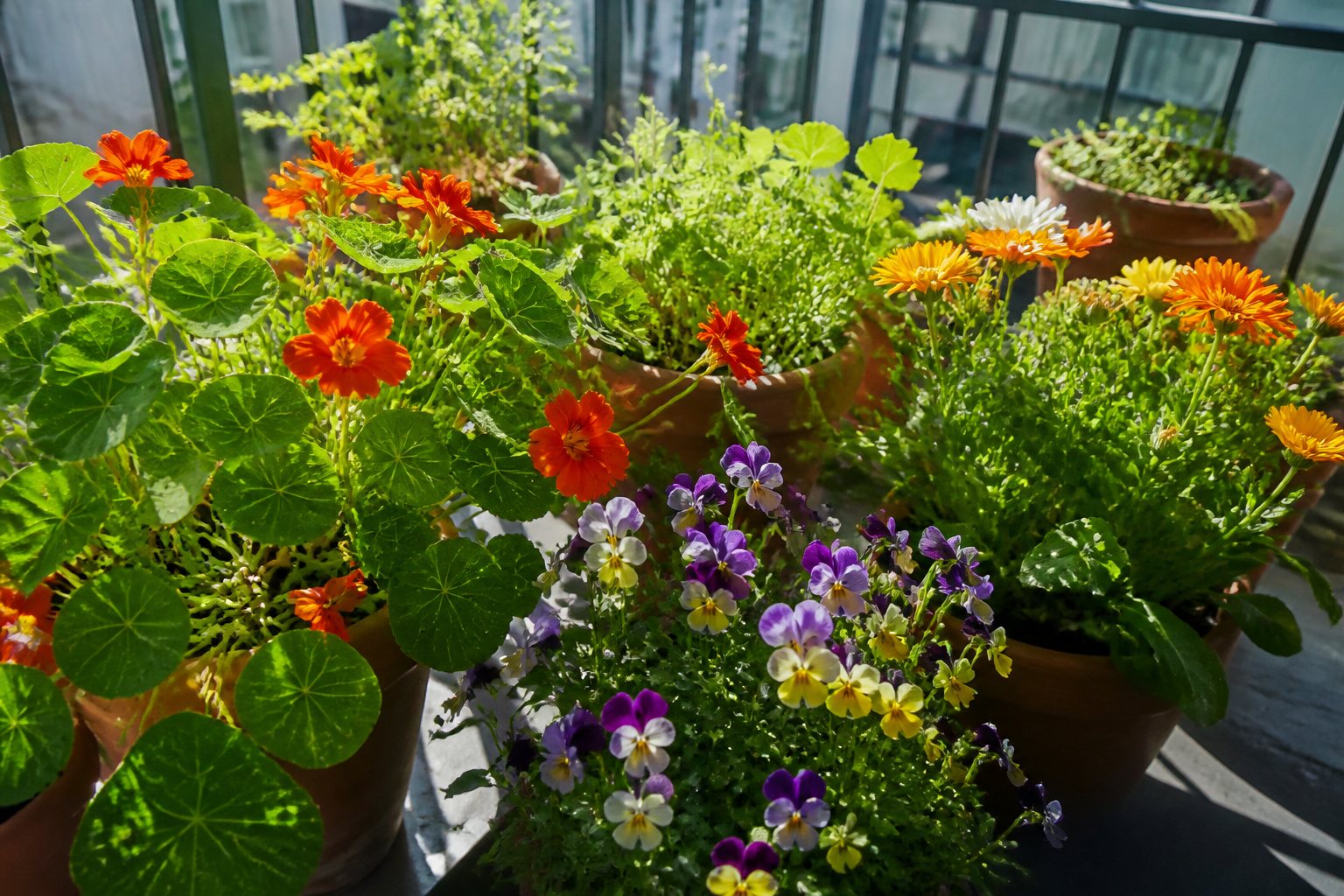

Nasturtiums, pot marigolds and pansies turn up in half the window boxes in Britain, yet few people think of them as food. Grown properly, these edible flowers add colour and flavour you will not find in a supermarket salad bag. The only condition is that you know exactly what you planted and how it was grown.
A balcony or a few containers by the back door is enough for a dozen species whose flowers can go straight into the kitchen. Some are annuals sown in spring, others are herbs you may already have in a pot.
Below is a table of twelve species with their taste and best use, the safety rules that apply without exception, and advice on picking and preparing the flowers.
In pots on a balcony you can grow nasturtium, calendula, violas and pansies, borage, chives, lavender, roses, courgettes, cornflowers, daisies, basil and dianthus for their flowers. Eat only flowers you have grown yourself without pesticides and can identify with certainty. Flowers from a florist are not food. Pick freshly opened blooms in the morning and use them the same day or the next.
Which flowers from a balcony can you eat?
Most edible flowers taste mild, but a few are distinctive. Nasturtium is peppery like watercress, chive flowers taste of onion and dianthus of cloves. The twelve species in the table all do well in pots and troughs.
| Plant | Taste | Use | Position |
|---|---|---|---|
| Nasturtium | peppery, like watercress | salads, sandwiches, stuffed flowers | sun to part shade |
| Calendula (pot marigold) | mildly bitter, earthy | petals in rice, omelettes, butter | sun |
| Viola, pansy | mild, slightly sweet | salads, cakes, crystallised flowers | sun to part shade |
| Borage | like cucumber | salads, ice cubes, summer drinks | sun |
| Chives | mild onion | salads, eggs, soft cheese, vinegar | sun to part shade |
| Lavender | strong, floral | sugar, biscuits, syrup (sparingly) | full sun |
| Rose | fragrant, slightly sweet | syrup, jam, desserts | sun |
| Courgette | delicate, like courgette | stuffed and fried flowers | full sun |
| Cornflower | mild, faintly spicy | garnish for salads, cakes, tea | sun |
| Daisy | slightly bitter, nutty | salads, garnish | sun to part shade |
| Basil | like the leaves, milder | pasta, tomatoes, salads | full sun |
| Dianthus (pinks) | clove-like | desserts, syrups, salads | sun |
How do you grow edible flowers in pots?
Most of these plants need at least five to six hours of direct sun a day. A north-facing balcony suits violas, chives and nasturtiums, while lavender, courgettes and basil will flower poorly there.
Annuals such as nasturtium, calendula, borage and cornflower can be sown indoors in April, or directly into troughs once the risk of frost has passed, usually from mid to late May. Violas and pansies prefer cool weather: plant them in autumn or early spring and they will flower from March into June.
- Pot size: 1–3 litres of compost is enough for nasturtium, calendula, violas and chives, 10 litres or more for lavender and roses, and at least 30–40 litres for a courgette.
- Compost: a good peat-free multipurpose or vegetable compost. Nasturtiums in rich, heavily fed soil produce plenty of leaves and few flowers.
- Watering: keep it even and do not let water stand in the saucer. Lavender tolerates drought, courgettes and borage do not.
- Deadheading: calendula, violas and nasturtiums flower for longer if you keep picking the blooms.
You may already grow chives, basil and lavender as herbs. If you are starting from scratch, our guide to a balcony herb garden covers the basics.
Where do they fit on a small balcony?
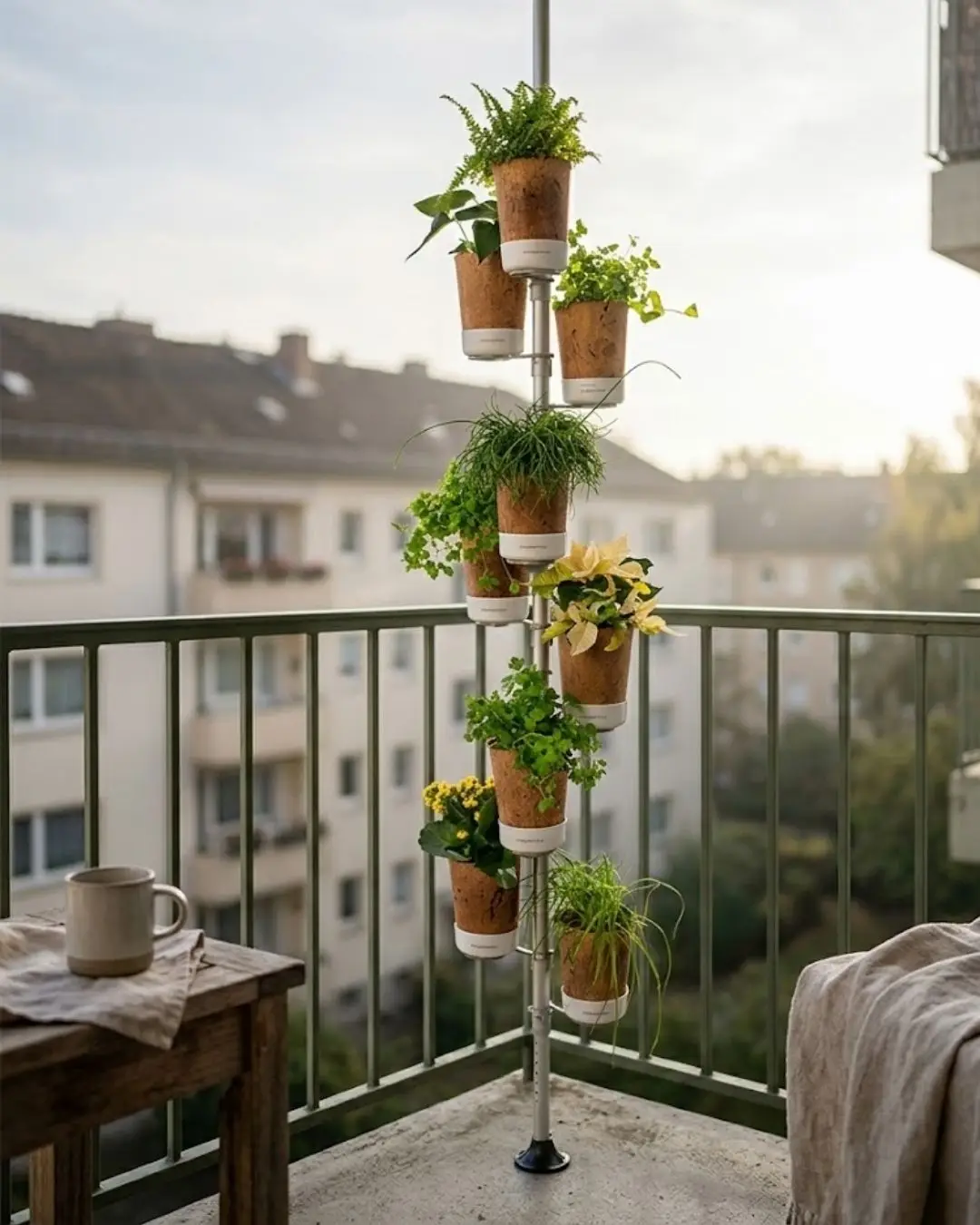
Nasturtiums, violas, calendula, chives, dianthus and basil are compact enough for pots arranged vertically. The Urban Planty Vertical Garden holds nine pots, each with a 300 ml water reservoir, on a pole that clamps between floor and ceiling, giving you a vertical garden without drilling on less than a square metre of floor. Courgettes and roses are better left in a large pot on the ground.
What are the rules for eating flowers safely?
Edible flowers are only safe if you know what you are eating and how the plant was grown. These rules apply without exception:
- Pesticide-free only: eat only flowers you have grown yourself without pesticides. Bedding plants sold as ornamentals at garden centres may carry residues of products not approved for food crops, so it is safest to sow from seed or buy plants labelled as herbs or vegetables.
- Identify correctly: if you are not certain what a plant is, do not eat it. Check the botanical name on the seed packet or plant label.
- Not from a florist: cut flowers and pot plants from a florist or supermarket are not grown to be eaten. Flowers from roadsides and parks are also unsuitable.
- Allergies: calendula, cornflower and daisy belong to the daisy family, like chamomile and ragweed. Anyone allergic to those should avoid them.
- Moderation: flowers are a seasoning and garnish, not a main ingredient. Borage contains pyrrolizidine alkaloids, so eat it only occasionally and in small amounts, and avoid it during pregnancy.
When and how should you pick edible flowers?
The best time is mid-morning, once the dew has dried and before the heat makes the flowers wilt. Choose blooms that have just opened, not ones that are fading or browning at the edges.
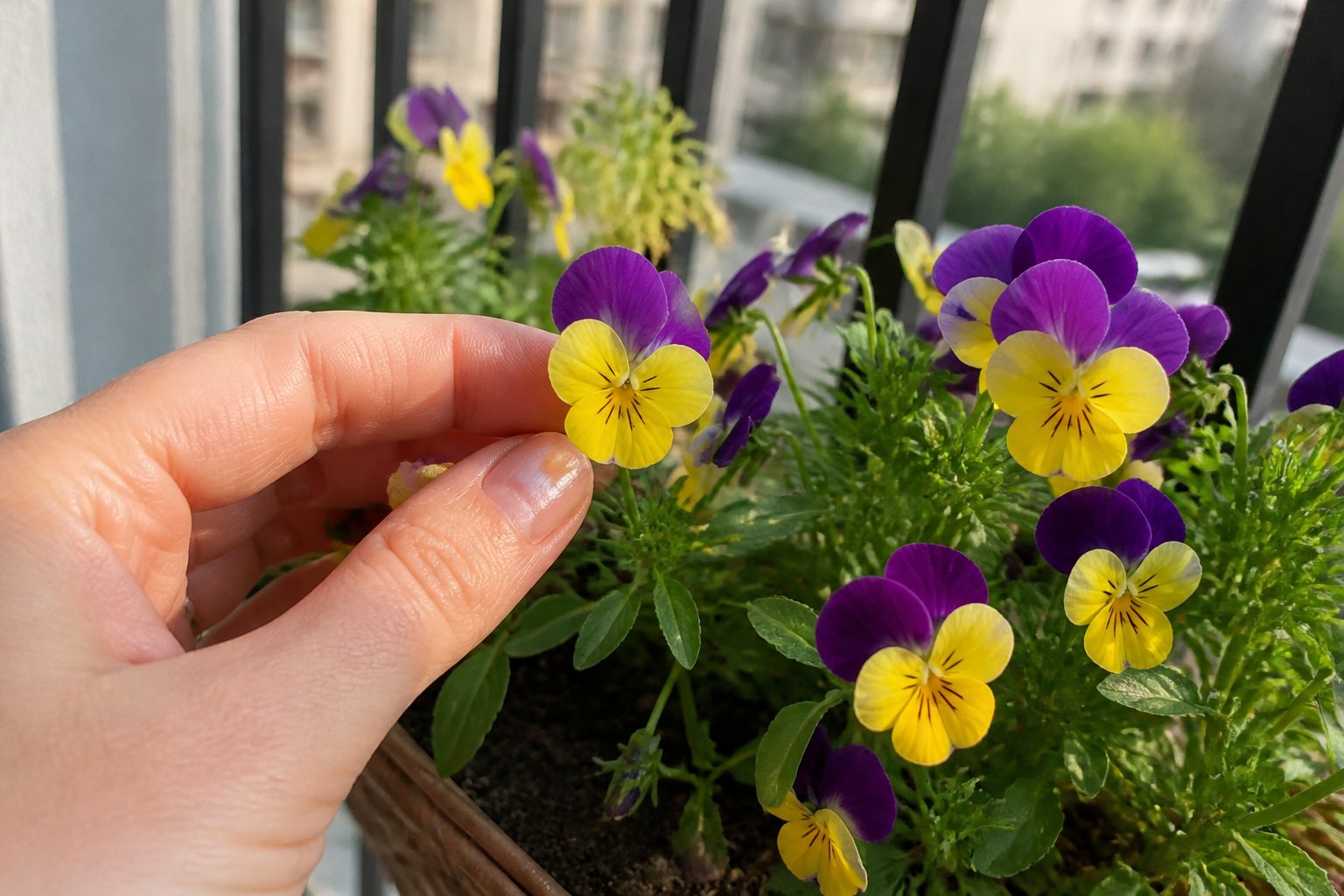
- Pinch or snip the flowers off with a short stalk.
- Shake them gently to dislodge insects and dip them briefly in a bowl of cold water.
- Dry them on kitchen paper.
- Cut away the white base of rose and dianthus petals, which is bitter. With larger flowers such as courgette, remove the stamens and pistil.
- If you are not using them straight away, keep them in the fridge in a container lined with damp kitchen paper for a day or two at most.
On courgettes, pick the male flowers, which sit on a thin stalk. Female flowers have a small fruit behind them that grows into the courgette.
How can you use edible flowers in the kitchen?
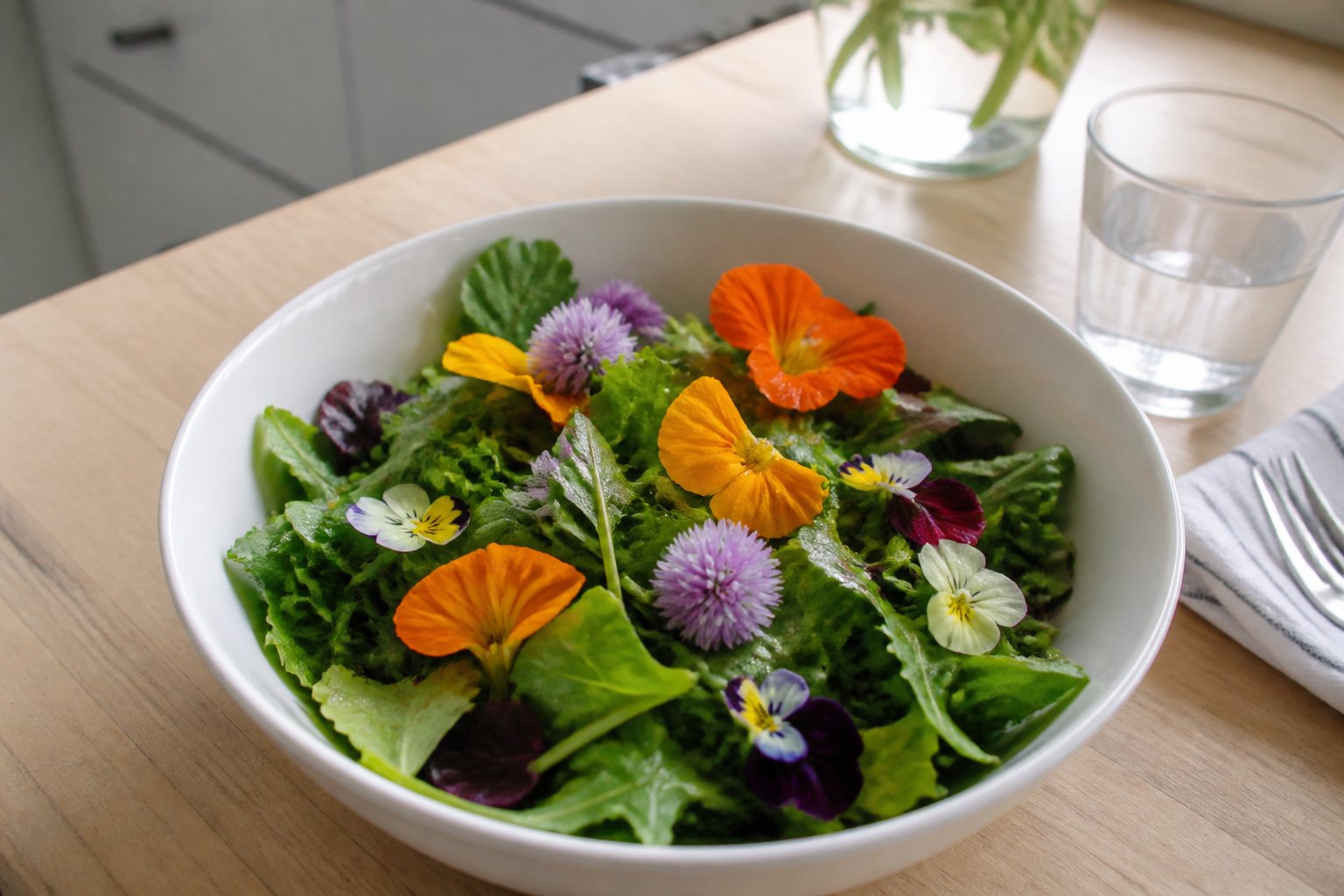
Because flowers are delicate, they usually go in at the end. Heat and acid quickly take away their colour and texture.
- Salads: nasturtiums, violas, borage and calendula petals, added after the dressing.
- Ice cubes: freeze violas or borage flowers in water for summer drinks.
- Butter and soft cheese: stir chive florets or calendula petals into butter or cream cheese.
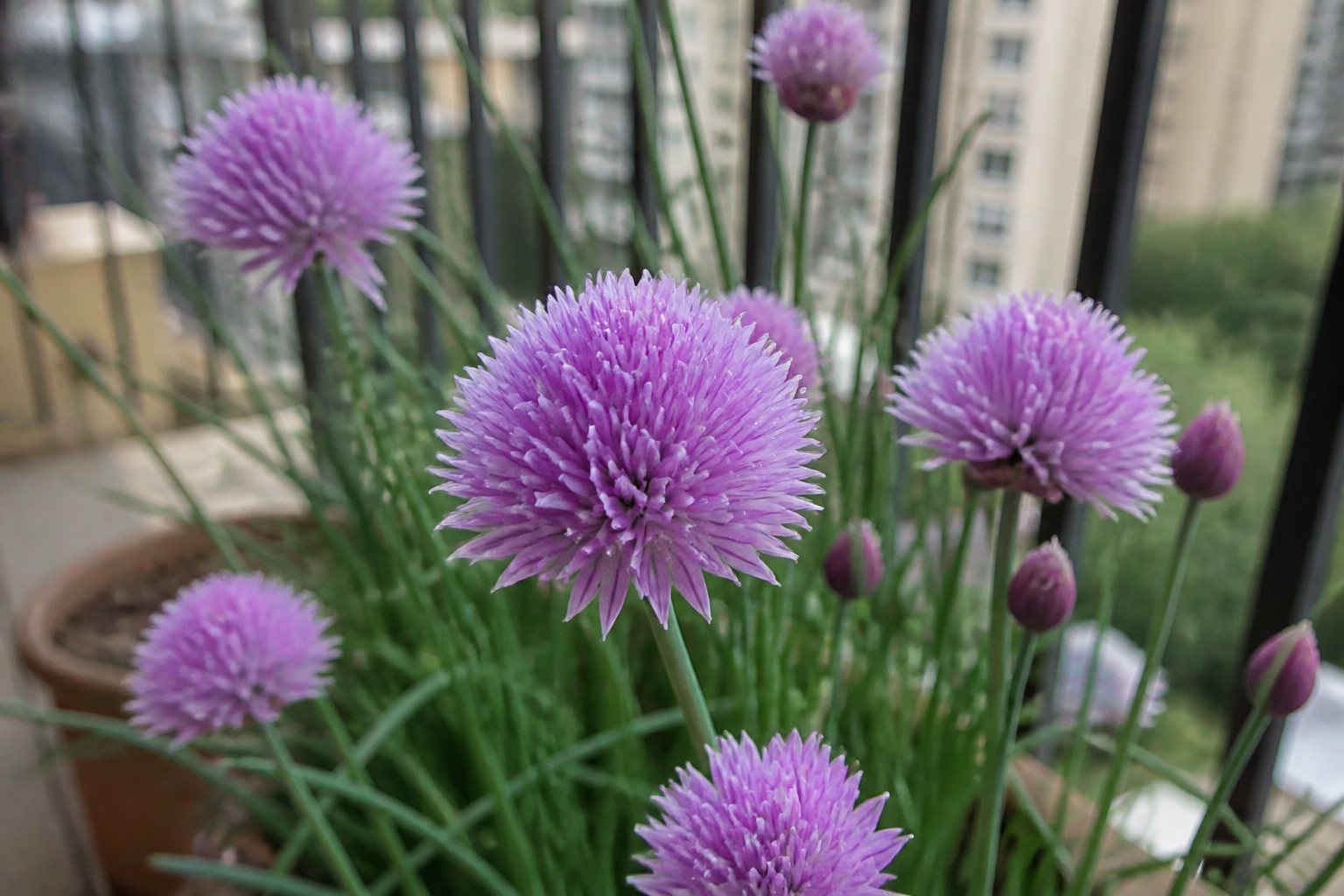
- Vinegar: chive flowers steeped in white wine vinegar for about two weeks turn it pink with a mild onion flavour.
- Stuffed courgette flowers: fill with ricotta and herbs and fry in a light batter.
- Baking: lavender or rose sugar, crystallised violas, pinks on a cake.
- Nasturtium seeds: pickle the green, unripe seeds in vinegar as a substitute for capers.
Basil flowers are edible, but if you want more leaves, pinch them out as they appear. There is more on that in our guide on how to grow basil indoors.
Frequently asked questions
Which edible flowers are easiest for beginners?
Nasturtium, calendula and violas are the easiest edible flowers to grow in pots. They germinate quickly from seed, flower for months and are easy to identify with certainty.
Can I eat flowers from a florist or garden centre?
Do not eat flowers from a florist, as they are not grown as food and are often sprayed. Ornamental bedding plants from garden centres may have been treated with products not approved for edible crops, so it is safer to grow edible flowers from seed.
How long do edible flowers keep?
Edible flowers keep in the fridge in a closed container lined with damp kitchen paper. They are best on the day of picking and should be used within one or two days.
Which balcony flowers are poisonous?
Foxglove, lily of the valley and oleander are poisonous and must never be eaten. Do not eat any flower you cannot identify with certainty.
Are chive flowers edible?
Chive flowers are edible and have a mild onion flavour. Separate them into single florets and scatter them over salads, eggs or soft cheese.