EN
 Italiano
 Slovenščina
 Čeština
 Deutsch
 Magyar
 polski
 Slovenčina







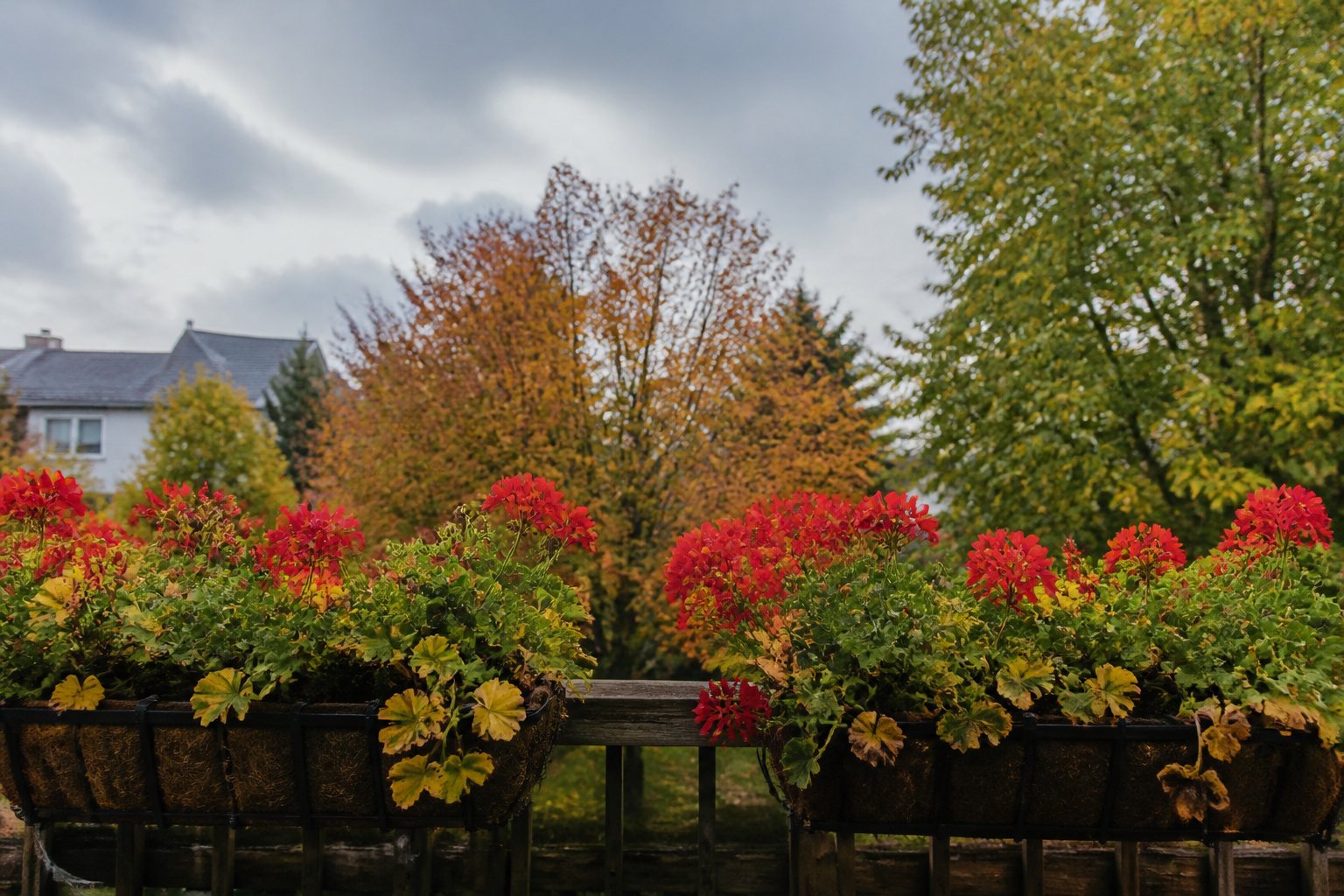

Balcony geraniums are tender perennials from southern Africa, and the first frost finishes them off outdoors. A plant kept through the winter, though, flowers earlier and more generously than a new one bought in May. Overwintering is not difficult, provided you choose the method that matches the space you have.
Most of us call them geraniums, although botanists file them under Pelargonium. On balconies and window ledges the two main types are the upright zonal kinds with rounded, often banded leaves, and the trailing ivy-leaved kinds that spill over boxes from May to October.
Below we look at when to bring them in, compare three ways of keeping them through winter and explain what they need in February and March, when the new season starts.
Bring geraniums in when night temperatures fall to around 5 °C, and always before the first frost. They overwinter best in a bright, cool spot at 5 to 10 °C, lightly cut back and watered only sparingly. In a dark cellar or garage they must be cut back hard and kept almost dry. In February or March, repot, prune and move them somewhere warmer and lighter.
When should you bring geraniums indoors?
Geraniums cope with a brief dip to a few degrees above zero, but frost kills the leaves and soft stems. Bring them in once nights settle at around 5 °C. In much of Britain that means early to mid October, a little later in sheltered city centres and along mild coasts.
Before moving them, pick off spent flowers, yellow leaves and any weeds in the box. Check the undersides of the leaves too. Whitefly and aphids carried indoors multiply quickly in the warmth.
Which way of overwintering geraniums works best?
It depends on the space. Geraniums rest in winter and need cool conditions. In a heated living room at 20 °C they keep growing, but in poor winter light they produce long, pale, weak shoots.
| Method | Temperature and light | Pruning | Watering | Best for |
|---|---|---|---|---|
| Bright and cool | 5 to 10 °C, bright window, stairwell, porch, unheated room | moderate, by about a third | a little every 2 to 3 weeks | most varieties, including regal pelargoniums |
| Dark and cold (cellar, garage) | 4 to 8 °C, dark | hard, to 10 to 15 cm, leaves removed | almost none, a splash every 4 to 6 weeks | zonal and ivy-leaved geraniums |
| Cuttings on a windowsill | 15 to 20 °C, bright sill | only the shoot tips are taken | lightly moist | little space, old woody plants |
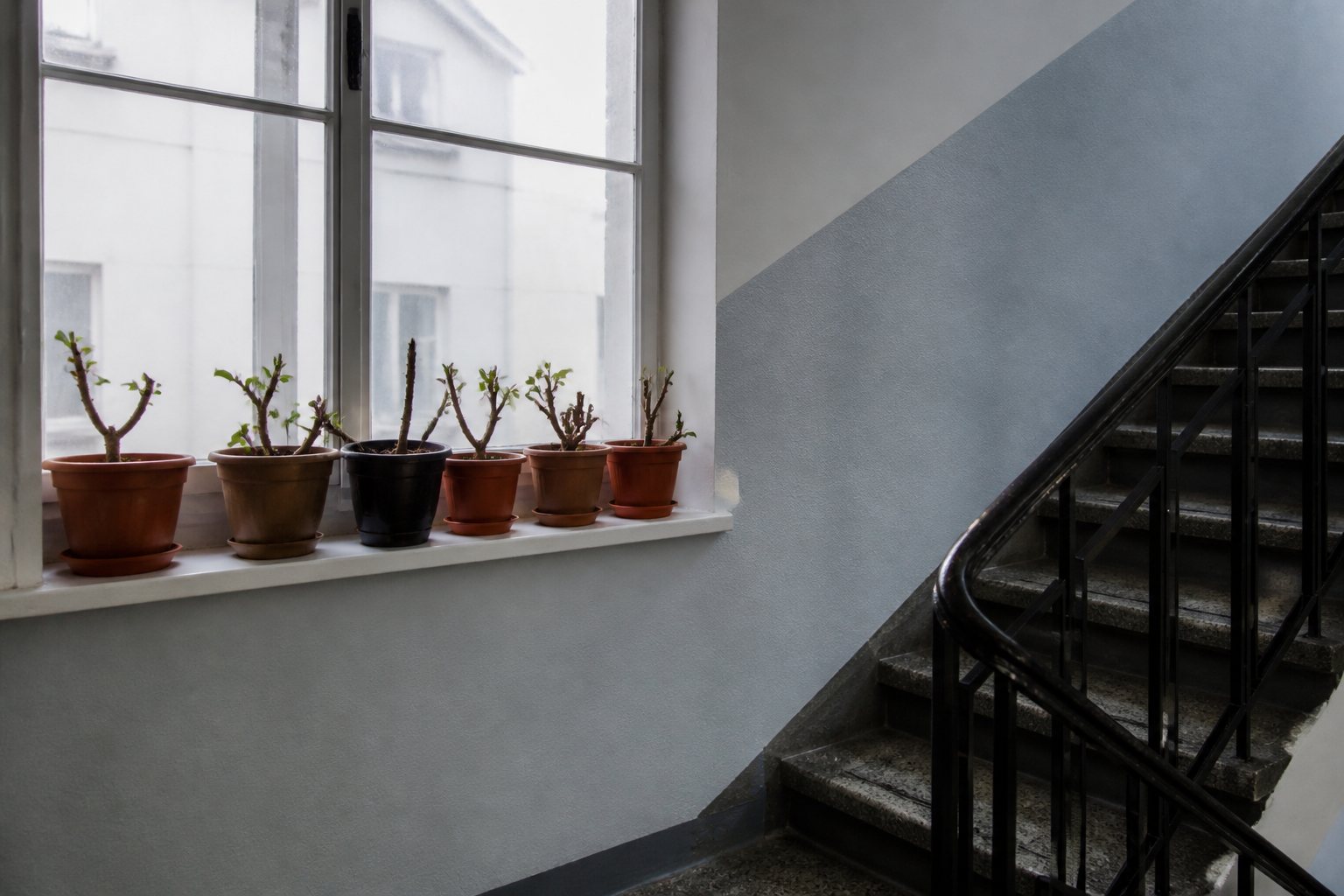
Bright, cool storage is the most reliable. The plants keep some leaves, start growing sooner in spring and flower earlier. A cold porch, an unheated stairwell with a window, a cool spare bedroom or a frost-free greenhouse all work.
In dark storage the plant almost stops. It works well when the cellar or garage is genuinely cold and dry. In a warm, dark room the plants exhaust themselves and begin to rot.
An older tradition is to store geraniums bare-root: shake the soil off, wrap the plants in newspaper or put them in a paper bag and hang them up in a cool cellar. It saves space but is riskier. Roots can dry out or go mouldy, so losses are higher.
How do you cut back geraniums for winter?
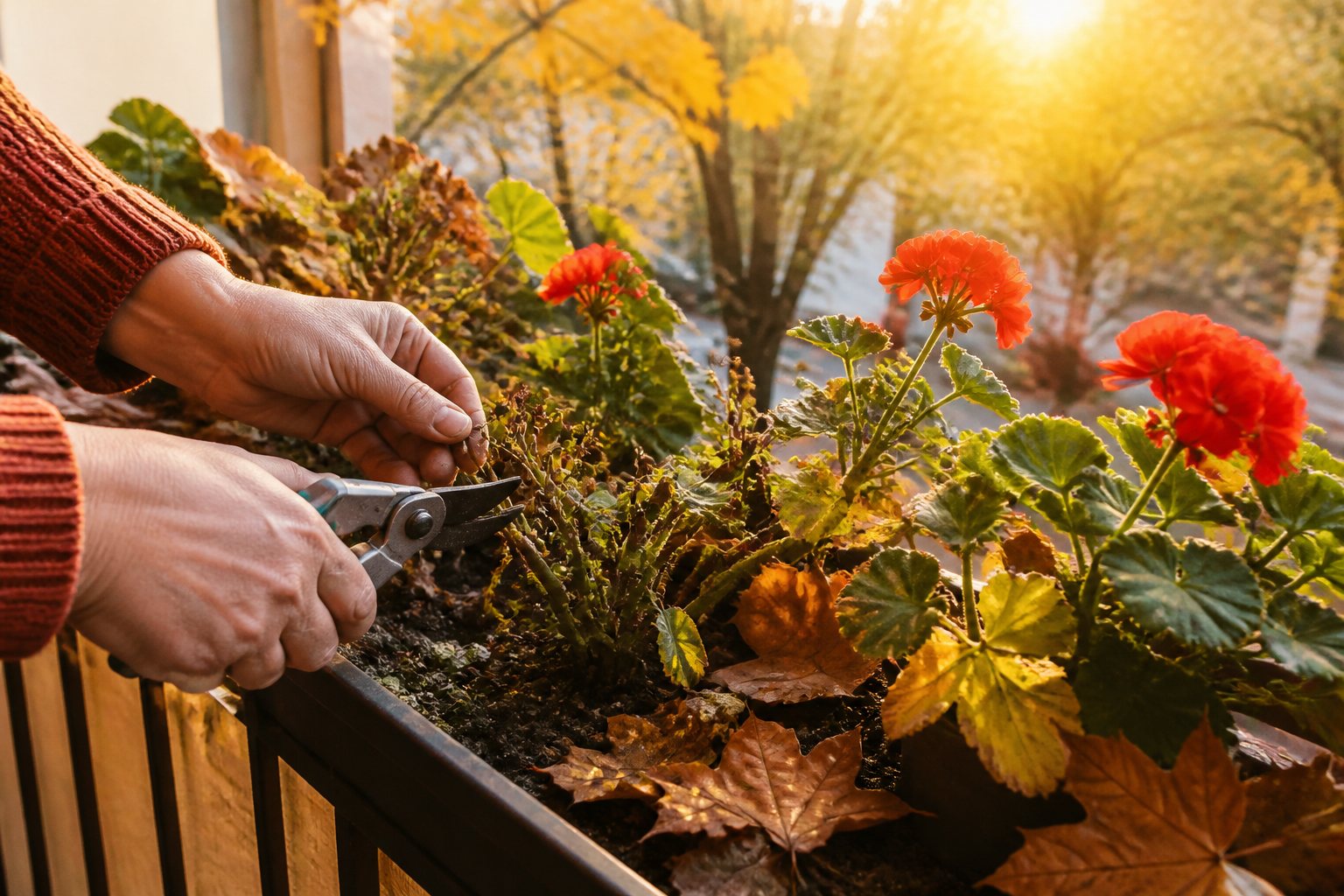
How hard to prune depends on the method. Plants going somewhere bright only need trimming enough to make them easy to move, with final shaping in spring. Plants heading for a dark cellar are cut back hard.
- Remove all flowers and flower buds. In winter the plant should not spend energy on blooming.
- Cut off yellow, dry and damaged leaves. Dead foliage is where grey mould takes hold first.
- For bright storage, shorten the shoots by about a third, to 20 to 25 cm.
- For dark storage, cut them to 10 to 15 cm and strip off almost all the leaves.
- Use sharp, clean secateurs and cut a few millimetres above a leaf joint.
How much should you water geraniums in winter?
Very little. Overwintered geraniums die from too much water far more often than from too little. In a bright, cool spot, water when the compost has dried a few centimetres down, usually every two to three weeks, and only enough to moisten it.
In a dark cellar a splash every four to six weeks is enough to stop the stems shrivelling. Do not feed from October to February. Our guide on how to water houseplants explains how to tell when a pot actually needs water.
How do you overwinter geraniums as cuttings?
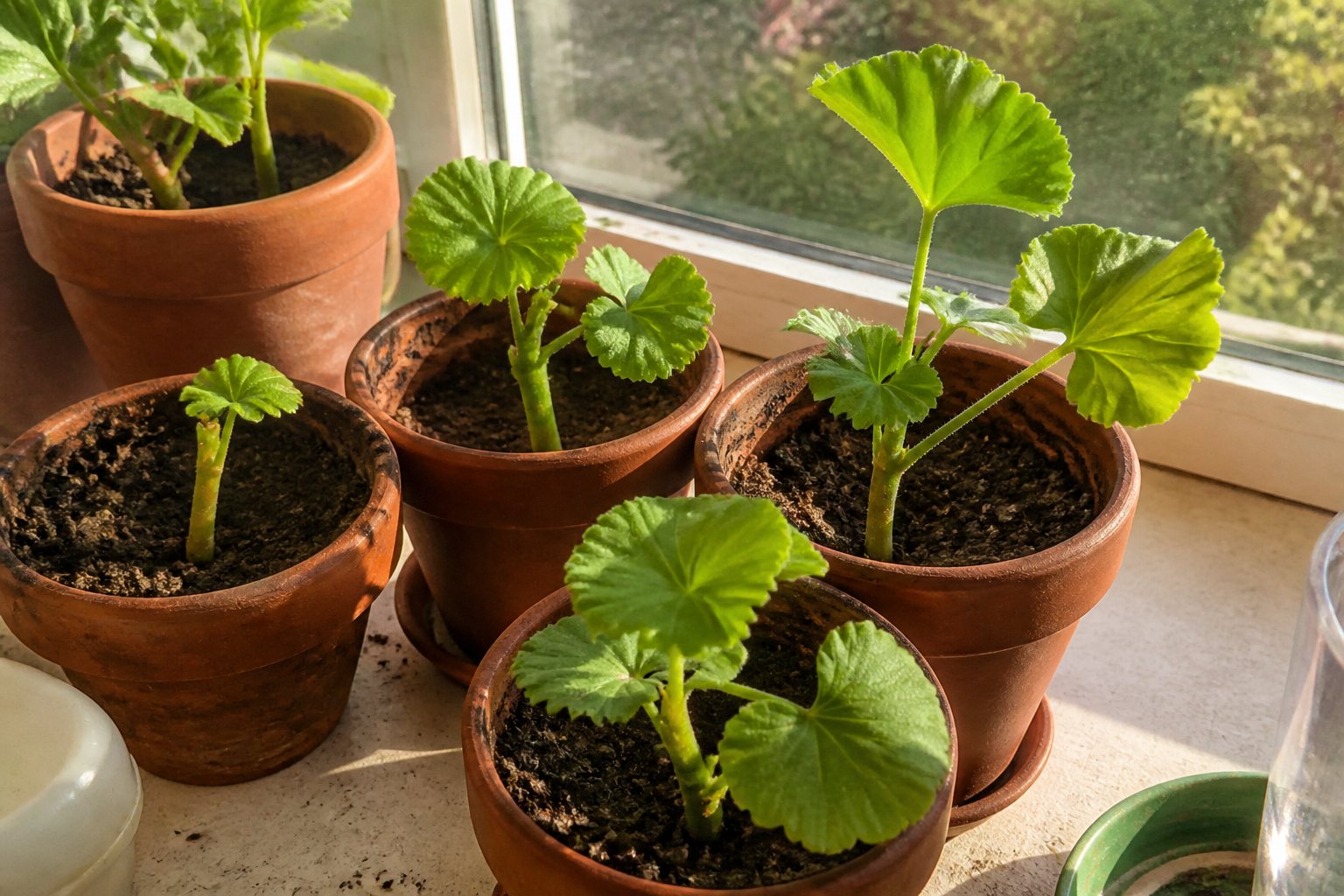
If you have no cool room for whole boxes, keep cuttings instead. An 8 cm pot takes up little space on a windowsill, and young plants often flower better in spring than old, woody ones.
Cuttings taken in August and September root most easily. October cuttings, taken as the plants come in, also work, but they root more slowly.
- Cut 8 to 10 cm tips from healthy shoots, just below a leaf joint.
- Remove the lower leaves and any flower buds, leaving two or three leaves at the top.
- Let the cut end dry in the air for a few hours.
- Insert them 2 to 3 cm deep in small pots of seed compost or a mix of compost and sand.
- Stand them on a bright windowsill at 15 to 20 °C and do not cover them with a plastic bag, as geranium cuttings rot easily under one.
Roots form in three to four weeks, and a new leaf at the tip shows the cutting has taken. Chillies can be kept indoors over winter in much the same way; see how to grow chillies in pots.
What should you do with geraniums in February and March?
As the days lengthen, geraniums wake up. Between mid February and mid March, get them ready for the new season.
- Repot: shake off the old compost and replant in fresh multipurpose or container compost, in a pot only slightly larger if needed.
- Prune: cut each shoot back to two or three buds and remove long, pale winter growth.
- More light and warmth: move the plants to your brightest window at 12 to 18 °C.
- More water: increase watering gradually as new leaves appear. Start feeding in April with a liquid feed for flowering plants every two weeks.
- Harden off: in April, put them outside for a few hours on mild days. Move them out for good once the risk of frost has passed, in most of the UK from late May.
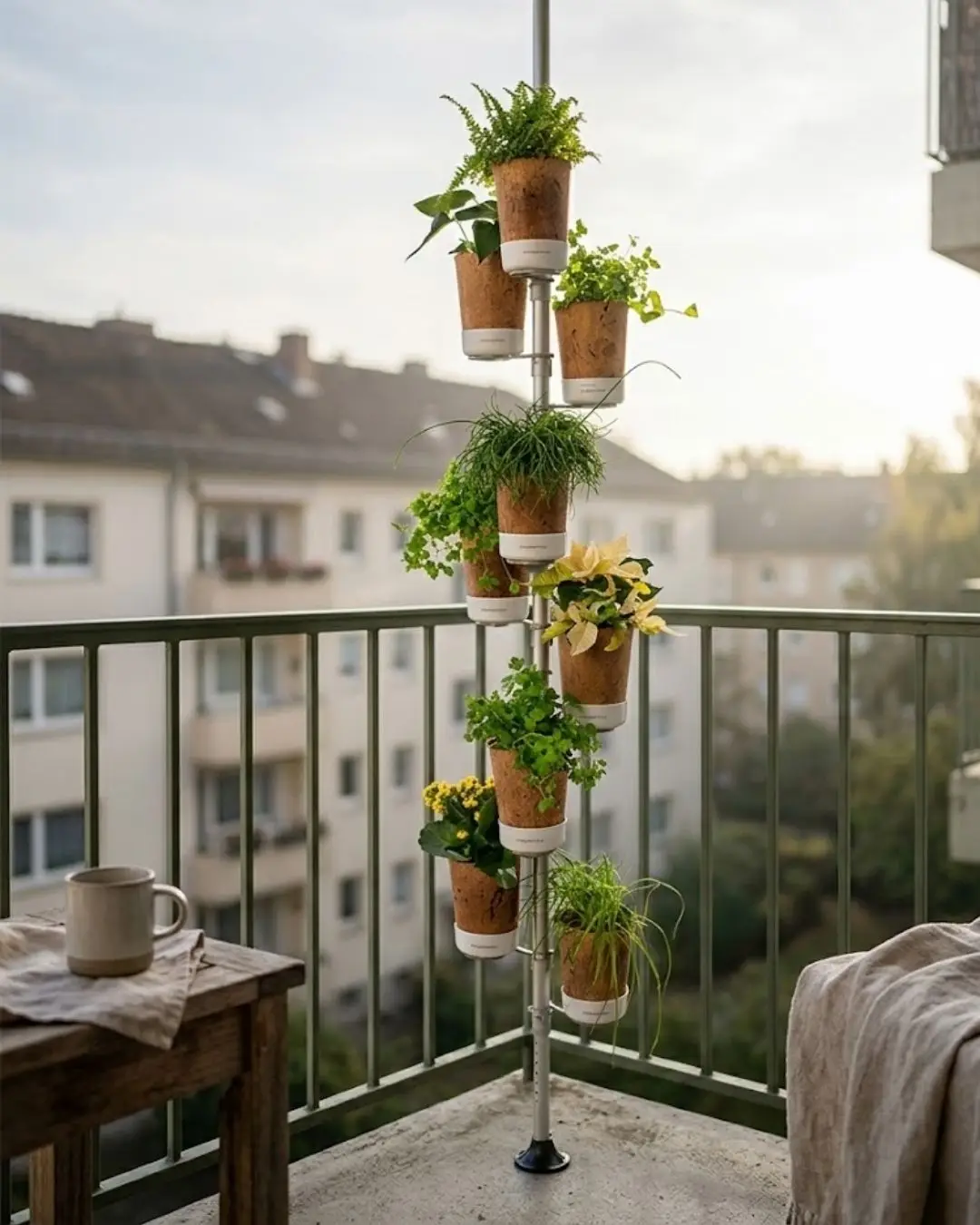
If the balcony railing is already full, some of the cuttings or herbs can go vertical in spring. A vertical garden without drilling clamps between floor and ceiling, holds nine pots with a 300 ml water reservoir each and needs less than 1 m² of floor. The Urban Planty Vertical Garden costs €149 with free shipping.
What problems do geraniums have over winter?
- Grey mould: a fuzzy grey coating on leaves and stems, encouraged by cool, damp air and dead foliage. Remove affected parts, ventilate and water less.
- Long, pale shoots: the room is too warm for the light available. Move the plant somewhere cooler or brighter and cut the shoots back in spring.
- Yellow leaves and leaf drop: some of this is normal over winter. Pick up fallen leaves regularly.
- Black stems at the base: rot caused by wet compost. Healthy tips can still be taken as cuttings.
- Whitefly and aphids: more common in warm rooms. Check the plants regularly and remove infested leaves.
Incidentally, the balcony “geranium” is botanically a pelargonium, while true geraniums are the hardy cranesbills of the border. Both names come from Greek: geranos means crane and pelargos stork, after the beak-shaped seed pods.
Frequently asked questions
When should geraniums be brought indoors?
Bring geraniums in when night temperatures fall to around 5 °C, and always before the first frost. In much of the UK that is early to mid October.
Can geraniums overwinter in a dark garage or cellar?
Yes, if it is cold, at 4 to 8 °C, and dry. Cut the geraniums back hard to 10 to 15 cm, remove the leaves and give only a splash of water every four to six weeks.
How often should you water geraniums in winter?
Water geraniums in a bright, cool spot every two to three weeks, once the compost has dried a few centimetres down. Too much water in winter causes stem rot, and they need no feed until spring.
Should geraniums be cut back in autumn or spring?
Cut geraniums back in autumn as far as the overwintering method requires, harder for a dark cellar. Do the final pruning in February or March, leaving two or three buds on each shoot.
Can geraniums stay outside on the balcony over winter?
In most of Britain and central Europe, no, because frost kills them. Only in very sheltered, nearly frost-free spots can geraniums survive a mild winter outdoors, and the risk is high.